Join us on a literary world trip!
Add this book to bookshelf
Grey
Write a new comment Default profile 50px
Grey
Subscribe to read the full book or read the first pages for free!
All characters reduced
Sanditon - cover

Sanditon

Jane Austen

Publisher: CKF Publishing

  • 0
  • 0
  • 0

Summary

Sanditon (1817) is an unfinished novel by the English writer Jane Austen. In January 1817, Austen began work on a new novel she called The Brothers, later titled Sanditon, and completed eleven chapters before stopping work in mid-March 1817, probably because of illness. R.W. Chapman first published a full transcription of the novel in 1925 under the name Fragment of a Novel.
Available since: 12/12/2023.

Other books that might interest you

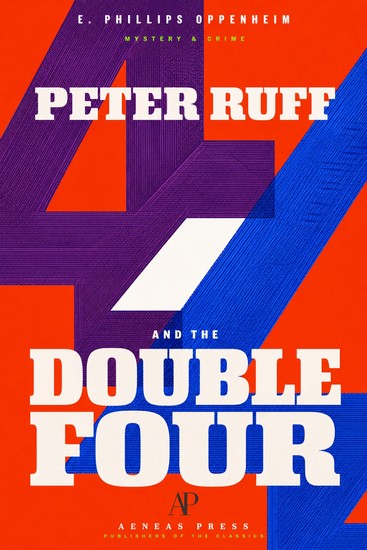
  • Peter Ruff and the Double Four - cover

    Peter Ruff and the Double Four

    E. Phillips Oppenheim

    • 0
    • 0
    • 0
    Peter Ruff, a small London agent with a genius for the discreet, is recruited into the Double Four — a European criminal directorate — and finds the way out is to run it. Oppenheim worked in his father's leather business for twenty years while writing at night, then produced some hundred and fifteen novels from the Riviera; this is his most cynical, and the criminals have better manners than the Foreign Office.
    Show book
  • Snow Country - cover

    Snow Country

    Yasunari Kawabata

    • 0
    • 0
    • 0
    This masterpiece from the Nobel Prize–winning author and acclaimed writer of Thousand Cranes is a powerful tale of wasted love set amid the desolate beauty of western Japan. 
     
    "Kawabata's novels are among the most affecting and original works of our time." —The New York Times Book Review 
    At an isolated mountain hot spring, with snow blanketing every surface, Shimamura, a wealthy dilettante, meets Komako, a lowly geisha. She gives herself to him fully and without remorse, despite knowing that their passion cannot last and that the affair can have only one outcome. In chronicling the course of this doomed romance, Kawabata has created a story for the ages—a stunning novel dense in implication and exalting in its sadness.
    Show book
  • The Harvester - cover

    The Harvester

    Gene Stratton-Porter

    • 0
    • 0
    • 0
    A man at one with nature finds himself enchanted by a vision in this classic Midwestern romance from the naturalist and author of The Keeper of the Bees.   David Langston, the Harvester, allows his dog to decide his fate every year—to join the money-making scramble in the noise and grime of the city, or continue harvesting the goldenseal, mullein, and ginseng in the woods around their country home. Every year, his dog Bel chooses correctly—for they are both creatures of the woods.   But this year, there is another matter to ponder. Should Langston remain alone—or should he go courting? There are pros and cons of course—mostly cons—that bang around in Langston’s mind. That is, until he sees a ghostly vision near the lake, a slender dark-haired woman wrapped in robes of white, lovelier than any he has ever seen in his twenty-six years. And then one day he sees her crying in the woods. Ruth Jameson is a girl caught in a bad situation, and Langston finds himself willing to do anything to help her and make her every wish come true.  Praise for the writing of Gene Stratton-Porter   “As famous in the early 1900s as J.K. Rowling is now . . . Her natural settings, wholesome themes and strong lead characters fulfilled the public’s desires to connect with nature and give children positive role models.” —Smithsonian Magazine   “Her narrative is entertaining, her enthusiasm catching.” —The New York Times
    Show book
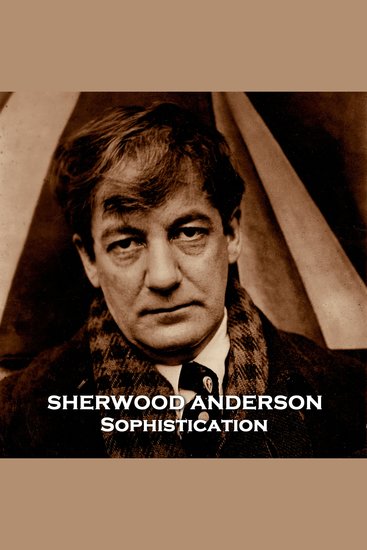
  • Sophistication - From their pens to your ears genius in every story - cover

    Sophistication - From their pens...

    Sherwood Anderson

    • 0
    • 0
    • 0
    Sherwood Anderson was born on 13th September 1876 in Camden, Ohio. 
    When his father’s business failed the family was forced to move on a regular basis before finally settling in Clyde, Ohio.   
    Anderson, one of 7 children, left school at 14 to take a number of jobs to help with the family finances. These were difficult years. 
    He moved to Chicago in search of opportunities before joining the Army for the US-Spanish War of 1898.  He then entered Wittenberg Academy in Springfield, Ohio to complete his education before moving back to Chicago to take up a writing job. 
    In 1904 he married Cornelia Lane, her family had resources and Anderson was keen, with this family backing, to run a business. 
    The early years of their marriage produced 3 children but a nervous breakdown in 1907 and another in 1912, despite his success as a business entrepreneur, resulted in him abandoning his family and deciding that a literary career would be best for him.   
    A move back to Chicago resulted in a job in advertising, a divorce from Cornelia and marriage to Tennessee Mitchell.  
    That same year his first book ‘Windy McPherson’s Son’ was released and in 1919, his most famous book, ‘Winesburg, Ohio’, a collection of short stories about life in an Ohio town was released. 
    Anderson continued to write short stories, novels and non-fiction but his only true bestseller came with ‘Dark Laughter’.  His influence on writers that followed, from Faulkner to Hemingway, was immense. He also married a further two times.   
    Sherwood Anderson died in in Colón, Panama, on the 8th March, 1941. He was 64. An autopsy revealed that a swallowed toothpick had resulted in peritonitis. 
    His headstone epitaph reads ‘Life, Not Death is the Great Adventure.’
    Show book

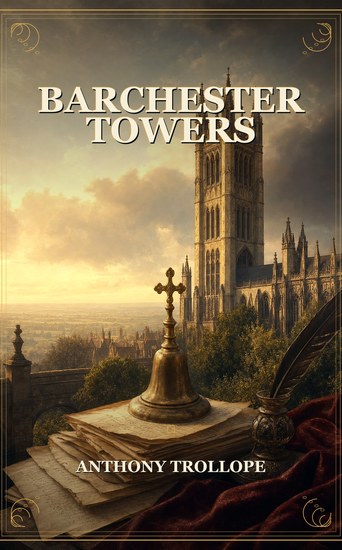
  • Barchester Towers - cover

    Barchester Towers

    Anthony Trollope

    • 0
    • 0
    • 0
    Barchester Towers by Anthony Trollope is offered here in a clean English digital edition prepared for fluent ebook reading. The work stands within classics and gives modern readers direct access to a public-domain classic with navigable structure and a restrained typographic presentation. The opening pages establish the book's atmosphere with this first movement: In the latter days of July in the year 185––, a most important question was for ten days hourly asked in the cathedral city of Barchester, and answered every hour in various ways—Who was to be the new bishop? The death of old Dr. Grantly, who had for many years filled that chair with meek authority, This edition is suited to readers who want a reliable, uncluttered version of the text for study, rediscovery, and sustained reading.
    Show book
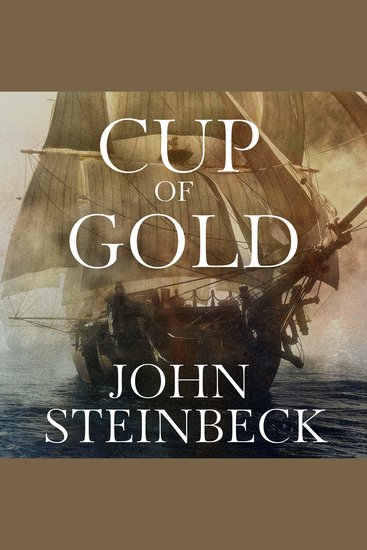
  • Cup of Gold - cover

    Cup of Gold

    John Steinbeck

    • 0
    • 0
    • 0
    The first novel from American literary great John Steinbeck (Grapes of Wrath) tells the fictionalized story of the illustrious 17th century pirate Captain Henry Morgan  
    Henry Morgan is a young boy growing up in a small town in Wales. One day, a sailor returns to regale Henry with tales of the West Indies, and the glory that awaits those adventuresome enough to go. Henry, dazzled, quickly finds a place aboard a ship heading to the islands, thus setting himself on the path to becoming the brutal and fearsome pirate Captain Morgan.  
    The portrait Steinbeck paints of Morgan (with some artistic license taken) is of a complex, lustful, and largely unhappy man, set in evocative locales that are laced with traces of magical realism. Though Morgan’s life was filled with blood and violence, Steinbeck portrays him as a thoughtful and intelligent commander of men, whose tragic flaw is an unquenchable lust for great accomplishments combined with a misunderstanding of what great accomplishments actually are.  
    Through his cunning he repeatedly attains the ever-grander victories he seeks—but he quickly discovers what so many before and after him have discovered: that achievement is not always as satisfying as the quest to achieve.  
    Publisher's Note: Originally published in 1929, Cup of Gold is a literary work that reflects the time in which it was published—both its good and its ill. The original text contains wording and terminology that represent outdated cultural beliefs regarding race and ethnicity. In the interest of preserving and documenting both the faults and highlights of literary history—an instrumental, crucial function of works entering the public domain—this text is unedited and uncensored in this audiobook recording. Please proceed with discretion.
    Show book