Join us on a literary world trip!
Add this book to bookshelf
Grey
Write a new comment Default profile 50px
Grey
Subscribe to read the full book or read the first pages for free!
All characters reduced
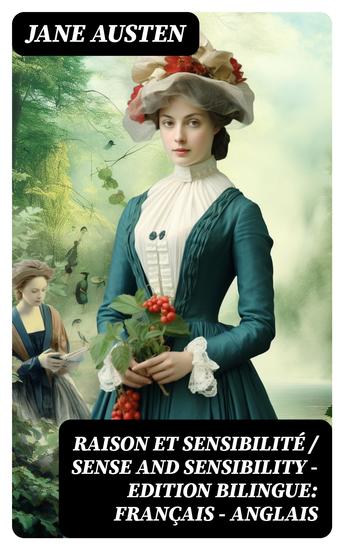
Raison et Sensibilité Sense and Sensibility - Edition bilingue: français - anglais - Enriched edition - cover

Raison et Sensibilité Sense and Sensibility - Edition bilingue: français - anglais - Enriched edition

Jane Austen

Publisher: DigiCat

  • 0
  • 0
  • 0

Summary

In her celebrated novel "Raison et Sensibilité / Sense and Sensibility," Jane Austen explores the complexities of love, morality, and social expectation in early 19th-century England. Through the contrasting characters of the rational Elinor Dashwood and the passionate Marianne Dashwood, Austen deftly employs irony and vivid characterizations to critique the limitations imposed on women during the Regency period. This bilingual edition not only showcases Austen's elegant prose but also allows readers to appreciate the nuances of her language in both French and English, enriching the experience of her intricate social observations. Jane Austen, an influential figure in English literature, penned this novel during a time when women's roles were predominantly restricted to domestic spheres. Her own experiences of navigating societal pressures as an unmarried woman likely informed her portrayal of the Dashwood sisters, as she expertly interweaves themes of financial security, social class, and emotional resilience. Austen's keen insights into human relationships reflect her acute understanding of social dynamics, making her works resonate even today. For those seeking a profound and engaging examination of familial bonds, societal norms, and personal growth, "Raison et Sensibilité / Sense and Sensibility" stands as a quintessential read. This bilingual edition invites readers of diverse backgrounds to appreciate Austen's masterful storytelling while reflecting on universal themes that remain relevant in contemporary discourse.

In this enriched edition, we have carefully created added value for your reading experience:
- A succinct Introduction situates the work's timeless appeal and themes.
- The Synopsis outlines the central plot, highlighting key developments without spoiling critical twists.
- A detailed Historical Context immerses you in the era's events and influences that shaped the writing.
- An Author Biography reveals milestones in the author's life, illuminating the personal insights behind the text.
- A thorough Analysis dissects symbols, motifs, and character arcs to unearth underlying meanings.
- Reflection questions prompt you to engage personally with the work's messages, connecting them to modern life.
- Hand‐picked Memorable Quotes shine a spotlight on moments of literary brilliance.
- Interactive footnotes clarify unusual references, historical allusions, and archaic phrases for an effortless, more informed read.
Available since: 11/18/2023.
Print length: 480 pages.

Other books that might interest you

  • Dracula's Guest - cover

    Dracula's Guest

    Bram Stoker

    • 0
    • 0
    • 0
    Title: Dracula’s Guest 
    Author: Bram Stoker 
    Narrator: Jonathan Dunne 
    Original Publication: 1914 
    Public Domain: Yes 
    Series Placement: Number 8 in the Timeless Terrors series 
    Description: 
    Dracula’s Guest by Bram Stoker is a haunting Gothic tale that serves as a chilling prelude to the legendary novel Dracula. First published posthumously in 1914, this short story follows an unnamed Englishman—implied to be Jonathan Harker—who strays from his coach during a journey through the Bavarian countryside on Walpurgis Night. 
    What begins as a simple detour soon descends into an atmosphere of mounting dread, as he encounters desolate graveyards, supernatural portents, and an unseen force that foreshadows the terror awaiting him in Transylvania. 
    Stoker weaves an unsettling blend of folklore, suspense, and atmospheric horror, capturing the eerie allure of the Gothic tradition. This recording, narrated by Amazon bestselling horror author Jonathan Dunne, immerses listeners in the tale’s dark landscapes and spectral menace. While the text itself is in the public domain, this performance is an original work and copyright © 2025 Jonathan Dunne. 
    Prepare to step into a shadowed world of ancient superstition and nocturnal terror—a fitting overture to one of literature’s most enduring vampire myths.
    Show book
  • Sun and Moon - A Classic Literary Short Story of Childhood Disillusionment and Emotional Awakening - cover

    Sun and Moon - A Classic...

    Katherine Mansfield

    • 0
    • 0
    • 0
    What happens when a magical night meant for children reveals how quickly wonder can fade? In “Sun and Moon” by Katherine Mansfield, two young siblings -Sun and Moon - eagerly await a grand evening party held by the adults in their home, convinced it will be the most exciting event of their lives. As preparations unfold and the house fills with lights, music, and unfamiliar guests, the children drift between anticipation and confusion. Their innocent expectations slowly collide with the rules and indifference of the adult world, reshaping how they see the celebration - and each other. With her signature psychological insight, Mansfield captures childhood perception with tenderness and precision, revealing the quiet shift from enchantment to awareness. “Sun and Moon” explores innocence, disappointment, and emotional awakening through a child’s eyes. Press play and experience one of her most memorable short stories - where a single evening gently alters how the world is seen.
    Show book
  • A Resurrection - From their pens to your ears genius in every story - cover

    A Resurrection - From their pens...

    H B Marriott Watson

    • 0
    • 0
    • 0
    The bookshelves of British literature are incredible collections that have gathered together centuries of very talented authors.  From these Isles their fame spread and whilst among their number many are now forgotten or neglected their talents endure.  Among them is H B Marriott Watson.
    Show book
  • Pygmalion - cover

    Pygmalion

    George Bernard Shaw

    • 0
    • 0
    • 0
    Pygmalion is a play by George Bernard Shaw, named after the Greek mythological figure. It premiered at the Hofburg Theatre in Vienna on 16 October 1913 and was first presented in German on stage to the public in 1913. Its English-language premiere took place at Her Majesty's Theatre in the West End in April 1914 and starred Herbert Beerbohm Tree as phonetics professor Henry Higgins and Mrs Patrick Campbell as Cockney flower girl Eliza Doolittle.
    In ancient Greek mythology, Pygmalion fell in love with one of his sculptures, which then came to life. The general idea of that myth was a popular subject for Victorian era British playwrights, including one of Shaw's influences, W. S. Gilbert, who wrote a successful play based on the story called Pygmalion and Galatea that was first presented in 1871. Shaw would also have been familiar with the musical Adonis and the burlesque version, Galatea, or Pygmalion Reversed. Shaw's play has been adapted numerous times, most notably as the 1938 film Pygmalion, the 1956 musical My Fair Lady and its 1964 film version.
    Shaw mentioned that the character of Professor Henry Higgins was inspired by several British professors of phonetics: Alexander Melville Bell, Alexander J. Ellis, Tito Pagliardini, but above all, the cantankerous Henry Sweet.
    Show book
  • Mysteries Of The Lost Continent Atlantis - cover

    Mysteries Of The Lost Continent...

    William Elliot

    • 0
    • 0
    • 0
    This classic work, written by Theosophist, W. Scott-Elliot, this book goes into detail about the lost city of Atlantis. The information came from C. W. Leadbeater, who said he received his information from astral clairvoyance. Scott-Elliot provides info on the people of Atlantis, such as their religion, races, different periods money, education, and much more.Atlantis, is a legendary island in the Atlantic Ocean, lying west of the Strait of Gibraltar. The principal sources for the legend are two of Plato’s dialogues, Timaeus and Critias. In the former, Plato describes how Egyptian priests, in conversation with the Athenian lawgiver Solon, described Atlantis as an island larger than Asia Minor and Libya combined and situated just beyond the Pillars of Hercules (the Strait of Gibraltar). About 9,000 years before the birth of Solon, the priests said, Atlantis was a rich island whose powerful princes conquered many of the lands of the Mediterranean until they were finally defeated by the Athenians and the latter’s allies. The Atlantians eventually became wicked and impious, and their island was swallowed up by the sea as a result of earthquakes. In the Critias, Plato supplied a history of the ideal commonwealth of the Atlantians.Medieval European writers who received the tale from Arab geographers believed the stories to be true, and later writers tried to identify it with an actual country. After the Renaissance, for example, attempts were made to identify Atlantis with America, Scandinavia, and the Canary Islands. The story of Atlantis, if Plato did not invent it, may in fact reflect ancient Egyptian records of a volcanic eruption on the island of Thera about 1500 BCE. This eruption, one of the most stupendous of historical times, was accompanied by a series of earthquakes and tsunamis that shattered civilization on Crete, thereby perhaps giving rise to the legend of Atlantis.
    Show book
  • Count Magnus - From their pens to your ears genius in every story - cover

    Count Magnus - From their pens...

    M R James

    • 0
    • 0
    • 0
    Montague Rhodes James is cited as perhaps the greatest English writer of ghost stories, an opinion few would disagree with. 
    James was born on 1st August 1862 at Goodnestone Parsonage in Kent, where his father was Curate but at age 3 the family went to live at Livermere, near Bury St Edmunds in East Anglia.  
    From early childhood he had a passion for mediaeval books and antiques. He was educated initially as a boarder at Temple Grove School in East Sheen, west London, before gaining a scholarship to Eton and thence Cambridge where he gained a double first, becoming a distinguished linguist and mediaevalist.  
    Before the Great War vacations were usually spent touring Europe absorbing cultures and references for his later writing. 
    A man of enormous knowledge it was said he timed his breakfast egg whilst he completed the Times crossword.  
    Many of his elegant yet terrifying tales were created by discarding the prevailing gothic cliches and placing his characters and narrative in a realistic setting.  Thereby the stories gained atmosphere and menace on a grand scale and he was famed as the originator of the antiquarian ghost story. 
    Although story-telling and writing these 30 or so tales was a hobby, when published their effect transformed the genre and still chill the bones in our more modern times. 
    James was also a medievalist scholar and translator whose work remains highly respected. He was also Provost of Eton College between 1918 and 1936. 
    M R James died on 12th June 1936 at Eton in Buckinghamshire.  He was 73.
    Show book