


Northanger Abbey (Legend Classics)
Jane Austen
Publisher: Legend Press
Summary
“If adventures will not befall a young lady in her own village, she must seek them abroad.”
Available since: 04/11/2025.

Publisher: Legend Press
“If adventures will not befall a young lady in her own village, she must seek them abroad.”
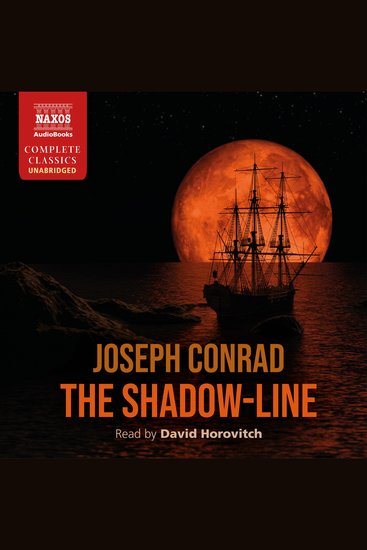
An unsettling tale of plague, drift and terror, The Shadow-Line documents a young seaman’s coming of age after he is recruited to captain a ship for the first time. Bad luck and disease haunt the inexperienced hero and his crew, and the evil legacy of the previous captain overshadows them with a feeling of supernatural menace. Against all odds, the young captain must get his crew through the Gulf of Siam to safety in Singapore, before they succumb to malaria and the curse of his mad predecessor. Written in 1915 and based on Conrad’s own experiences 27 years earlier, The Shadow-Line is a gripping take on the lines between youth and maturity, sanity and madness.Show book

'The Shadow in the Rose Garden'. Lawrence is often accused of misogyny and this story used as evidence against him. There is the simple but honest mine worker, who has taken on a wife who is 'above' him but who is struggling to understand her and her feelings for him. Slowly, the story unravels the woman's past. The reader cannot be entirely unsympathetic to her plight, Lawrence is too good a writer to let that happen, but her dishonesty has probably ruined two lives and our feelings are for the husband.Show book

A captain on the run from his demons…literally! A trapped countess fights for her life in an unfamiliar estate. A love-struck painter searches to save his love against the mysterious suitor that stole her. And more! The Watcher and Other Weird Stories contains six Victorian cautionary tales. Joseph Sheridan Le Fanu shines the light on not only the shadows in the cobblestone alleys but the shadows in the human soul. This is a fine new edition to the classic collection by one of the early masters of supernatural horror with a new foreword by Sam Knight! Bring your lantern, check your windows and paintings. You’ll love diving into these old haunts!Show book
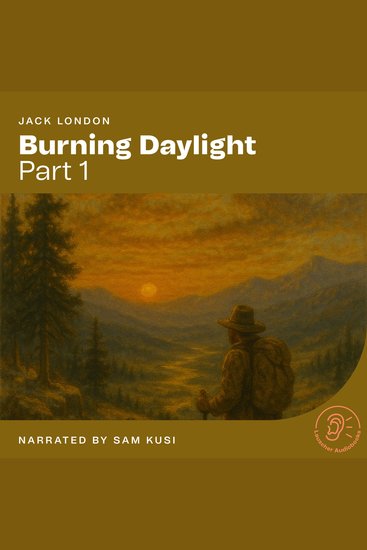
Burning Daylight, Part 1:
Burning Daylight takes place in the Yukon Territory in 1893. The main character, Elam Harnish, nicknamed "Burning Daylight" was the most successful entrepreneur of the Alaskan Gold Rush. The story of the main character was partially based upon the life of Oakland entrepreneur "Borax" Smith. Bringing his fortunes to the States he is cheated out of it by a crowd of money kings, and recovers it only at the muzzle of his gun. Embarking on a new life in California, he makes another fortune by underhanded means . . . only to find his corrupt life suddenly turned around by the love of a woman.
Show book

"Nostromo" is a novel by Joseph Conrad, published in 1904. It is considered one of Conrad's most significant works and a masterpiece of modernist literature. The novel is set in the fictional South American country of Costaguana, where political turmoil and the quest for wealth intersect. The story revolves around the enigmatic figure of Nostromo, an Italian expatriate and trusted longshoreman in the port of Sulaco. Conrad explores themes of greed, imperialism, and the corrupting influence of power while offering a complex narrative that weaves together the lives of various characters.Show book

The German tale of four brothers who set out to learn their crafts in the big wide world. When they return home as skilled men; a thief, an astronomer, a hunter, and a tailor their skills are challenged by their father - 'I should like to try what each of you can do in this way.Show book





