Junte-se a nós em uma viagem ao mundo dos livros!
Adicionar este livro à prateleira
Grey
Deixe um novo comentário Default profile 50px
Grey
Assine para ler o livro completo ou leia as primeiras páginas de graça!
All characters reduced
Mansfield Park - cover
LER

Mansfield Park

Jane Austen

Editora: Madeley publishing

  • 0
  • 0
  • 0

Sinopse

Mansfield Park is the third published novel by the English author Jane Austen, first published in 1814 by Thomas Egerton. A second edition was published in 1816 by John Murray, still within Austen's lifetime. The novel did not receive any public reviews until 1821.
The novel tells the story of Fanny Price, starting when her overburdened family sends her at the age of ten to live in the household of her wealthy aunt and uncle and following her development into early adulthood. From early on critical interpretation has been diverse, differing particularly over the character of the heroine, Austen's views about theatrical performance and the centrality or otherwise of ordination and religion, and on the question of slavery. Some of these problems have been highlighted in the several later adaptations of the story for stage and screen.
Disponível desde: 01/09/2024.

Outros livros que poderiam interessá-lo

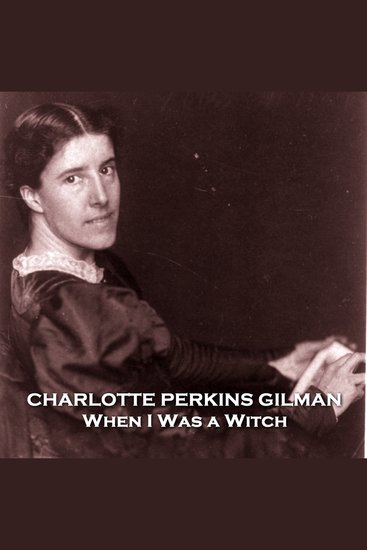
  • When I Was a Witch - From their pens to your ears genius in every story - cover

    When I Was a Witch - From their...

    Charlotte Perkins Gilman

    • 0
    • 0
    • 0
    Charlotte Perkins Gilman was born on 3rd July 1860 in Hartford, Connecticut, to an unaffectionate mother and a father who abandoned her and her older brother to a life of poverty. 
    Inevitably her schooling was limited and by 15 she had attended seven different schools but received only four years education.  However Charlotte was resourceful and did spend time with her father’s aunts – the suffragist Isabella Beecher Hooker and the ‘Uncle Tom Cabin’s’ author, Harriet Beecher Stowe as well as many hours at the public library studying ancient civilisations. 
    In 1878, she enrolled in classes at the Rhode Island School of Design where she met Martha Luther and they developed a close relationship until Luther married in 1881. Charlotte was devastated and detested romance and love until she met and married the artist Charles Walter Stetson.  
    Their only child, Katharine Beecher Stetson, was born in 1885 but left Charlotte with post-natal depression, then often dismissed as a case of hysteria or nerves.  Unsuited to domestic life she ruptured her life and moved to California with Katherine.  She divorced in 1894 and then sent Katharine east to live with her father and his second wife confirming that his paternal rights be acknowledged and that Katherine establish a relationship with her father. 
    After her mother died in 1893, Charlotte moved back east and became involved with her first cousin, Wall Street attorney, Houghton Gilman who she married in 1900. After his death she moved back to California, where Katherine now lived.   
    Her most popular story is ‘The Yellow Wallpaper’ which touched on her own post-partum depression and underlined the need for women to be responsible for their mental and physical well-being, as the narrator is ordered by her husband/doctor to take compete rest in her room where she is isolated and becomes obsessed with the revolting yellow wallpaper.   
    She wrote other notable short stories the best of which we also include.   
    Charlotte lectured widely for social reform, wrote important non-fiction works that questioned our patriarchal system and left a legacy as a leading and positive spokesperson for feminism.  
    She was diagnosed with incurable breast cancer in 1932 and, as she wrote in her suicide note and autobiography, she ‘chose chloroform over cancer’    
    Charlotte Perkins Gilman took her own life on 17th August 1935, aged 75, in Pasadena, California.
    Ver livro
  • The Master Key System - cover

    The Master Key System

    Charles F. Haanel

    • 0
    • 0
    • 0
    The Master Key System by Charles F. Haanel is offered here in a clean English digital edition prepared for fluent ebook reading. The work stands within classics and gives modern readers direct access to a public-domain classic with navigable structure and a restrained typographic presentation. The opening pages establish the book's atmosphere with this first movement: Nature compels us all to move through life. We could not remain stationary however much we wished. Every right-thinking person wants not merely to move through life like a sound-producing, perambulating plant, but to develop - to improve - and to continue the development mentally to the close of phy This edition is suited to readers who want a reliable, uncluttered version of the text for study, rediscovery, and sustained reading.
    Ver livro
  • The War of the Worlds - cover

    The War of the Worlds

    Herbert George Wells

    • 0
    • 0
    • 0
    H.G. Wells' classic tale of alien invasion has to this day never been out of print. Like many works of the era, it was originally published as a serial - though the publisher, Pearson's Magazine, demanded to know the ending before committing to publication.
    The War of the Worlds, with its matter-of-fact narrative style and deft mixture of contemporary science and fictionalized interstellar war machines, became an instant hit. Its themes of colonialism, social Darwinism, good and evil, and total war still resonate with modern-day readers, so much so that it's been continuously adapted for screen, radio, television, comics, and print.
    Ver livro
  • A Book of Ghosts: 2 - cover

    A Book of Ghosts: 2

    Bram Stoker, John Buchan, H. G....

    • 0
    • 0
    • 0
    "Some Spirits Return Not for Rest, but for Reckoning."
    
    The journey into the twilight world of S. Baring-Gould continues. In this second volume of his celebrated supernatural works, the master of the Victorian "weird tale" delves even deeper into the shadows of the English countryside. These are stories for the dead of winter—narratives where the past is a living, breathing entity that refuses to stay buried beneath the floorboards of history.
    
    The Architect of Atmospheric Terror: Baring-Gould remains unsurpassed in his ability to find terror in the everyday. Volume 2 elevates his signature style, blending his expertise as an antiquarian with a dark, psychological insight into the human condition. Here, the haunting is often a social or moral consequence; a ghost is not just a spirit, but a debt that must be paid. Whether exploring the silent corridors of a crumbling manor or the windswept desolation of a country churchyard, Baring-Gould crafts an atmosphere of "uncomfortable reality" that has influenced generations of supernatural writers.
    
    As a peer to the great ghost story writers of the late 19th century, Baring-Gould provides a crucial link between traditional folklore and modern psychological horror. This volume is an essential cornerstone for collectors of classic ghost stories, Victorian literature, and British folk horror.
    
    The candles are dimming. Buy "A Book of Ghosts: Volume 2" today and settle in for a night of elegant, bone-chilling terror.
    Ver livro
  • Middlemarch (Book 2: Old and Young) - cover

    Middlemarch (Book 2: Old and Young)

    George Eliot

    • 0
    • 0
    • 0
    Middlemarch (Book 2: Old and Young), A Study of Provincial Life is a novel by English author George Eliot, the pen name of Mary Ann Evans. It appeared in eight installments (volumes) in 1871 and 1872. Set in Middlemarch, a fictional English Midlands town, from 1829 to 1832, it follows distinct, intersecting stories with many characters. Issues include the status of women, the nature of marriage, idealism, self-interest, religion, hypocrisy, political reform, and education. Leavened with comic elements, Middlemarch approaches significant historical events in a realist mode: the Reform Act 1832, early railways, and the accession of King William IV. It looks at medicine of the time and reactionary views in a settled community facing unwelcome change. Eliot began writing the two pieces that formed the novel in 1869–1870 and completed it in 1871. Initial reviews were mixed, but it is now seen widely as her best work and one of the great English novels.
    Ver livro
  • To Bow Bridge - From their pens to your ears genius in every story - cover

    To Bow Bridge - From their pens...

    Arthur Morrison

    • 0
    • 0
    • 0
    Arthur Morrison was born on November 1st, 1863, in Poplar, in the East End of London. From the age of 8, after the death of his father, he was brought up, along with two siblings, by his mother, Jane. 
    Morrison spent his youth in the East End. In 1879 he began as an office boy in the Architect's Department of the London School Board and, in his spare time, visited used bookstores in Whitechapel Road. He first published, a humorous poem, in the magazine Cycling in 1880. 
    In 1885 Morrison began writing for The Globe newspaper. In 1886, he switched to the People's Palace, in Mile End and, in 1888, published the Cockney Corner collection, about life in Soho, Whitechapel, Bow Street and other areas of London.  
    By 1889 he was an editor at the Palace Journal, reprinting some earlier sketches, and writing commentaries on books and articles on the life of the London poor. 
    By 1890 he was back at The Globe and published ‘The Shadows Around Us’, a supernatural collection of stories.  Also at this time he began to develop a keen interest in Japanese Art. 
    In October 1891 his short story A Street appeared in Macmillan's Magazine. The following year he married Elizabeth Thatcher and then befriended publisher and poet William Ernest Henley for whom he wrote stories of working-class life in Henley's National Observer between 1892-94.  
    In 1894 came his first detective story featuring Martin Hewitt, described as "a low-key, realistic, lower-class answer to Sherlock Holmes”. 
    Morrison published A Child of the Jago in 1896 swiftly followed by The Adventures of Martin Hewitt. 
    In 1897 Morrison wrote seven stories about Horace Dorrington, a deeply corrupt private detective, described as "a cheerfully unrepentant sociopath who is willing to stoop to theft, blackmail, fraud or cold-blooded murder to make a dishonest penny."  
    To London Town, the final part of a trilogy including Tales of Mean Streets and A Child of the Jago was published in 1899. Following on came a wide spectrum of works, including novels, short stories and one act plays.  
    In 1911 he published his authoritative work Japanese Painters, illustrated with art from his own collection.  
    Although he retired from journalistic work in 1913 he continued to write about Art.  
    In his last decades Morrison served as a special constable, and reported on the first Zeppelin raid on London. Tragically in 1921 his son, Guy, who had survived the war, died of malaria.  
    The Royal Society of Literature elected him as a member in 1924 and to its Council in 1935.   
    In 1930 he moved to Chalfont St Peter, Buckinghamshire. Here he wrote the short story collection Fiddle o' Dreams and More. 
    Arthur Morrison died on the 4th December 1945.  He was 82 years.
    Ver livro