Join us on a literary world trip!
Add this book to bookshelf
Grey
Write a new comment Default profile 50px
Grey
Subscribe to read the full book or read the first pages for free!
All characters reduced
Emma - cover

Emma

Jane Austen

Publisher: apebook

  • 0
  • 0
  • 0

Summary

Emma is one of the famous novels by Jane Austen and was first published in 1816.

Unlike most of the other female protagonists in Austen´s novels the heroine Emma Woodhouse shows no real romantic interest in men. Instead of getting involved into a relationship herself she prefers meddling in other people´s lives. She is absolutely self-satisfied, although the conclusions of her imagination and perceptions often lead her astray. But finally, it comes to her self-revelation concerning her own true affections.

“I am going to take a heroine whom no one but myself will much like.” (Jane Austen)

Emma is one of the best-loved and essential classics in English literature. Like Austen´s other novels it retains a fascination for modern readers, and has been adapted for several films as well as for a long list of dramatic plays. Some critics place this novel even higher than Austen´s masterpiece Pride and Prejudice.
 
Available since: 12/29/2022.

Other books that might interest you

  • The Web of the Golden Spider - cover

    The Web of the Golden Spider

    Frederick O. Bartlett

    • 0
    • 0
    • 0
    The listener gets transported into a world filled with action, travel, betrayal and greed. The story is complicated and multifaceted involving a journey across the sea, different countries and a potential revolution; but the core of it is of our hero rescuing his girl and trying to find the famous treasure of Eldorado. Extract: "Old man," he said with a new ring in his voice, "you must follow me the rest of this journey. I've got down to one thing now––just one thing. I'm going to find this girl––I'm going to take her into these two arms––and I'm going to carry her out of here and never let her go. Do you understand? And there isn't gold enough, nor men enough, nor heathen images enough in the world to stop me now. We're going back, Stubbs––the girl and I––we're going back, and God help those who get in our way." Artist Bio Author: Frederick O. Bartlett (1876-1945), was an American writer. Artist Bio Jack Brown: Jack Brown is a passionate reader of classic and genre oriented literature. He enjoys creating high quality audio books.
    Show book
  • The Pickwick Papers - cover

    The Pickwick Papers

    Charles Dickens

    • 0
    • 0
    • 0
    Nearly two centuries after The Pickwick Papers first appeared in 1837, listeners continue to enjoy the vigorous humor and heartwarming optimism of Dickens' first great literary achievement. Actor Paul Scofield evokes all the warmth and laughter of the unlikely adventures of the immortal Samuel Pickwick, Esq., and the other members of the Pickwick Club. Abetted by Pickwick's faithful manservant, Sam Weller, the Pickwickians bumble through hilarious misadventures, romantic escapades, and other twists of plot, encountering many delightfully Dickensian characters along the way.
    Show book
  • Lysistrata - cover

    Lysistrata

    Aristophenes

    • 0
    • 0
    • 0
    The women of Athens are sick of the Peloponnesian war that has dragged on for year after year after year, causing great hardship to everyone. They decide to deny the men sex until they agree to make peace, using the one thing that perhaps men enjoy more than killing each other. Does it work? Listen and find out. This comedy by Aristophanes was first performed in 411 BC
    Show book
  • The Snowstorm - Author of War & Peace Anna Karenina and countless other classics Russian realist Tolstoy brings a harsh look at life in Winter - cover

    The Snowstorm - Author of War &...

    Leo Tolstoy

    • 0
    • 0
    • 0
    Leo Tolstoy was born in 1828 in the Russian province of Tula to a wealthy noble family. As a child, he had private tutors but he showed little interest in any formal education. When he went to the University of Kazan in 1843 to study oriental languages and law, he left without completing his courses.  Life now was relaxed and idle but with some writing also taking place.  Gambling debts forced an abrupt change of path and he joined the army to fight in the Crimean War.  He was commended for his bravery and promoted but was appalled at the brutality and loss of life.  He recorded these and other earlier experiences in his diaries which formed the basis of several of his works. 
     
    In 1852 ‘Childhood’ was published to immediate success and was followed by ‘Boyhood’ and ‘Youth’. 
     
    His experience in the army and the horrors he witnessed resulted in ‘The Cossacks’ in 1862 and the trilogy ‘Sevastopol Tales’. After the war he travelled around Europe, visiting London and Paris and meeting such luminaries as Victor Hugo and Charles Darwin.  
     
    It was now that Tolstoy began his masterpiece, ‘War and Peace’. Published in 1869 it was an epic work that changed literature. He quickly followed this with ‘Anna Karenina’.  
     
    These successes made Tolstoy rich and helped him accomplish many of his dreams but also brought problems as he grappled with his faith and the lot of the oppressed poor. These revolutionary views became so popular that the authorities now kept him under surveillance.  
     
    He led a life of asceticism and vegetarianism and put his socialist ideals into practice by establishing numerous schools for the poor and food programmes. He also believed in giving away his wealth, which caused much discord with his wife.  
     
    His writing continued to bring forth classics such as ‘The Death of Ivan Ilyich’ and many brilliant and incisive short stories such as ‘How Much Land Does A Man Need’.  
     
    In 1901 Tolstoy was excommunicated from the Church and controversially deselected for the Nobel Prize for Literature. 
     
    Whilst undertaking a pilgrimage by train in October 1910 with his daughter Aleksandra he caught pneumonia in the nearby town of Astapovo.  Leo Tolstoy died on November 9th, 1910, he was 82. 
     
    In this much acclaimed short story Tolstoy’s characters are engulfed by a huge snowstorm which descends upon them and puts the successful conclusion of their journey into perilous doubt.
    Show book
  • Young Magic - Power may be good by nature or evil in design - cover

    Young Magic - Power may be good...

    Helen Simpson

    • 0
    • 0
    • 0
    Helen de Guerry Simpson was born in Sydney, Australia on the 1st December 1897.  As a 17 year old she was sent to France and then on to Oxford, England to complete her education.  Whilst there she founded the Oxford Women's Dramatic Society.  She was sent down in 1921 apparently for breaking regulations prohibiting men and women students from acting together. 
     
    Her early work of poems, plays, a novel and a collection of short stories found little commercial success. It was only with ‘Boomerang’ in 1932 that her success was established.  Helen continued to write across the genres and by now had become intensely interested in politics.  She was selected to run by the Liberals for the Isle of Wight parliamentary seat in the expected General Election of 39 or 40. 
     
    Sadly this coincided with the rapid onset of cancer and her health very quickly deteriorated.   
     
    Helen Simpson died in Worcestershire, England on the 14th October 1940.  She was 42. 
     
    In ‘Young Magic’ a young girl has definite supernatural abilities which she attempts to control.  Years later when she returns home and begins a relationship those abilities begin to reappear in a more sinister form.
    Show book
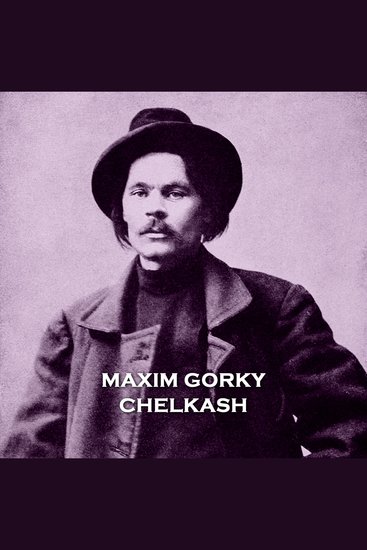
  • Chelkash by Maxim Gorky - A small time thief is caught up in a larger scheme testing his willpower and showing the dangers of greed - cover

    Chelkash by Maxim Gorky - A...

    Maxim Gorky

    • 0
    • 0
    • 0
    Alexei Maximovich Peshkov was born on 28th March 1868, in Nizhny Novgorod, Russia. 
     
    Better known as Maxim Gorky he was orphaned at 11 and ran away from home at 12.  At 19 he had already attempted suicide and thereafter travelled, by foot, across the Russian Empire for 5 years. 
     
    His first book ‘Essays & Stories’ in 1898 was a sensation and so began a long career as an author of short stories, novels and plays.  Gorky saw writing as a moral and political act that would help to change the unjust world around him.  He was an ardent early advocate of the emerging Marxist movement and publicly opposed the Tsarist regime leading several times to his arrest.  
     
    In 1904 he began his own theatre but the censor banned every play and Gorky was forced to abandon the project. 
     
    But Gorky was a financially successful author, editor, and playwright and gave monies to political parties as well as for civil rights and social reform.  The brutal shooting of workers, which set in motion the Revolution of 1905, pushed Gorky more decisively toward radical solutions.  
     
    In 1906 he went to the United States to raise funds for the Bolsheviks. Those experiences including a scandal over travelling with his lover and not his wife deepened his contempt for the ‘bourgeois soul.’ 
     
    Gorky now moved to Capri in Italy, both for health reasons and to escape the increasingly repressive times in Russia.  
     
    An amnesty for the 300th anniversary of the Romanov dynasty saw him return to Russia in 1914. His politics remained close to the Bolshevik cause.  But soon, after the 1918 revolution, his essays referred to Lenin as a tyrant for his senseless arrests and repression.  He was soon appealing to the outside world for food aid after the catastrophic crop failure. 
     
    In October 1921 Gorky returned to Italy, now in Fascist hands, and settled in Sorrento until 1932.  His health worsened with the onset of tuberculosis. 
     
    He wrote several successful books there but now decided to find an understanding with the communist regime. Stalin invited him home and his return was hailed as a major propaganda victory.  He was decorated with the Order of Lenin, and a province, a park, and various streets re-named in his honour. 
     
    But he had his faults too.  In 1933, Gorky co-edited a book on the White Sea-Baltic Canal and denied even a single prisoner died during its construction, but thousands had. As well, knowing that some Nazis were homosexual, a phrase was attributed to him that said ‘exterminate all homosexuals and fascism will vanish’.  Although he was himself was quoting another he was decidedly homophobic. 
     
    With the increase of Stalinist repression in 1935 Gorky was placed under unannounced house arrest. 
     
    Maxim Gorky died on the 18th June 1936 from pneumonia.  He was 68. 
     
    Stalin and Molotov were among those who carried Gorky's urn of ashes at his funeral.  
     
    In Gorky’s story, a thief, Chelkash, ensnares a young man into his scheme to steal silk from a ship.  When he then sells the stolen goods he is set upon by the young accomplice.  What happens then is as unexpected as it is remarkable.
    Show book