¡Acompáñanos a viajar por el mundo de los libros!
Añadir este libro a la estantería
Grey
Escribe un nuevo comentario Default profile 50px
Grey
Suscríbete para leer el libro completo o lee las primeras páginas gratis.
All characters reduced
The Fall of the Assads - The End of Half a Century of Tyranny in Syria and How It Will Change the World - cover

The Fall of the Assads - The End of Half a Century of Tyranny in Syria and How It Will Change the World

James Snell

Editorial: Gibson Square

  • 0
  • 0
  • 0

Sinopsis

In this gripping and concise account, Middle East expert James Snell delves deep into the collapse of the al-Assads' dictatorship, tracing their brutal atrocities from 1970 and what it means for the West. Through detailed narratives and eyewitness testimonies, he chronicles the relentless oppression and war crimes that fuelled the opposition's struggle. The fall of Damascus in December 2024 not only marked the end of over 50 years of Assad-family rule but also provided an unexpected development in the international drug trade, terrorism, Russia's strategic stronghold in the Mediterranean, highlighting significant geopolitical shifts. James currently writes for the Telegraph and Spectator on Syria.
Disponible desde: 17/07/2025.
Longitud de impresión: 160 páginas.

Otros libros que te pueden interesar

  • Pragmatism - cover

    Pragmatism

    William James

    • 0
    • 0
    • 0
    In this book, James argues that the most important criterion for evaluating ideas and beliefs is their practical usefulness in real-life situations, rather than their abstract truth or correspondence to reality. James introduces the concept of "pragmatism," which he defines as a method of approaching philosophical questions by examining their practical consequences. He argues that truth is not an absolute and fixed entity, but rather a relative and changing one that is determined by the practical outcomes of our beliefs and actions. Read in English, unabridged.
    Ver libro
  • Brainjacking - The Science of Influence and Manipulation - cover

    Brainjacking - The Science of...

    Brian Clegg

    • 0
    • 0
    • 0
    Brainjacking takes us on a journey through advertising and marketing's attempts to understand and influence our thoughts and desires, from the earliest billboards to the technologies of the future. To discover how science intersects with our desires and decisions, the book pulls together three strands that have a huge impact on our lives: advertising, how much privacy we can and should have in the new electronic world, and how to draw the line been information and influence. 
     
    With Brian Clegg as your guide, this is a book that will help you unpick the insidious world of brainjacking. Expertly pulling together different strands on disparate topics including AI, Big Data, subliminal advertising and more, this essential investigation shows how new and old technology and science can be combined to influence human behaviour and beliefs.
    Ver libro
  • Bloody Verrières: The I SS-Panzerkorps Defence of the Verrières-Bourguebus Ridges - Volume II: The Defeat of Operation Spring and the Battles of Tilly-la-Campagne 23 July–5 August 1944 - cover

    Bloody Verrières: The I...

    Arthur W. Gullachsen

    • 0
    • 0
    • 0
    Detailed examination of how the I. SS Panzerkorps faced Anglo-Canadian offensives in the area of the Verrières and Bourguébus ridges during the battle for Normandy.South of the Norman city of Caen, Verrières Ridge was seen a key stepping-stone for the British Second Army if it was to break out of the Normandy bridgehead in late July 1944. Imposing in height and containing perfect terrain for armored operations, the Germans viewed it as the lynchpin to their defenses south of the city of Caen and east of the Orne river.  Following the failure of British Operation Goodwood on 18–20 July and the containment of the Canadian Operation Atlantic, further Allied attacks to seize the ridge would have to defeat arguably the strongest German armored formation in Normandy: The I. SS-Panzerkorps ‘Leibstandarte.’ In the second volume of this two-volume work, the fighting of 23 July–3 August is chronicled in detail, specifically the premier Anglo-Canadian operation to capture Verrières Ridge, Operation Spring on 25 July. Designed as an attack to seize the ridge and exploit south with armor, this battle saw the 2nd Canadian Corps attack savaged again by German armored reserves brought in specifically to defeat another Goodwood.  Not satisfied with this defensive victory, German armored forces would then seek to restore an earlier defensive line further north, attacking to destroy the 2nd Canadian Infantry Division. Largely unknown, these were some of the strongest and most successful German armored operations to take place in the Normandy campaign.
    Ver libro
  • History of Argentina - From the Arrival of the Spanish to the 20th Century - cover

    History of Argentina - From the...

    Kelly Mass

    • 0
    • 0
    • 0
    Argentina's history is a rich tapestry that can be divided into four distinct periods: the pre-Columbian or early history (up to the sixteenth century), the colonial period (1530–1810), the nation-building period (1810–1880), and contemporary history (from approximately 1880 to the present). Each phase shaped the region, transforming it from sparsely inhabited land into the modern Argentine Republic. 
    Human presence in what is now Argentina dates back approximately 13,000 years, with evidence of early settlements in Patagonia. Archaeological findings suggest human activity through the Paleolithic, Mesolithic, and Neolithic periods. However, a significant depopulation of large interior areas occurred between 4000 and 2000 B.C., likely due to a prolonged period of drought. Over time, indigenous peoples in the region evolved into diverse cultural groups with varying levels of complexity. 
    Uruguayan archaeologist Raúl Campá Soler categorized Argentina’s indigenous peoples into three groups: basic hunters and food gatherers without pottery; advanced gatherers and hunters; and basic farmers who developed pottery. The Pampas and Patagonia were dominated by the first group, while the second included tribes like the Charrúa, Minuane, and Guaraní. The third group, inhabiting regions such as the Quebrada de Humahuaca, adopted farming practices and pottery.
    Ver libro
  • The History of England Volume 3 - From Henry VII to Mary - cover

    The History of England Volume 3...

    David Hume

    • 0
    • 0
    • 0
    The accession of Henry VII (reigned 1485-1509) to the throne of England, leading to the end of the Wars of the Roses, opened the door to Tudor rule, setting a different character to the monarchy. In Volume 3 of The History of England, Hume traces the story through turbulent and unpredictable times, the reigns of Henry VII, Henry VIII, Edward VI, the brief period of Jane Grey; and concluding with the brutal religious persecutions of Mary I.  
    Initially, Henry VII had to establish royal control and legitimacy. With his customary clarity and natural story-telling style, Hume tells how Henry established his authority with a firm, ruthless but sure hand. He suppressed insurrections, faced French incursions into Brittany, instability in Scotland, and other fractious relationships with Spain and Flanders. Just as important was his commitment to improving the monetary state of the country after the turmoil of the Wars of the Roses. As a result, he was able to pass on a wealthier England to his successor. 
    Henry VIII (reigned 1509-1547) was welcomed as a huge contrast, from the ‘jealous, severe and avaricious’ character of his father. The bold, youthful and courageous prince of just 18 years engendered much hope in the populace. But his character resulted in a reign of much turbulence, from his marital profligacy as he searched for an heir, to his departure from the religious overlordship of the Pope.  Under his flamboyant rule the country was to experience huge uncertainties, with expeditionary failures abroad, introduction of the new religion, the dissolution of monasteries and constant financial challenges. 
    His son, Edward VI (reigned 1547-1553) raised hopes as he was known to be a committed Protestant. But his early death at the age of 15, (apart from the short, disputed reign of Lady Jane Grey), saw the fiercely Catholic Mary (1553-1558) accede to the throne. Predictably, the five years of her monarchy was dominated by religious persecution as an increasingly embittered sovereign sought to impose Catholicism on the nation. Her death after only five years left England in a parlous state. 
    As always, Hume’s characterful but well-informed view of events brings the launch of the Tudor monarchy to life. He deals not only with the major events and personalities, but by introducing many less well-known individuals and their actions, brings a vivid quality to the story of England as it unfolds.
    Ver libro

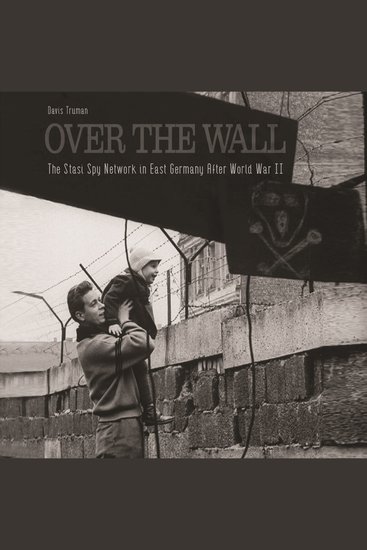
  • Over The Wall - The Stasi Spy Network in East Germany After World War II - cover

    Over The Wall - The Stasi Spy...

    Davis Truman

    • 0
    • 0
    • 0
    Through meticulous research and compelling analysis, this book unravels the insidious politicization of intelligence under Ulbricht's regime. Witness accounts clash with Stasi reports, revealing a stark disparity between the reality of East German sentiments and the distorted narrative peddled to the politburo. As labor unrest simmered beneath the surface, the regime's reliance on manipulated intelligence proved catastrophic. 
    The narrative climaxes with the June 17, 1953 uprising - a pivotal moment in East German history. Amidst the enthusiasm of a million citizens rising against oppression, the fragility of Ulbricht's regime is laid bare. "Over the Wall" lays bare the extent of Ulbricht's manipulation and its profound impact on the tumultuous events of 1953, offering a chilling reminder of the dangers of wielding truth as a weapon.
    Ver libro