Join us on a literary world trip!
Add this book to bookshelf
Grey
Write a new comment Default profile 50px
Grey
Subscribe to read the full book or read the first pages for free!
All characters reduced
Richard of Jamestown - A Story of the Virginia Colony - cover

Richard of Jamestown - A Story of the Virginia Colony

James Otis

Publisher: Good Press

  • 0
  • 0
  • 0

Summary

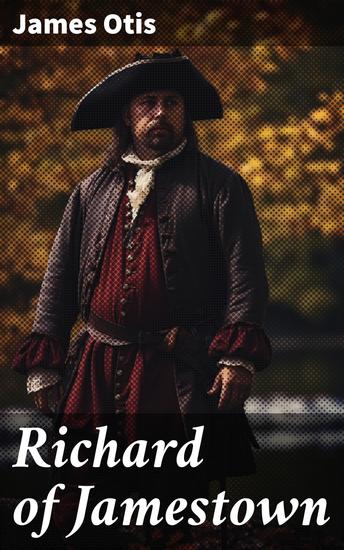
In "Richard of Jamestown," James Otis crafts a compelling historical narrative centered around the life of a young boy in the early 17th century, as he navigates the challenges and adventures of colonial America. Otis employs a vivid, accessible style that blends rich descriptions with dialogue, allowing readers to immerse themselves in the vivid realities of Jamestown's founding. This work not only captures the spirit of exploration and survival but also integrates themes of friendship, loyalty, and the struggle for identity amidst cultural clashes, situating the novel within the larger context of American historical fiction aimed at young readers. James Otis was deeply influenced by the prevailing spirit of nationalism and his interest in American history, which emerges from his background as an educator and a writer dedicated to instilling civic virtue in youth. His exploration of characters from earlier American history reflects his commitment to imparting moral lessons and fostering a sense of connection to the nation's past. Otis'Äôs enthusiasm for storytelling and his pedagogical inclinations heighten the educational value of this historical narrative. "Richard of Jamestown" is recommended for readers who seek an engaging introduction to American colonial history through the eyes of a relatable protagonist. This novel not only serves as a delightful read but also offers valuable insights into the formative experiences that shaped America, making it a must-read for both young audiences and history enthusiasts.
Available since: 11/10/2023.
Print length: 74 pages.
Other books that might interest you

  • Pandya Empire - Tamil Kingdoms in the Shadow of Rome - cover

    Pandya Empire - Tamil Kingdoms...

    Rolf Hedger

    • 0
    • 0
    • 0
    The Pandya dynasty was one of the most ancient and influential Tamil kingdoms of South India, with origins deeply rooted in both history and legend. The earliest references to the Pandyas appear in Tamil Sangam literature, which dates back over two thousand years. These texts describe the Pandyas as powerful rulers of Madurai, a city that would become the cultural and political heart of their kingdom. The dynasty’s history is intertwined with mythology, particularly in Tamil literary traditions that claim the Pandyas descended from the gods. Some legends suggest that the first Pandya king was Kulasekara Pandya, a ruler said to be divinely blessed by Lord Shiva himself. 
    Historically, the Pandyas are believed to have established their rule as early as the 6th century BCE, although their presence likely predates this period. The Sangam Age, which spanned from roughly 300 BCE to 300 CE, marks the first well-documented era of Pandya rule. During this time, the kingdom flourished due to its strong trade networks, military strength, and patronage of Tamil poets and scholars. The Pandyas ruled alongside the Chola and Chera dynasties, forming a triad of powerful Tamil polities that competed for dominance in South India. These three kingdoms frequently engaged in alliances, conflicts, and shifting power dynamics that shaped the region’s history. 
    The early Pandyas built their capital in Korkai, an important port city known for its pearl fisheries and maritime trade. However, as their kingdom expanded, Madurai became the political and cultural center of their rule. The Pandyas were known for their patronage of literature and arts, particularly the Tamil Sangam assemblies, where poets and scholars composed some of the most revered works in Tamil history. This period saw the flourishing of Tamil culture, with kings promoting literary works that detailed heroism, love, and governance.
    Show book
  • Frontal Fatigue - The Impact of Modern Life and Technology on Mental Illness - cover

    Frontal Fatigue - The Impact of...

    MD Mark D. Rego

    • 0
    • 0
    • 0
    If technology is making modern life easier, why are we suffering from more stress and mental illness? 


    In this trailblazing book, Dr. Mark Rego, who has practiced psychiatry in the community and taught at Yale for thirty years, explores why mental illness and stress are skyrocketing alongside technology that was ostensibly created to improve our world. Using decades of experience and pioneering scientific research, Dr. Rego presents his innovative hypothesis of Frontal Fatigue, the background condition from which many of us now suffer. Frontal Fatigue exists when the unique pressures of modern life overwhelm the prefrontal cortex, the part of our brains that can make us susceptible to mental illness. 


    Frontal Fatigue examines: why mental illness is increasing in modern times; how the demands of our technology-centric lives place countless people at risk for mental illness and lacking in basic psychological well-being; and solutions for finding stability and peace within the noise of modern life. This astute perspective in the battle for our collective and individual peace of mind illustrates why mental illness is on the rise in these technologically advanced times and how we can act to adjust our lives in response.
    Show book
  • The American Scholar - cover

    The American Scholar

    Ralph Waldo Emerson

    • 0
    • 0
    • 0
    In 1837, Ralph Waldo Emerson took the stage at Harvard and delivered what would become one of the most influential speeches in American intellectual history. The American Scholar was not just a lecture—it was a manifesto, a call to arms for a young nation searching for its own cultural identity. Emerson challenged his audience to break free from European intellectual traditions, urging them to think for themselves, to create, and to embrace the vast potential of the American mind.
    This work is more than philosophy; it is an invitation to independence—not just political, but intellectual and spiritual. Emerson paints the scholar not as a passive keeper of knowledge, but as an active force, shaped by nature, books, and action. He argues that true learning is not about memorizing the past, but about engaging with the present and forging the future. His words ignited generations of thinkers, from Henry David Thoreau to Walt Whitman, and continue to inspire anyone who dares to challenge convention.
    The American Scholar is a timeless reminder that education is not about repetition, but about revolution. It is a celebration of the individual mind, the courage to question, and the boundless potential of human thought.
    Show book
  • The Iran-Iraq War - A Decade of Conflict - cover

    The Iran-Iraq War - A Decade of...

    Nova Ashford

    • 0
    • 0
    • 0
    The Iran-Iraq War, which raged from 1980 to 1988, was one of the longest and most devastating conflicts of the 20th century. To understand its eruption, one must look back at the complex web of historical grievances, ideological clashes, and strategic calculations that set the stage for war. The roots of the conflict lay not only in territorial disputes and regional rivalry but also in the dramatically shifting political landscapes within both nations. 
    Iran, under the rule of Shah Mohammad Reza Pahlavi until 1979, had enjoyed a close relationship with the West, particularly the United States. The Shah’s regime was modernizing but also increasingly authoritarian, and his reliance on foreign powers alienated large segments of the Iranian population. This discontent culminated in the Islamic Revolution of 1979, which swept Ayatollah Ruhollah Khomeini to power and replaced the monarchy with a theocratic republic. The revolution shocked the region, especially its Sunni neighbors and secular governments, as Iran began exporting its revolutionary ideology and calling for the overthrow of what it labeled as corrupt, un-Islamic regimes. 
    Iraq, ruled by the secular Ba'ath Party under Saddam Hussein, was especially alarmed. Not only did Iraq share a long and often contentious border with Iran, but it also had a significant Shi’a majority population that Saddam feared could be influenced by Khomeini’s message. Additionally, Iraq had longstanding territorial disputes with Iran, particularly over the Shatt al-Arab waterway, a critical channel for oil exports. Saddam believed that post-revolution Iran, weakened by purges and internal strife, presented a unique opportunity for Iraq to assert dominance in the region.
    Show book
  • Rome’s Legacy - Enduring Impacts on the World (3 in 1) - cover

    Rome’s Legacy - Enduring Impacts...

    Rogan Fish

    • 0
    • 0
    • 0
    This book bundle is a captivating exploration of the cultural and intellectual legacy of one of history’s most influential civilizations. The first section delves into the art of ancient Rome, from vivid frescoes that adorned villa walls to intricate mosaics that decorated public spaces. It also covers sculpture and portraiture, showcasing how Roman artists blended Greek traditions with their own flair to immortalize emperors, gods, and everyday citizens in marble and bronze. 
    The second part of the book is a deep dive into Roman architecture, one of the most enduring hallmarks of the empire. You’ll explore the design and engineering behind iconic structures like the Colosseum, the Pantheon, and massive bathhouses. This section breaks down the architectural innovations—such as arches, domes, and the groundbreaking use of concrete—that enabled Rome to construct buildings that still awe the world today. It also covers city planning and how Rome influenced future Western architecture. 
    The final section turns to Roman innovation, highlighting practical inventions that supported the empire's growth and efficiency. Learn how aqueducts transported water across miles, how paved roads unified the empire, and how engineering marvels enabled a high standard of urban life. From glass blowing to heating systems and even early newspapers, Roman ingenuity touched every corner of society. Cultural Achievements is a richly illustrated and accessible guide to the brilliance of Roman creativity—and how it shaped the world we live in today.
    Show book
  • Beauty in the Escape - cover

    Beauty in the Escape

    Lena Nguyen

    • 0
    • 0
    • 0
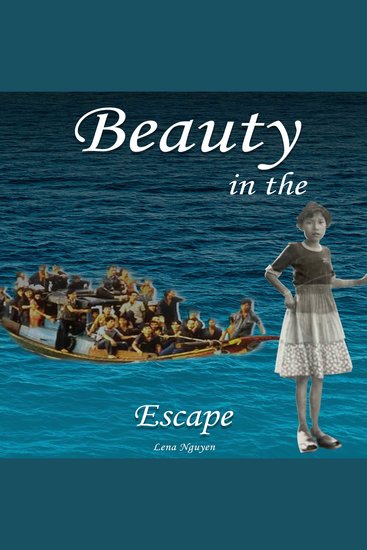
    Hailing from a small village in the beautiful land of Vietnam, young Lena enjoys living out her simple existence. Her world revolves around her grandma, siblings, school, and all her village friends, until one day, when a detonating bomb announced the beginning of a devastation that would go down in history—The Vietnam War. Having never known her father and being estranged from her mother, who resides in the US with her American husband, she soon finds herself fighting the treacherous waters of the sea in a small boat, seeking refuge from the war with a daunting task glowering down at her—starting a new life in a foreign land, under the care of her estranged mother no less. Lena recounts all her doubts, insecurities, and challenges, including her near brush-ins with death itself in this book, hoping to motivate others through her story of sheer grit and determination to survive all odds and build a better life.
    Show book