Join us on a literary world trip!
Add this book to bookshelf
Grey
Write a new comment Default profile 50px
Grey
Subscribe to read the full book or read the first pages for free!
All characters reduced
The Ancient Highway - cover

The Ancient Highway

James Oliver Curwood

Publisher: DigiCat

  • 0
  • 0
  • 0

Summary

In "The Ancient Highway," James Oliver Curwood weaves a rich tapestry of adventure and introspection set against the backdrop of the untamed wilderness. This novel captures the essence of the American landscape, revealing a profound connection between nature and the human spirit. Curwood's evocative prose and vivid imagery draw readers into the depths of the forests and rivers, while themes of exploration, survival, and self-discovery permeate the narrative. As characters traverse the ancient pathways forged by time, they grapple with both internal and external conflicts, showcasing Curwood's ability to merge adventure with deeper philosophical musings. James Oliver Curwood was a prolific writer and fervent conservationist whose love for nature profoundly influenced his work. Born in 1878, his experiences as a hunter and outdoorsman in the Canadian wilderness enriched his storytelling, facilitating a genuine portrayal of nature rarely seen in literature of his time. Curwood's commitment to capturing the beauty and complexity of the natural world reflects a larger cultural movement towards conservation and appreciation of the environment during the early 20th century. For readers yearning for an immersive experience that transcends mere storytelling, "The Ancient Highway" is a compelling exploration of adventure and self. Curwood's masterful narrative will resonate with those who seek a deeper understanding of humanity's relationship with the wild. This book is a must-read for enthusiasts of nature writing, adventure, and those intrigued by the philosophical undercurrents of early American literature.
Available since: 09/15/2022.
Print length: 239 pages.

Other books that might interest you

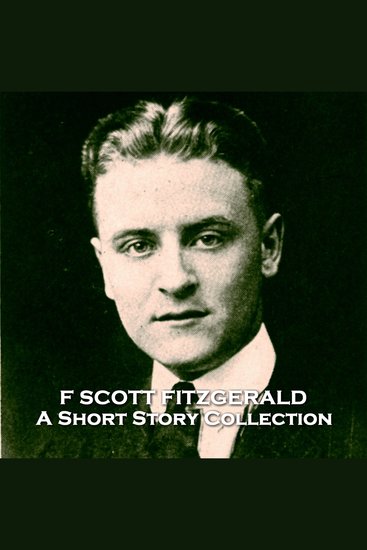
  • F Scott Fitzgerald - A Short Story Collection - A wonderful collection from the legendary American author of The Great Gatsby - cover

    F Scott Fitzgerald - A Short...

    F Scott itzgerald

    • 0
    • 0
    • 0
    Francis Scott Key Fitzgerald was born on September 24th 1896 in Saint Paul, Minnesota, to an upper-middle-class family. His early years in Buffalo, New York showed him to be a boy of high intelligence and drive with a thirst for literature.  
     
    In 1908, his father was fired from Procter & Gamble, and the family returned to Minnesota. Here Fitzgerald attended St. Paul Academy, in St. Paul, until 1911. At 13 he was published in the school newspaper, it was, of all things, a detective story. In 1911, aged 15, he was sent to the prestigious Newman School, in Hackensack, New Jersey. And, after graduating in 1913, he decided to continue at Princeton University. Here he firmly dedicated himself to writing. Unfortunately his writing pursuits came at the expense of his coursework. In 1917 he dropped out to join the U.S. Army.  
     
    However this service to his country came with the very real fear that he might perish in the trenches of Western Europe with his literary dreams not yet begun. So he spent the weeks before reporting for duty at work on a novel entitled The Romantic Egotist.  Fitzgerald was assigned to Camp Sheridan, in Alabama. It was there that Fitzgerald met the love of his life; Zelda Sayre, the "golden girl," of Montgomery youth society.  
     
    The war ended before Fitzgerald could be deployed, and he moved to New York City hoping to start a career in advertising that would be lucrative enough to convince Zelda to marry him. Unable to convince her that his means were enough to support her she broke off the engagement. Fitzgerald returned to his parents in St. Paul, to revise The Romantic Egoist, now recast as This Side of Paradise. His revised novel was accepted by Scribner's and published in 1920 becoming an instant success.  
     
    It launched Fitzgerald's career as a writer and provided a steady income suitable for Zelda's ambitions. The engagement resumed and they married at St. Patrick's Cathedral in New York. Frances Scott "Scottie" Fitzgerald, their only child, was born on October 26, 1921. 
     
    Inspired by the parties he had attended visiting Long Island's north shore Fitzgerald began planning the greatest of his novels, The Great Gatsby, in 1923, wanting to produce "something new—something extraordinary and beautiful and simple and intricately patterned."  Published in April 1925, The Great Gatsby received mixed reviews and sold poorly; only 20,000 in its first year.  Today, it is considered a literary classic and one of a small circle vying for the title "Great American Novel".  
     
    Fitzgerald continued to supplement his income by writing short stories for magazines and to sell his stories and novels to Hollywood. He called this "whoring".  
     
    In February 1932, Zelda was hospitalized with schizophrenia. Fitzgerald rented a house nearby and worked on his latest book, Tender Is the Night, and finally published it in 1934.  
     
    Fitzgerald's heavy and excessive drinking had now developed into alcoholism and with recurring financial difficulties, the emotional toll of Zelda's mental illness, this meant several difficult years.  
     
    In 1937, Fitzgerald moved to Hollywood. His income improved and he began to work in the film industry. He found movies beneath his talents, but was once again in perilous financial straits, and so spent the second half of the 1930s in Hollywood, working on a triangle of short stories, scripts for MGM, and his final novel, The Love of the Last Tycoon.   
     
    In 1939, MGM ended the contract, and Fitzgerald became a writer for hire. Still an alcoholic, he now became estranged from Zelda and developed a relationship with Sheilah Graham, the Hollywood gossip columnist. They quickly became lovers.  
     
    In this last period of his life his alcoholism had left him physically wrecked. After suffering a heart attack, in Schwab's Drug Store, he was ordered to avoi
    Show book

  • The Merry Wives of Windsor - cover

    The Merry Wives of Windsor

    William Shakespeare

    • 0
    • 0
    • 0
    First published in 1602 by William Shakespeare, The Merry Wives of Windsor features the popular figure Sir John Falstaff, who first appeared in Henry IV, Part 1 and Part 2. Some speculate that Merry Wives was written at the behest of Queen Elizabeth I, who wanted to see Falstaff in love; and that Shakespeare was forced to rush its creation as a result, and so it remains one of Shakespeare's lesser-regarded plays.
    The play revolves around two intertwined plots: the adventures of the rogue Falstaff who plans to seduce several local wives, and the story of young Anne Page who is being wooed by prominent citizens while she has her sights set on young Fenton. The wives come together to teach Falstaff a lesson, and in the end love triumphs.
    The Merry Wives of Windsor is believed to have been first performed in 1597 and was subsequently published in quarto in 1602, in a second quarto in 1619, and then in the 1623 First Folio. Despite holding a lesser place in Shakespeare's canon, it was one of the first Shakespearean plays to be performed in 1660, after the reinstatement of Charles II and theatre once again was permitted to be performed in London.
    Show book
  • The Iron Heel - cover

    The Iron Heel

    Jack London

    • 0
    • 0
    • 0
    The Iron Heel is a science fiction novel novel by American writer Jack London, first published in 1908. 
    It is considered to be "the earliest of the modern dystopian" fiction, it chronicles the rise of an oligarchic tyranny in the United States. In The Iron Heel, Jack London's socialist views are explicitly on display. A forerunner of soft science fiction novels and stories of the 1960s and 70s, the book stresses future changes in society and politics while paying much less attention to technological changes.
    The Iron Heel is cited by George Orwell's biographer Michael Shelden as having influenced Orwell's most famous novel Nineteen Eighty-Four. Orwell himself described London as having made "a very remarkable prophecy of the rise of Fascism", in the book and believed that London's understanding of the primitive had made him a better prophet "than many better-informed and more logical thinkers." Specifically, Orwell's protagonist Winston Smith, like London's Avis Everhard, keeps a diary where he writes down his rebellious thoughts and experiences. However, while Everhard's diary remained hidden during the centuries of tyranny to be discovered and published later, Smith's diary falls into the hands of the book's harsh Thought Police, whose interrogator tells Smith not to expect posterity to vindicate him: "Posterity will never hear of you, we will vaporize you".
    Show book
  • The Red Badge of Courage - cover

    The Red Badge of Courage

    Stephen Crane

    • 0
    • 0
    • 0
    On a cold day, the 304th New York Infantry Regiment awaits battle beside a river. Eighteen-year-old Private Henry Fleming, remembering his reasons for enlisting as well as his mother's resulting protests, wonders whether he will remain brave in the face of fear or turn and run. The story follows Fleming on the fateful days to come, through flight and redemption, injury and the horrors of war. The Red Badge of Courage received generally positive reviews from critics on its initial publication; in particular, it was said to be a remarkably modern and original work., the original 1895 publication went through ten editions in the first year alone, making Crane an overnight success at the age of twenty-four. 
    This bestselling book in both the US and the States, praised for its sense of realism is reproduced here, narrated by Michael Ward.
    Show book
  • Traffic and Rebuilding (Unabridged) - cover

    Traffic and Rebuilding (Unabridged)

    H. G. Wells

    • 0
    • 0
    • 0
    Herbert George Wells (21 September 1866 - 13 August 1946) was an English writer. Prolific in many genres, he wrote dozens of novels, short stories, and works of social commentary, history, satire, biography and autobiography. His work also included two books on recreational war games. Wells is now best remembered for his science fiction novels and is often called the "father of science fiction", along with Jules Verne and the publisher Hugo Gernsback.
    TRAFFIC AND REBUILDING: The London traffic problem is just one of those questions that appeal very strongly to the more prevalent and less charitable types of English mind.
    Show book
  • The Life and Opinions of Tristram Shandy Gentleman - cover

    The Life and Opinions of...

    Laurence Sterne

    • 0
    • 0
    • 0
    Tristram Shandy is a satirical and experimental work that takes a unique approach to storytelling. Rather than following a linear narrative, the book is a chaotic and digressive account of the life and opinions of its narrator, Tristram Shandy. The novel incorporates various elements, including humorous anecdotes, reflections on philosophy, and playful experiments with typography. It is often considered a precursor to modernist literature due to its unconventional structure and self-aware narrative.
    Show book