Join us on a literary world trip!
Add this book to bookshelf
Grey
Write a new comment Default profile 50px
Grey
Subscribe to read the full book or read the first pages for free!
All characters reduced
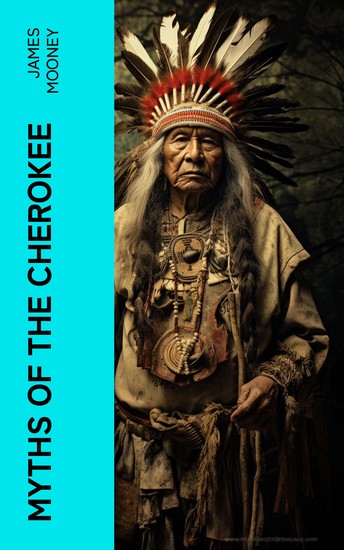
Myths of the Cherokee - Illustrated Edition - cover

Myths of the Cherokee - Illustrated Edition

James Mooney

Publisher: e-artnow

  • 0
  • 0
  • 0

Summary

The myths given in this book are part of a large body of material collected among the Cherokee, chiefly in successive field seasons from 1887 to 1890, inclusive, and comprising more or less extensive notes, together with original Cherokee manuscripts, relating to the history, archeology, geographic nomenclature, personal names, botany, medicine, arts, home life, religion, songs, ceremonies, and language of the tribe.  Contents:  Historical Sketch of the Cherokee    Stories and Story-tellers  The Myths  Cosmogonic Myths  Quadruped Myths   Bird Myths  Snake, Fish, and Insect Myths   Wonder Stories    Historical Traditions  Miscellaneous Myths and Legends
Available since: 12/15/2023.
Print length: 682 pages.

Other books that might interest you

  • Colonialism: A Moral Reckoning - cover

    Colonialism: A Moral Reckoning

    Nigel Biggar

    • 0
    • 0
    • 0
    The Sunday Times Bestseller 
    A new assessment of the West’s colonial record 
    In the wake of the dissolution of the Soviet empire in 1989, many believed that we had arrived at the ‘End of History’ – that the global dominance of liberal democracy had been secured forever. 
    Now however, with Russia rattling its sabre on the borders of Europe and China rising to challenge the post-1945 world order, the liberal West faces major threats. 
      
    These threats are not only external. Especially in the Anglosphere, the ‘decolonisation’ movement corrodes the West’s self-confidence by retelling the history of European and American colonial dominance as a litany of racism, exploitation, and massively murderous violence. 
      
    Nigel Biggar tests this indictment, addressing the crucial questions in eight chapters: Was the British Empire driven primarily by greed and the lust to dominate? Should we speak of ‘colonialism and slavery’ in the same breath, as if they were identical? Was the Empire essentially racist? How far was it based on the theft of land? Did it involve genocide? Was it driven fundamentally by the motive of economic exploitation? Was undemocratic colonial government necessarily illegitimate? and, Was the Empire essentially violent, and its violence pervasively racist and terroristic? 
      
    Biggar makes clear that, like any other long-standing state, the British Empire involved elements of injustice, sometimes appalling. On occasions it was culpably incompetent and presided over moments of dreadful tragedy. 
      
    Nevertheless, from the early 1800s the Empire was committed to abolishing the slave trade in the name of a Christian conviction of the basic equality of all human beings. It ended endemic inter-tribal warfare, opened local economies to the opportunities of global trade, moderated the impact of inescapable modernisation, established the rule of law and liberal institutions such as a free press, and spent itself in defeating the murderously racist Nazi and Japanese empires in the Second World War. 
      
    As encyclopaedic in historical breadth as it is penetrating in analytical depth, Colonialism offers a moral inquest into the colonial past, forensically contesting damaging falsehoods and thereby helping to rejuvenate faith in the West’s future. 
    In his latest work, Biggar, the Sunday Times bestselling author, offers a new perspective on the era of colonialism. His bestselling book provides a comprehensive analysis of the ethics and philosophy of colonial rule in Britain and Europe during the Georgian era (1714-1837). 
    For fans of Tod E. Bolsinger (Tempered Resilience), Patrick J. Deneen (The Democratic Soul), Richard B. Hays (The Moral Vision of the New Testament), Michael D. Coogan (The Ten Commandments), and Matthew J. Goodwin (Values, Voice and Virtue). 
    HarperCollins 2023
    Show book
  • Renaissance The: An Enthralling Guide to a Period of Rebirth in Arts Science and Culture - cover

    Renaissance The: An Enthralling...

    Billy Wellman

    • 0
    • 0
    • 0
    Do the names Michelangelo, Leonardo da Vinci, and Raphael ring a bell? 
    If so, you are already somewhat familiar with the Renaissance, which saw a rebirth in the arts and science. Great strides were made in several fields, and many men made a name for themselves by creating masterpieces or developing new theories, even if some people found them controversial. 
    This comprehensive guide digs into some of the most famous figures of the period and includes some who might not be as well known. This exciting ride through history gives you an introductory look at one of the most fascinating periods in history, injecting new life into a topic that has been written about countless times before.  
    Avoid the stuffy academic audiobooks on the Renaissance and instead explore a captivating look at a period that brought renewed interest to the arts, science, and culture in general. 
    In this audiobook, you will learn about the following:How the Middle Ages segued into the RenaissanceSome of the well-known concepts that emerged during the period, such as humanismWhy some families became patrons of the artsHow religion impacted the RenaissanceFamous artists, thinkers, and scientists who breathed new life into European societyExamples of Renaissance paintings and architecture How the printing press led to the spread of ideasAnd so much more! 
    Scroll up and click the “add to cart” button to begin learning about the Renaissance today!
    Show book
  • How to Recognize Toxic Anxiety - cover

    How to Recognize Toxic Anxiety

    Olivia Werner

    • 0
    • 0
    • 0
    [How to Recognize Toxic Anxiety] delves into the intricate landscapes of modern anxiety with unflinching precision and intimate understanding. Through lyrical prose that echoes the quiet moments of psychological struggle, this groundbreaking exploration maps the subtle territories where anxiety infiltrates daily life. With remarkable attention to detail, the book illuminates how anxiety transforms ordinary experiences—from morning coffee rituals to midnight thoughts—into complex negotiations with fear. Drawing on rich metaphorical frameworks of weather patterns, architecture, and internal chemistry, it offers readers a revolutionary lens for understanding their own experiences of anxiety. What sets this work apart is its masterful balance of scientific insight and emotional resonance, weaving together the biological underpinnings of anxiety with the deeply personal experience of navigating its presence in contemporary life. The narrative doesn't just describe anxiety; it captures its essence in the spaces between heartbeats, in the pauses between breaths, in the moments between thoughts—making visible what has long remained unseen.
    Show book
  • Nightmare Fuel - The Science of Horror Films - cover

    Nightmare Fuel - The Science of...

    Nina Nesseth

    • 0
    • 0
    • 0
    Do you like scary movies? Have you ever wondered why? 


    In Nightmare Fuel, Nina Nesseth explores the strange and often unexpected science of fear through the lenses of psychology and physiology. How do horror films get under our skin? And why do we keep coming back for more? 


    Horror films promise an experience: fear. But how exactly do filmmakers pull this off? The truth is, there's more to it than just loud noises and creepy images. 


    With the affection of a true horror fan and the critical analysis of a scientist, Nesseth explains how audiences engage horror with both their brains and bodies, and teases apart the elements that make horror films tick. Nightmare Fuel covers everything from jump scares to creature features, serial killers to the undead, and the fears that stick around to those that fade over time. 


    With in-depth discussions and spotlight features of some of horror's most popular films—from classics like The Exorcist to modern hits like Hereditary—and interviews with directors, film editors, composers, and horror academics, Nightmare Fuel is a deep dive into the science of fear, a celebration of the genre, and a survival guide for going to bed after the credits roll.
    Show book
  • Crown Jewels: Unpack the misconceptions and uncover the real lives of today’s royal women with this groundbreaking feminist analysis of the British monarchy – new for 2026! - cover

    Crown Jewels: Unpack the...

    Catherine Mayer

    • 0
    • 0
    • 0
    Globally famous and yet universally misunderstood – these are the complex and utterly engrossing stories of Britain's royal women behind the public façade. 
    Look closely at the narratives about contemporary royal women and you will see a repeating pattern, each characterised as the monarchy’s saviour or a destroyer, saint or sinner, or describing an arc between those poles. It is when royal women attempt to define themselves, carve out meaning for themselves, that things get really interesting. “She won’t go quietly. That’s the problem,” said Diana in her controversial Panorama interview. Nor did she. 
    The requirement that royal women give up their voice was already out of step with those earlier times and her instincts. Her sons’ wives have taken openly divergent paths, Kate dutiful, Meghan kicking against the restraints. Their sharply polarised supporters reject the idea of any commonalities, yet they are there. Both women have seen their lives instrumentalised and distorted. 
    To appreciate royal women and their significance more clearly, it is necessary to unpick the storylines written for them, the preconceptions projected on to them. They are globally famous and universally misunderstood. 
    Crown Jewels will unmask characters far more complex and interesting than standard portrayals suggest—and also spotlight the fragility of the monarchy. For more than a century apparently unsinkable, the House of Windsor is floundering. The most compelling and consequential players in this unfolding endgame are royal women.
    Show book
  • The Rise of China as a Global Power - Economic Growth Trade Wars and the Shift in Global Influence - cover

    The Rise of China as a Global...

    Fredrich Hazelton

    • 0
    • 0
    • 0
    Over the past few decades, China has emerged as a dominant force in global affairs, reshaping the economic, political, and cultural landscape of the 21st century. From its beginnings as an agrarian society to its status as the world's second-largest economy, China's rise has been nothing short of transformative. This journey, marked by rapid industrialization, technological innovation, and assertive foreign policy, has propelled the nation into the global spotlight, prompting discussions about the future balance of power in a multipolar world.  
      
    China’s rise did not happen overnight. Decades of reform, beginning with Deng Xiaoping’s economic policies in the late 1970s, laid the foundation for what would become an economic powerhouse. By opening its markets, encouraging foreign investment, and emphasizing export-driven growth, China achieved an unprecedented transformation. The country’s ambitious initiatives, such as the Belt and Road Initiative, have further cemented its influence across Asia, Africa, and Europe, showcasing its capability to lead large-scale international projects.  
      
    While China’s economic success has garnered global admiration, it has also sparked significant challenges and controversies. Trade wars with the United States, disputes over intellectual property rights, and concerns over its role in international organizations have underscored tensions with other global powers. Simultaneously, its advances in technology, including 5G infrastructure and artificial intelligence, have positioned it as a key competitor to traditional Western tech leaders. 
    Show book