Join us on a literary world trip!
Add this book to bookshelf
Grey
Write a new comment Default profile 50px
Grey
Subscribe to read the full book or read the first pages for free!
All characters reduced
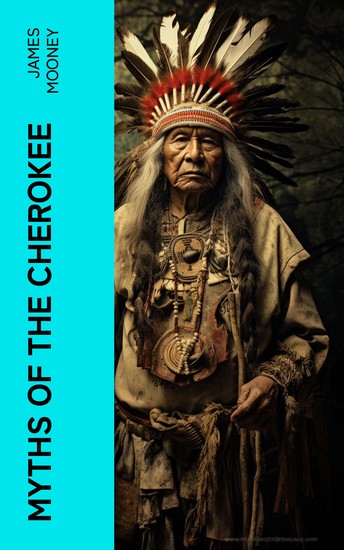
Myths of the Cherokee - Illustrated Edition - cover

Myths of the Cherokee - Illustrated Edition

James Mooney

Publisher: e-artnow

  • 0
  • 0
  • 0

Summary

The myths given in this book are part of a large body of material collected among the Cherokee, chiefly in successive field seasons from 1887 to 1890, inclusive, and comprising more or less extensive notes, together with original Cherokee manuscripts, relating to the history, archeology, geographic nomenclature, personal names, botany, medicine, arts, home life, religion, songs, ceremonies, and language of the tribe.  Contents:  Historical Sketch of the Cherokee    Stories and Story-tellers  The Myths  Cosmogonic Myths  Quadruped Myths   Bird Myths  Snake, Fish, and Insect Myths   Wonder Stories    Historical Traditions  Miscellaneous Myths and Legends
Available since: 12/15/2023.
Print length: 682 pages.
Other books that might interest you

  • Confident Pluralism - Surviving and Thriving through Deep Difference - cover

    Confident Pluralism - Surviving...

    John D. Inazu

    • 0
    • 0
    • 0
    The United States seems to become more dramatically polarized and divided with each passing month. There are seemingly irresolvable differences in the beliefs, values, and identities of citizens across the country that too often play out in our legal system in clashes on a range of topics such as the tensions between law enforcement and minority communities. How can we possibly argue for civic aspirations like tolerance, humility, and patience in our current moment? 
     
    In Confident Pluralism, John D. Inazu analyzes the current state of the country, orients the contemporary United States within its broader history, and explores the ways that Americans can—and must—strive to live together peaceably despite our deeply engrained differences. Pluralism is one of the founding creeds of the United States—yet America’s society and legal system continues to face deep, unsolved structural problems in dealing with differing cultural anxieties and differing viewpoints. Inazu not only argues that it is possible to cohabitate peacefully in this country, but also lays out realistic guidelines for our society and legal system to achieve the new American dream through civic practices that value toleration over protest, humility over defensiveness, and persuasion over coercion. 
     
    This new edition of Confident Pluralism is an essential clarion call during one of the most troubled times in US history. Inazu argues for institutions that can work to bring people together as well as political institutions that will defend the unprotected. Confident Pluralism offers a refreshing argument for how the legal system can protect peoples’ personal beliefs and differences and provides a path forward to a healthier future of tolerance, humility, and patience.
    Show book
  • My Lai Massacre and Operation Speedy Express The: The History of the US Army’s Most Controversial Operations during the Vietnam War - cover

    My Lai Massacre and Operation...

    Editors Charles River

    • 0
    • 0
    • 0
    The Vietnam War could have been called a comedy of errors if the consequences weren’t so deadly and tragic. In 1951, while war was raging in Korea, the United States began signing defense pacts with nations in the Pacific, intending to create alliances that would contain the spread of Communism. As the Korean War was winding down, America joined the Southeast Asia Treaty Organization, pledging to defend several nations in the region from Communist aggression. One of those nations was South Vietnam.  
    	The Vietnam War remains one of the most controversial events in American history, and it bitterly divided the nation in 1968, but it could have been far worse. That’s because, unbeknownst to most Americans that year, American forces had carried out the most notorious mass killing of the war that March. On March 16, perhaps as many as 500 Vietnamese villagers in the Son My village complex - men, women, and children - were killed by American soldiers in Task Force Barker. The worst of the violence, carried out by members of Charlie Company, 1st Battalion, 11th Infantry, occurred in a small village known locally as Xom Lang. On American maps, the location was marked as My Lai (4), and when news of the killings leaked into the American press over a year and a half later in November 1969, it was under that name that the incident became infamous as the “My Lai Massacre.”  
    	The controversy surrounding Operation Speedy Express led to an investigation by the U.S. Army and the House Armed Services Committee. The Army was ultimately cleared of wrongdoing, but resistance to U.S. involvement in Vietnam continued to grow, and in the nearly 60 years since, modern historians have tried to uncover more about the controversial Speedy Express and whether it represented a massive war crime. Thus, even though it remains less well known than My Lai, the operation’s notoriety has started to grow in its own right recently. 
    Show book
  • How to Be Happy - cover

    How to Be Happy

    Olivia Werner

    • 0
    • 0
    • 0
    [How to Be Happy] is a transformative meditation on the subtle art of contentment, weaving together the delicate threads of human consciousness with the raw immediacy of lived experience. Through crystalline prose that captures the nuances of internal landscapes, this book navigates the spaces between breaths, the wisdom of the body, and the architecture of joy. Unlike conventional self-help narratives, it doesn't offer prescriptive solutions but rather invites readers into a deeper understanding of happiness as something that exists in relation to everything we feel. Drawing on themes of embodied awareness and the quiet revolution of self-discovery, the book illuminates how happiness lives in the overlooked moments - in the warmth of sunlight on skin, in the rhythm of breathing, in the spaces we often rush past in our hurry to arrive somewhere else.
    Show book
  • Charles Before Diana - A King in the Making - cover

    Charles Before Diana - A King in...

    Helen Cathcart

    • 0
    • 0
    • 0
    The eldest son of Queen Elizabeth II and Prince Philip, the Duke of Edinburgh, Prince Charles has been heir to the British throne since he was three years old. 


    In this lively and illuminating account, royal biographer Helen Cathcart charts the first thirty years of Prince Charles's life, from his birth at Buckingham Palace in 1948 and rugby-playing schooldays at Gordonstoun, through his undergraduate years cycling to lectures at Trinity College, Cambridge, and subsequent military career in the Royal Air Force and the Royal Navy. 


    Cathcart reveals a young man of many interests—actor, polo player, cellist, helicopter pilot, and conservationist—and takes the listener behind the scenes of notable events in the Prince's life, including his investiture as Prince of Wales at Caernarfon Castle in 1969 and move to Chevening in 1974, before giving insight into his romantic relationships prior to his marriage to Lady Diana Spencer. 


    Drawing on an extraordinary fund of private material, Charles Before Diana is an intimate portrait of the man behind the Prince—a man with an endearing sense of comedy and a conscientious devotion to duty.
    Show book
  • Libya and the West - What Everyone Needs to Know - cover

    Libya and the West - What...

    Peter Hahn

    • 0
    • 0
    • 0
    Libya and the West: What Everyone Needs to Know® is a welcome update to the literature on Western diplomatic relations with Libya. It specifically analyzes the complicated relationships that Italy, Britain, the United States, and France developed with Libya beginning in the 1910s. On the basis of a wide range of primary and secondary sources, it offers insights into the political and socio-economic conditions within Libya that concerned Western leaders and shaped their policies. Among the crucial episodes that this book embraces are fascist Italy's military conquest and colonization of Libya; the expulsion of Axis armies from Libya and other north African states during World War II; the enthronement of King Idris in 1951; the discovery of oil in Libya in 1959. It explains the seizure of power by Muammar Qaddafi in 1969; the low-intensity military conflict between the United States and Libya in the 1980s; the Western response to Libyan acts of terrorism, including the murder of a British police officer in London in 1984 and the downing of Pan Am flight 103 in 1988; the enduring turmoil sparked by the Arab Spring in 2011; the decision by NATO powers to intervene militarily in the Libyan civil war to ensure the downfall of the Qaddafi regime; and the murder of U.S. Ambassador Christopher Stevens at Benghazi in 2012.
    Show book
  • The Refugee Crisis - Displacement Migration and the Humanitarian Response - cover

    The Refugee Crisis -...

    Fredrich Hazelton

    • 0
    • 0
    • 0
    The global refugee crisis has become one of the defining challenges of our time, affecting millions of individuals and reshaping societies worldwide. Conflict, persecution, and environmental disasters have forced people to flee their homes in search of safety and stability. The plight of refugees is a human tragedy, marked by loss, uncertainty, and resilience. Understanding the complexities of this crisis is crucial not only for addressing immediate needs but also for fostering long-term solutions.  
      
    Refugees are often caught in a precarious position, navigating between the dangers of their homelands and the uncertainties of a new environment. From overcrowded camps to perilous journeys across borders, their experiences underscore the fragility of human security in the face of adversity. Despite international efforts, including treaties like the 1951 Refugee Convention, the global response remains fragmented and uneven, leaving many refugees without adequate support.  
      
    The crisis also presents significant challenges for host countries, which must balance humanitarian responsibilities with domestic concerns. Refugees can contribute to the social and economic fabric of their host communities, but this potential is often overshadowed by political debates and societal tensions. Misconceptions and fears about refugees have fueled resistance in some regions, further complicating their integration. 
    Show book