Join us on a literary world trip!
Add this book to bookshelf
Grey
Write a new comment Default profile 50px
Grey
Subscribe to read the full book or read the first pages for free!
All characters reduced
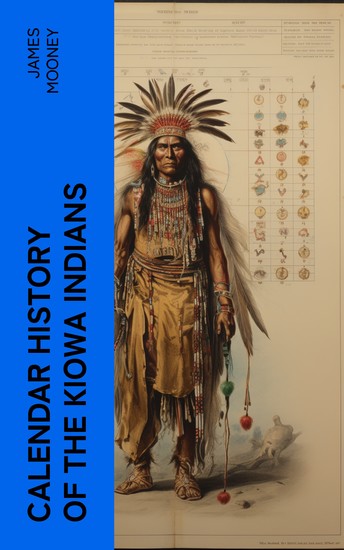
Calendar History of the Kiowa Indians - With Original Photos & Maps - cover

Calendar History of the Kiowa Indians - With Original Photos & Maps

James Mooney

Publisher: e-artnow

  • 0
  • 0
  • 0

Summary

The desire to preserve to future ages the memory of past achievements is a universal human instinct, as witness the clay tablets of old Chaldea, the hieroglyphs of the obelisks, our countless thousands of manuscripts and printed volumes, and the gossiping old story-teller of the village or the backwoods cabin. The reliability of the record depends chiefly on the truthfulness of the recorder and the adequacy of the method employed. In Asia, the cradle of civilization, authentic history goes back thousands of years; in Europe the record begins much later, while in America the aboriginal narrative, which may be considered as fairly authentic, is all comprised within a thousand years. The peculiar and elaborate systems by means of which the more cultivated ancient nations of the south recorded their histories are too well known to students to need more than a passing notice here. It was known that our own tribes had various ways of depicting their mythology, their totems, or isolated facts in the life of the individual or nation, but it is only within a few years that it was even suspected that they could have anything like continuous historical records, even in embryo. The fact is now established, however, that pictographic records covering periods of from sixty to perhaps two hundred years or more do, or did, exist among several tribes, and it is entirely probable that every leading mother tribe had such a record of its origin and wanderings, the pictured narrative being compiled by the priests and preserved with sacred care through all the shifting vicissitudes of savage life until lost or destroyed in the ruin that overwhelmed the native governments at the coming of the white man. Several such histories are now known, and as the aboriginal field is still but partially explored, others may yet come to light.
Available since: 12/15/2023.
Print length: 610 pages.
Other books that might interest you

  • A People's Guide to Capitalism - An Introduction to Marxist Economics - cover

    A People's Guide to Capitalism -...

    Hadas Thier

    • 0
    • 0
    • 0
    A lively, accessible, and timely guide to Marxist economics for those who want to understand and dismantle the world of the 1%. 


    Economists regularly promote Capitalism as the greatest system ever to grace the planet. With the same breath, they implore us to leave the job of understanding the magical powers of the market to the "experts." 


    Despite the efforts of these mainstream commentators to convince us otherwise, many of us have begun to question why this system has produced such vast inequality and wanton disregard for its own environmental destruction. This book offers answers to exactly these questions on their own terms: in the form of a radical economic theory.
    Show book
  • Calling in Context - Social Location and Vocational Formation - cover

    Calling in Context - Social...

    Susan L. Maros

    • 0
    • 0
    • 0
    "I don't care for vocational books written in the United States; they're too American." When Susan Maros heard this comment from a Malaysian colleague, she was initially taken aback. Isn't the concept of calling universal? Why wouldn't resources with a biblical perspective on vocation apply to everyone?The reality is that each of us encounters our questions of calling from within a particular context. In this paradigm-shifting book, Maros explores how various dimensions of social location—including race, ethnicity, culture, socioeconomic status, and gender—shape our assumptions and experiences with vocation. Maros helps Christians in the United States in particular see how ideas about calling that emphasize certainty, career paths, and personal achievement arise from cultural priorities that shouldn't go unexamined, such as individualism, productivity, and meritocracy. She explains how unexamined "mental maps" can distort our perspective and refocuses our attention on biblical insights about calling as a lifelong journey. In the process, she helps us find both clarity and encouragement to explore the paths before us.God calls all people, yes—but calling is not a monolithic concept. Filled with numerous stories from Christians in diverse communities, Calling in Context invites anyone exploring questions of calling to find fresh possibilities in their own identity and engagement with God's mission. Reflection questions and Bible study prompts are included throughout.
    Show book
  • Cicada [Audiobook] - cover

    Cicada [Audiobook]

    Hosho McCreesh, Sean Lynch

    • 0
    • 0
    • 0
    The audiobook of the story of the little poem that could and just continues to! From original idea to letterpress broadside to social media favorite inspiring more connection than any of his other work, Hosho McCreesh and Sean Lynch tell the moving true story behind McCreesh's most beloved and widely-read poem, Cicada - originally published as a letterpresses broadside and spread all over the English-reading world by the operatives and patrons of Guerrilla Poetics Project. It's the how and the when and the why of its writing, and stories of just how far this little poem has traveled. DrunkSkull Books is proud to present this niche non-fiction audiobook by Sean Lynch and Hosho McCreesh.
    Show book
  • Private Censorship - cover

    Private Censorship

    J.P. Messina

    • 0
    • 0
    • 0
    Concerns about censorship have once again reached a fever pitch across the liberal West. With a few notable exceptions, complaints about censorship in the twenty-first century West are complaints about the behavior of private parties: employers, media conglomerates, social media platforms, and search engines. 


    To better understand the concerns surrounding nonstate interference with speech, Private Censorship offers an account of censorship, as well as an assessment of the ethical and political issues it raises across contexts. J. P. Messina asks and variously answers questions like: what should we think when employees get fired for things they say and how might patterns of such firings create a climate of fear inimical to free inquiry? When is it appropriate for social media firms to deplatform users, and what does it mean for our democracy that those in charge of such decisions are often wealthy Silicon Valley executives? Do search engines act as massive gatekeepers to information in troubling ways, and how might they be constrained, if they do? Along the way, Messina casts a critical eye on many popular proposals for responding to these complaints. Unlike these popular approaches, Private Censorship foregrounds the importance of rights to property, association, and free expression for thinking well about twenty-first century censorship concerns.
    Show book
  • Thai History - Facts and Background of the Siamese and the Khmer Empire (2 in 1) - cover

    Thai History - Facts and...

    Kelly Mass

    • 0
    • 0
    • 0
    Learn more about the history of those countries. The topics addressed will be the following: 
    The Khmer Empire--Historians describe Cambodia as the Khmer State or the Angkorian Empire (Khmer:) from the 9th century to the 15th century, when it was a Hindu/Buddhist empire in Southeast Asia. The empire, which developed from the old societies of Funan and Chenla, governed and/or "vassalized" the majority of mainland Southeast Asia and parts of Southern China, covering from the suggestion of the Indochinese Peninsula northward to modern-day Yunnan province in China, and from Vietnam westward to Myanmar. The Khmer Empire was greater at its peak than the Byzantine Empire (Eastern Roman Empire) that existed at the exact same period. 
    The Siamese-- Siam was just a much different name for what's now referred to as Thailand. The Siamese are the people who live there, though they're never ever called as such any longer. 
    Thailand is a fascinating country, with its own culinary arts, culture, history, royalty, infrastructure, and influence on the world. To learn more about these “Thai” people before they were called Thai, when they were Siamese, is to learn about those people’s roots.
    Show book
  • The Letter - cover

    The Letter

    Ann Cusack, Sarah Sidebottom

    • 0
    • 0
    • 0
    Co-written by the writer of Sunday Times bestsellers The Asylum, The Convent, Silent Sisters and Abandoned 
     
     
    Harrowing emotional story of horrific sexual abuse at the hands of a father 
     
    Sarah Sidebottom was repeatedly raped by both her father and her brother as a child has secured justice thanks to a forgotten letter. 
     
    Sarah Sidebottom, 54, was raped and sexually abused by her father, Arthur William Bowditch, and her brother, Arthur Stephen Bowditch. They were jailed in 2022 for a total of 32 years. 
     
     
    The first attack, when she was just three and a half years old, left Sarah needing surgery to repair internal damage. A decades-old letter from her doctor proved crucial in securing a conviction for the abuse, which began almost 50 years go.
    Show book