We are sorry! The publisher (or author) gave us the instruction to take down this book from our catalog. But please don't worry, you still have more than 500,000 other books you can enjoy!
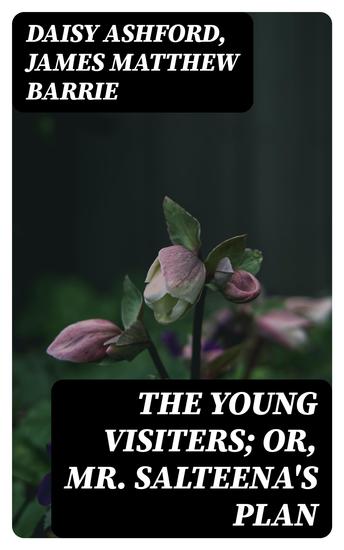
The Young Visiters; or Mr Salteena's Plan
James Matthew Barrie, Daisy Ashford
Publisher: DigiCat
Summary
In 'The Young Visiters; or, Mr. Salteena's Plan,' Daisy Ashford invites readers into the intricacies of high society within late Victorian England with a humorous, yet astounding, simplicity of prose that belies its unintentionally satirical nature. Written in a child's hand when Ashford herself was just nine years old, the book exudes charm through its unintended misspellings and unique interpretations of upper-class life. It provides an unfiltered observation of adult conventions through a child's eyes, capturing the awkward love triangle between the naïve Alfred Salteena, the young Ethel Monticue, and the more socially astute Bernard Clark. Ashford's work is set against a tableau of social climbing and romantic pursuit, reflecting the time's obsession with status and propriety and thus serves as both a delightful narrative and a unique literary artifact reflecting the mores of a bygone era.

Once considered a literary curiosity, Daisy Ashford wrote 'The Young Visiters' in 1890 at the tender age of nine, an impressive feat that provides an unparalleled glimpse into the perceptions of childhood. Published over two decades later in 1919 without corrections to her original manuscript, the novel showcases Ashford's precociousness and her surprising grasp on societal roles and adult relationships. Her unintentional social commentary offers humor, poignancy, and an exceptional degree of authenticity which likely differs from that of a seasoned novelist, underlining how the author's own social experiences as a child may have flavored this portrayal of the class-conscious world she observed.

For those who delight in the whimsical and the authentic, 'The Young Visiters' promises a reading experience unlike any other. Its endearing narrative and the remarkable circumstances of its creation make it a must-read for enthusiasts of historical fiction and aficionados of literary wonders alike. The book comes highly recommended for readers seeking a rare window into the perspectives of youth on the adult world, as well as a charming artifact of literary history that continues to enchant and educate contemporary audiences on the complexities and peculiarities of Victorian society.
Available since: 06/13/2022.
Print length: 35 pages.