Join us on a literary world trip!
Add this book to bookshelf
Grey
Write a new comment Default profile 50px
Grey
Subscribe to read the full book or read the first pages for free!
All characters reduced
On the Subject of Fallen Things - cover

On the Subject of Fallen Things

James Kearns

Publisher: Bad Betty Press

  • 0
  • 0
  • 0

Summary

"you start every new day with an inventory: a moth, a cape, a parachute, a coffin, a gun, the wall you built to mount the gun."
On the Subject of Fallen Things is an addictive, Chekhovian metanarrative: phenomenological, absurd, and dripping with black humour. James Kearns' speaker keeps company with Lazarus, an inept psychic, and a deceased superhero, but finds himself increasingly alone—lost in dialogue with mortality, both personal and anthropological. Permanence, culpability, the function and corruption of human storytelling: all come into play in a surge of momentum that grips the reader, even as it breaks apart: a lean explosion, a gunshot in the distance.
"On the Subject of Fallen Things weaves whimsy into narrative epiphanies that you never see coming. Each line aggregating weight like the lightness of snowflakes gathering into an avalanche. Hugely enjoyable. Get it now." Roger Robinson, A Portable Paradise, Winner of the 2019 T.S. Eliot Prize
"This is a really brilliant sequence of poems. Like Ponge, or Herbert, or Steger, or Simic, it manages to be both serious and fleeting, weighty and funny. It's hopeful, actually." S.J. Fowler, 3:AM Magazine
Available since: 11/28/2023.
Print length: 84 pages.

Other books that might interest you

  • My Land of Freedom - A poem of war and freedom - cover

    My Land of Freedom - A poem of...

    Ifeanyi Njoku

    • 0
    • 0
    • 0
    This poem is a powerful reflection on war, displacement, and the struggle for freedom. It tells the tragic story of a people who fought for liberation but were met with violence, loss, and eventual surrender. Likely referencing the Igbo experience during the Nigerian Civil War, it captures the pain of oppression and the resilience of those who endured it. 
    The poem begins with a contradiction: "In my land of freedom, I walked with fear." This highlights the irony of living in a place meant to be free but being consumed by anxiety. The people demand justice, yet their cries are silenced by violence. The line "Killing our brothers, and leaving us undone" conveys both physical loss and emotional devastation. 
    The imagery of "scorching soil" and "separated from families" paints a picture of suffering and displacement. War does not just take lives—it tears families apart and leaves hearts unable to thrive. The mention of "refugee camps" emphasizes how many were forced from their homes, left to question their identity: "Are we unlucky, to be Igbo?" This speaks to a deep sense of abandonment and injustice. 
    The poem also highlights betrayal, as leaders fail to protect their people. "Everyone was a soldier, in this war we couldn't win." This line captures the grim reality of a war where survival itself was a battle. Despite their bravery, they were up against overwhelming forces. 
    The final lines are heartbreaking: "We had to surrender, and say goodbye to our pride." This is not just a loss of battle but a loss of dignity. Yet, even in surrender, their story lives on. This poem is a tribute to resilience, a reminder of suffering, and a call to remember those who fought, even when the world turned away.
    Show book
  • Lifescapes - A Biographer's Search for the Soul - cover

    Lifescapes - A Biographer's...

    Nelson Thomas

    • 0
    • 0
    • 0
    "A lyrical, radiant memoir." —Kirkus Reviews, Starred Review 
    Ann Wroe, obituaries editor for The Economist, reflects on the art and impossibility of capturing life on the page. Through her experiences and through people she has known, studied, or merely glimpsed in windows, she movingly explores what makes a life and how that life lingers after in this breathtaking combination of poetry, memoir, and observation. 
    'What is life?' asked the poet Shelley, and he could not come up with an answer. Scientists, too, for all their understanding of how life manifests, thrives and evolves, have still not answered that fundamental question. Yet biographers and obituarists continue to corral lives in a few columns, or a few hundred pages, aware all the time how fleeting and elusive their subject is. 
    In this dazzlingly original blend of poetry, biography, observation, and memoir, Wroe explores the experience of trying to capture the essence of a person. Animated by her rare imagination, eye for the telling detail, and the wit, beauty and clarity of her writing, Lifescapes is a luminous, deeply personal answer to Shelley's question.
    Show book
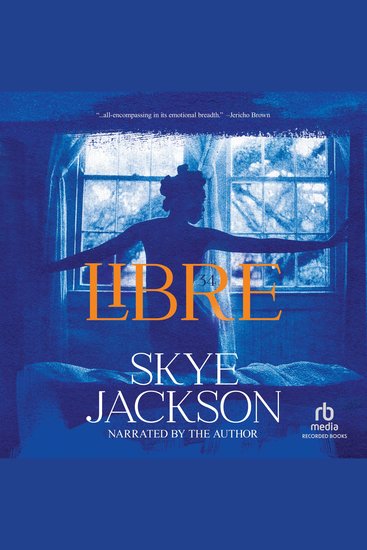
  • Libre - cover

    Libre

    Skye Jackson

    • 0
    • 0
    • 0
    A soaring collection of poems that deftly explores the familial, personal, and societal relationships of a young Black woman trying to make her way in a fraught world. 
      
    Freedom reverberates in Skye Jackson’s breathtaking debut, Libre, with evocative poems that are heart-wrenching, haunting, sensual, and tender. This collection explores the experiences of a young Black woman in New Orleans as she navigates the pull of familial and romantic relationships, celebrating the joys of Blackness, art, and friendship. Libre also includes Jackson’s award-winning poem “can we touch your hair?” which was hand selected by former US Poet Laureate Billy Collins for inclusion in the Library of Congress Poetry 180 Project. 
      
    An acolyte of Sade and Stevie Nicks, Jackson muses on microaggressions, interracial relationships, and the endless intricacies of Black women’s hair as she rails against loss, random violence, and the dark expectations that society often places upon people of color. She roams each room of the heart, open and unafraid of what she might find behind every door. Through it all, this debut shines as the poetry refracts and reflects like a mirror leaving nothing unseen.
    Show book
  • Deaf Republic - A Lyric Essay - cover

    Deaf Republic - A Lyric Essay

    Ilya Kaminsky

    • 0
    • 0
    • 0
    Finalist for the National Book Award; finalist for the PEN/Jean Stein Award; finalist for the National Book Critics Circle Award; winner of the Los Angeles Times Book Prize; winner of the Anisfield-Wolf Book Award; winner of the National Jewish Book Award; finalist for the Kingsley Tufts Poetry Award; finalist for the T. S. Eliot Prize; and a finalist for the Forward Prize for Best Collection 


    Ilya Kaminsky's astonishing parable in poems asks us, What is silence? 


    Deaf Republic opens in an occupied country in a time of political unrest. When soldiers breaking up a protest kill a deaf boy, Petya, the gunshot becomes the last thing the citizens hear—they all have gone deaf, and their dissent becomes coordinated by sign language. The story follows the private lives of townspeople encircled by public violence: a newly married couple, Alfonso and Sonya, expecting a child; the brash Momma Galya, instigating the insurgency from her puppet theater; and Galya's girls, heroically teaching signing by day and by night luring soldiers one by one to their deaths behind the curtain. At once a love story, an elegy, and an urgent plea, Ilya Kaminsky's long-awaited Deaf Republic confronts our time's vicious atrocities and our collective silence in the face of them.
    Show book
  • The Bell Tower - Poems - cover

    The Bell Tower - Poems

    Pamela Crowe

    • 0
    • 0
    • 0
    Acerbic, precise and very funny, Pamela Crowe's poems explore home life and relationships in a delightfully forthright voice. Secret frustrations and anxieties are aired and private fantasies brought into the light, as odes blur into diatribes and psychodramas become love poems.
    
    Woven throughout The Bell Tower is a love of Jane Austen, Sylvia Plath, Wendy Cope and – above all – Helen Fielding's Bridget Jones. These are fierce, acutely observed poems that give weight to domestic minutiae and put words to helpless howls into the abyss.
    You, the cloud.
    
    Oh look! there you are,
    
    blobbing along as if you're best friends with rain
    
    and thunder is your dad. Fuck off.
    
    - excerpt from 'Cloudcunt'
    Show book
  • George Bernard Shaw: Arms And The Man - cover

    George Bernard Shaw: Arms And...

    George Bernard Shaw

    • 0
    • 0
    • 0
    Arms and the Man is a satirical drama play written by George Bernard Shaw published in 1898.  It has become one of the most popular of his plays. Like his other works, Arms and the Man questions conventional values and uses war and love as his satirical targets. He delightfully pops the bubble of the 'brave soldier' always wishing to charge into battle and shows (I think) how people stay the same whether in uniform or not and are not magically changed into different people. A cautious soldier can be just as admirable as a reckless one.
    Show book