Join us on a literary world trip!
Add this book to bookshelf
Grey
Write a new comment Default profile 50px
Grey
Subscribe to read the full book or read the first pages for free!
All characters reduced
Ulysses - cover

Ulysses

James Joyce

Publisher: Legorreta

  • 0
  • 0
  • 0

Summary

Ulysses by James Joyce
A modernist masterpiece, Ulysses follows Leopold Bloom through a single day in Dublin. Blending stream-of-consciousness narrative with mythological parallels, Joyce explores themes of identity, memory, and the mundane, revolutionizing literary form and language in the process.
Available since: 03/25/2025.
Print length: 288 pages.

Other books that might interest you

  • The Science of Getting Rich - cover

    The Science of Getting Rich

    Wallace D Wattles

    • 0
    • 0
    • 0
    The Science of Getting Rich is the classic guide to creating wealth through the Law of Attraction. First published in 1910, a hundred years later it inspired Rhonda Byrne's bestselling book and movie, The Secret. According to Wallace D. Wattles, "There is a science of getting rich, and it is an exact science, like algebra or arithmetic. There are certain laws which govern the process of acquiring riches; once these laws are learned and obeyed by any man, he will get rich with mathematical certainty."
    Show book
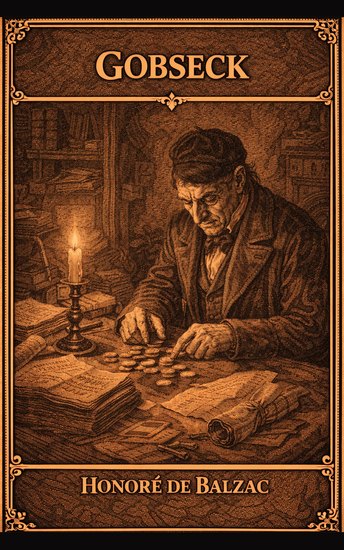
  • Gobseck - cover

    Gobseck

    Honoré de Balzac

    • 0
    • 0
    • 0
    In Gobseck, Honoré de Balzac delivers a powerful and penetrating exploration of wealth, obsession, and the hidden machinery of society. Set in post-Napoleonic Paris, this masterful novella—part of Balzac's monumental collection La Comédie Humaine—examines the corrosive power of money and the moral compromises people make in pursuit of status and survival.
    
    At the center of the story stands Jean-Esther van Gobseck, an aging and enigmatic moneylender whose life revolves around one unwavering principle: gold rules the world. Cold, calculating, and emotionally detached, Gobseck has built his fortune by lending money to desperate aristocrats and ambitious social climbers, watching with clinical fascination as debt exposes their secrets, weaknesses, and hypocrisies. To him, human emotions—love, honor, loyalty—are mere illusions, all ultimately subject to the authority of money.
    
    The narrative unfolds through the perspective of a young lawyer, Derville, who recounts Gobseck's life and his dealings with the aristocratic Countess de Restaud. As the Countess spirals into financial and moral ruin to sustain her extravagant lifestyle and illicit passions, Gobseck becomes both witness and silent judge. Through this tragic entanglement, Balzac reveals the fragile façade of high society and the devastating consequences of greed, vanity, and unchecked desire.
    
    Yet Gobseck is more than a portrait of a miser. It is a profound meditation on capitalism, power, and human nature. Gobseck himself is a paradox—both predator and philosopher, villain and observer. Though he accumulates immense wealth, he lives in stark austerity, hoarding treasures he never uses, revealing the emptiness at the heart of his obsession. His life poses unsettling questions: Is wealth power, security, or prison? Can a person truly possess riches without being possessed by them?
    
    Balzac's sharp realism, vivid characterizations, and incisive social commentary make Gobseck a timeless study of ambition and morality. With psychological depth and keen insight into the financial and emotional transactions that govern human relationships, this novella remains strikingly relevant in a world still driven by profit and power.
    
    Dark, intelligent, and unflinchingly honest, Gobseck is a compelling exploration of the price of wealth—and the cost of losing one's soul in its pursuit.
    Show book

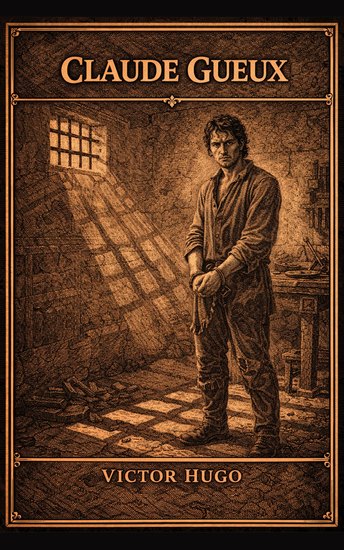
  • Claude Gueux - cover

    Claude Gueux

    Victor Hugo

    • 0
    • 0
    • 0
    Claude Gueux is a powerful and deeply moving novella by Victor Hugo that confronts the harsh realities of poverty, injustice, and the brutal nature of the 19th-century penal system. Written with moral intensity and social conviction, this short yet impactful work stands as one of Hugo's earliest and most direct critiques of systemic inequality and capital punishment.
    
    The story follows Claude Gueux, a poor but intelligent working-class man who is driven to theft by desperate circumstances. Unable to provide for himself and the woman he loves, Claude commits a crime not out of malice, but out of necessity. For this act, he is sentenced to prison — a place where the rigid structure of authority, deprivation, and humiliation tests the limits of human dignity.
    
    Inside the prison walls, Claude quickly distinguishes himself through his intelligence, quiet strength, and natural leadership. He earns the respect and admiration of fellow inmates and even gains a measure of influence among them. However, his moral character and popularity attract the hostility of the prison director, whose arbitrary cruelty and abuse of power create a growing tension between authority and humanity.
    
    When Claude forms a deep and compassionate bond with a young prisoner, the director deliberately separates them as an act of control and punishment. This calculated act of psychological cruelty pushes Claude toward a tragic and inevitable confrontation. What follows is not merely a crime of violence, but a dramatic statement on injustice, oppression, and the failure of society to uplift its most vulnerable members.
    
    Victor Hugo uses Claude's story to raise urgent social questions: Who is truly responsible for crime — the individual or the society that neglects him? What role do poverty, lack of education, and systemic inequality play in shaping human fate? Hugo argues passionately that crime is often born from social injustice, and that punishment without reform only deepens the cycle of suffering.
    
    Though brief, Claude Gueux delivers a profound emotional and philosophical impact. Hugo's prose is direct yet eloquent, blending narrative storytelling with moral reflection. The novella anticipates many of the themes later developed in his masterpiece Les Misérables, particularly the call for compassion, justice reform, and the recognition of human dignity in all people.
    
    More than a tragic tale, Claude Gueux is a bold social indictment — a plea for education instead of execution, for reform instead of retribution, and for humanity within institutions designed to punish. Hugo transforms one man's fate into a broader commentary on society's responsibility toward its poorest and most marginalized citizens.
    
    Timeless, thought-provoking, and morally urgent, Claude Gueux remains a compelling read for those interested in classic literature, social justice themes, and the enduring question of how societies treat their most vulnerable members.
    Show book
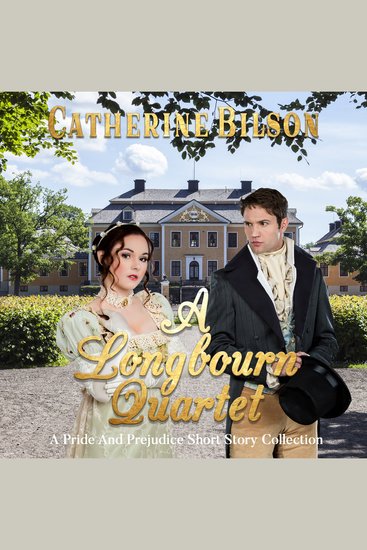
  • A Longbourn Quartet - An Austenesque Short Story Collection - cover

    A Longbourn Quartet - An...

    Catherine Bilson

    • 0
    • 0
    • 0
    Four short stories set in the beloved world of Jane Austen's Pride & Prejudice which explore missing scenes and paths not taken in the original story. 
    A Slip and a Trip 
    This little Mis-step takes place at the dance at Lucas Lodge, at which Elizabeth declines Darcy’s offer of a dance. Though in canon, Jane and Bingley aren’t mentioned as even being present, they must surely have been there. 
    The Darcy Inquisition 
    The Scene: Darcy’s house in London, a week post-Hunsford. Darcy has lapsed into despair; Georgiana, fearing for him, has called for her cousin Colonel Fitzwilliam to help. They intend to interrogate Darcy to find out what is wrong, but somehow things go slightly awry. 
    Based on selected nuggets from the wonderful Monty Python sketches of The Spanish Inquisition. 
    Incidentally, did you know that one of Jane Austen’s suggestions for Colonel Fitzwilliam’s first name was Montgomery? That discovery inspired this whole ficlet… 
    Mr. Bennet’s Call 
    This is my imagining of a scene omitted from P&P: in the original work, we discover that Mr Bennet paid a call upon Bingley when he teases Mrs Bennet about not being able to escape the acquaintance. I found myself wondering, what was said in that call? 
    The Exception That Proves The Rule 
    You know the rule. Eavesdroppers rarely hear good of themselves. 
    So, this is a what-if one-shot that is intended to be the exception to that rule. 
    Our little tale begins at Netherfield, while Elizabeth is there nursing Jane. Elizabeth comes downstairs to dispatch the letter to her mother, requesting that the carriage be sent to collect them. Of course, she must ask Mr Bingley for the use of a rider to convey the message to Longbourn, and so she goes looking for him.
    Show book
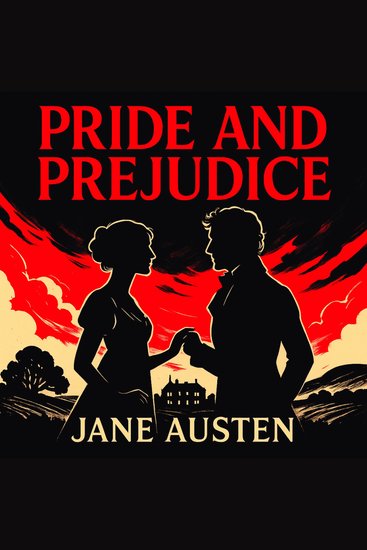
  • Pride and Prejudice - cover

    Pride and Prejudice

    Jane Austen

    • 0
    • 0
    • 0
    Pride and Prejudice unfolds the timeless tale of spirited Elizabeth Bennet and the brooding Mr. Darcy, set against the elegant backdrop of Regency-era England. This classic Jane Austen novel weaves sharp social commentary with an enduring romance that has captivated readers for over two centuries. Narrated by Amelia Clarke, this audiobook brings every witty exchange and heartfelt confession to life, from Elizabeth’s first, prickly impressions of Darcy to the triumphant overcoming of pride and prejudice on both sides. 
    With memorable characters, keen observations on class and manners, and a narrative that balances humor and emotion, Pride and Prejudice remains one of the most beloved works of English literature. Amelia Clarke’s warm yet nuanced performance highlights the novel’s rich dialogue and vivid settings—from grand country estates to lively balls—making this edition an irresistible experience for both longtime fans and newcomers alike. Whether you’re discovering Elizabeth Bennet’s independent spirit or Darcy’s hidden kindness for the first time, this rendition of Pride and Prejudice is sure to enchant and inspire.
    Show book
  • Aega - cover

    Aega

    La Sa Ra

    • 0
    • 0
    • 0
    Last Story in the Panchabhootha series - Anjali : Aega (Sky)
    Show book