Join us on a literary world trip!
Add this book to bookshelf
Grey
Write a new comment Default profile 50px
Grey
Subscribe to read the full book or read the first pages for free!
All characters reduced
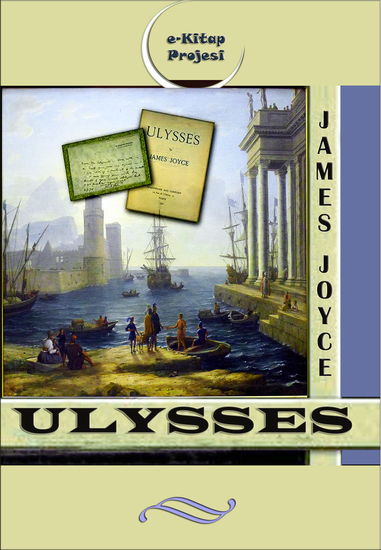
Ulysses - cover

Ulysses

James Joyce

Publisher: E-Kitap Projesi & Cheapest Books

  • 0
  • 0
  • 0

Summary

The book consists of 18 chapters, each covering roughly one hour of the day, beginning around 8 a.m. and ending sometime after 2 a.m. the following morning. Each chapter employs its own literary style, and parodies a specific episode in Homer's Odyssey. Furthermore, each chapter is associated with a specific colour, art or science, and bodily organ. This combination of kaleidoscopic writing with an extreme formal schematic structure renders the book a major contribution to the development of 20th-century modernist literature. The use of classical mythology as an organising framework, the near-obsessive focus on external detail, and the occurrence of significant action within the minds of characters have also contributed to the development of literary modernism. Nevertheless, Joyce complained that, "I may have oversystematised Ulysses," and played down the mythic correspondences by eliminating the chapter titles that had been taken from Homer.

As he was completing work on Dubliners in 1906, Joyce considered adding another story featuring a Jewish advertising canvasser called Leopold Bloom under the title Ulysses. Although he did not pursue the idea further at the time, he eventually commenced work on a novel using both the title and basic premise in 1914. The writing was completed in October 1921. Three more months were devoted to working on the proofs of the book before Joyce halted work shortly before his self-imposed deadline, his 40th birthday (2 February 1922).
This publication encountered censorship problems in the United States; serialisation was halted in 1920 when the editors were convicted of publishing obscenity. Although the conviction was based on the "Nausicaä" episode of Ulysses, The Little Review had fuelled the fires of controversy with dada poet Elsa von Freytag-Loringhoven's defence of Ulysses in an essay "The Modest Woman." Joyce's novel was not published in the United States until 1933.

With the appearance of both Ulysses and T. S. Eliot's poem, The Waste Land, 1922 was a key year in the history of English-language literary modernism.

In Ulysses, Joyce employs stream of consciousness, parody, jokes, and virtually every other established literary technique to present his characters. The action of the novel, which takes place in a single day, 16 June 1904, sets the characters and incidents of the Odyssey of Homer in modern Dublin and represents Odysseus (Ulysses), Penelope and Telemachus in the characters of Leopold Bloom, his wife Molly Bloom and Stephen Dedalus, parodically contrasted with their lofty models.

The book explores various areas of Dublin life, dwelling on its squalor and monotony. Nevertheless, the book is also an affectionately detailed study of the city, and Joyce claimed that if Dublin were to be destroyed in some catastrophe it could be rebuilt, brick by brick, using his work as a model. To achieve this level of accuracy, Joyce used the 1904 edition of Thom's Directory—a work that listed the owners and/or tenants of every residential and commercial property in the city. He also bombarded friends still living there with requests for information and clarification.
Available since: 02/10/2024.
Print length: 800 pages.


Other books that might interest you

  • Oscar Wilde: THE FISHERMAN AND HIS SOUL - cover

    Oscar Wilde: THE FISHERMAN AND...

    Oscar Wilde

    • 0
    • 0
    • 0
    To get what we want is often the greatest curse of all. The fisherman here accidentally catches a mermaid in his net. He falls in love with the Mermaid and tells her that he wants to marry her. She tells him that he can only marry her if he sends away his soul. From a Witch, the Fisherman learns how to send his soul away. The Soul makes several attempts to persuade the Fisherman to take him back, eventually convincing him to do so with the tale of a beautiful dancer who lives nearby. Too late does the Fisherman discover that the soul which he sent out into the world without a heart has become evil. So be careful what you set your heart on. This story was first published in 1896 in the book A House of Pomegranates. - Summary by phil chenevert
    Show book
  • Clairvoyance - From their pens to your ears genius in every story - cover

    Clairvoyance - From their pens...

    D K Broster

    • 0
    • 0
    • 0
    Dorothy Kathleen Broster was born on 2nd September 1877 at Devon Lodge in Grassendale Park, Garston, Liverpool. 
    At 16, the family moved to Cheltenham, where she attended Cheltenham Ladies' College and then on to St Hilda’s College, Oxford to read history, where she was one of the first female students, although at this time women were not awarded degrees. 
    Broster served as secretary to Charles Harding Firth, a Professor of History for several years, and collaborated on several of his works. Her first two novels were co-written with a college friend, Gertrude Winifred Taylor. 
    With the Great War interrupting her literary ambitions she served as a Red Cross nurse at a Franco-American hospital, but returned to England with a knee infection in 1916.  
    After the war, she moved near to Battle in East Sussex and took up writing full-time.  
    In 1920 she at last received her Bachelor of Arts and Master of Arts from Oxford. 
    Her novels, mainly historical fiction, peaked in popularity with ‘The Flight of the Heron’, in 1925, a best-seller followed up by two sequels. 
    As well as poetry and various articles she also wrote several short stories, the best known of which is a classic of weird fiction ‘The Couching at the Door’ in which an artist appears to be haunted by a mysterious entity. 
    An intensely private individual many readers deduced from her name that she was both a man and Scottish. 
    D K Broster died in Bexhill Hospital on 7th February 1950.  She was 73.
    Show book
  • A Sting In The Ale - cover

    A Sting In The Ale

    Colin Devine

    • 0
    • 0
    • 0
    Love, Cruelty, Power: the three cornered stool on which the world squats. A Sting in the Ale is not a novel, it is not even an anti-novel but rather an extended meditation in short story and poetic form over the events reimagined of an otherwise uneventful life; the life of every human animal in which plot and plans fall prey to one darn thing after another. Most things were never meant to be - as the poet of lower middle class misery once observed. The modern cult of power has replaced the ancient notion of the Good as the credible measure of a fulfilled and meaningful life. To what pass is the cult of the self and the cult of power and its holyfool handmaidens leading us? Power, Cruelty and Love; the power of love, the love of power and the universal apologia of partners, jilting lovers, politicians and pimps of various persuasions insisting that one has to be cruel in order to be kind. Very often the kindness in the human animal is cruelty in waiting. A Sting in the Ale is a work of art or pornography - only the individual reader can decide.
    Show book
  • The Nameless Man - cover

    The Nameless Man

    Rodrigues Ottolengui

    • 0
    • 0
    • 0
    Rodrigues Ottolengui was an American writer and pioneering dentist born in Charleston, SC, who lived most of his life in New York City. Ottolengui was one of the first dentists to use X-rays and was a specialist in orthodontics and root canal therapy. In the 1890s, Ottolengui published four novels and a collection of detective short stories, including The Nameless Man. 
    A seasoned stage actor, Raymond Stottlemyre was born and raised in Pelican Rapids, MN. He has worked in local radio, narrated various audio programs, and has performed in hundreds of plays over the decades.
    Show book
  • Man Overboard - A Jesse McDermitt Novel - cover

    Man Overboard - A Jesse...

    Wayne Stinnett

    • 0
    • 0
    • 0
    Jesse McDermitt has returned to the Florida Keys. But things in the islands are different now. The locals are worried, but nobody can explain why. A sense of foreboding hangs in the humid July air. 
    One of the locals, an investment banker, is waiting tables at the Rusty Anchor Bar and Grill. He seems a shell of the man he used to be—a hollow man whose fortune and wife are gone. He’s tight-lipped about how he came to be a guest in Rufus’s little shack behind the bar. 
    Something very sinister is going on—Jesse smells it. He’s usually very good at rooting out the source of a problem, but is stumped this time. 
    Until another tight-lipped hollow man shows up.
    Show book
  • Edna Ferber: Long Distance - Romance is often closer than we think - cover

    Edna Ferber: Long Distance -...

    Edna Ferber

    • 0
    • 0
    • 0
    Telephone lineman in the early 1900s were known for their very vocal appreciation of any and all female beauty as it walked below on the street. From their lofty perch they felt safe to whistle and shout their thanks to the lovely ladies who passed anywhere within their visual range. The women thus admired often expressed distain and dislike of this outward expression by the men but they usually walked away with their complexions a bit rosier than before. This, as we now know of course, was very inappropriate and something to be sternly discouraged but at the time all parties involved somehow to managed survive and even thrive. This story is about such an encounter. But the lady involved did not just blush and walk away, she stopped and invited the man on the pole to come down and get his face slapped for his impudence. She was of Irish descent and did not put up with uppity and distasteful men. 
    Well, the man did come down and did indeed get a resounding slap from her. What happened after this I will let the listener discover in this delightful tale of men and women and their mysterious doings.
    Show book