

Unisciti a noi in un viaggio nel mondo dei libri!
Aggiungi questo libro allo scaffale
Grey
Scrivi un nuovo commento Default profile 50px
Grey
Iscriviti per leggere l'intero libro o leggi le prime pagine gratuitamente!
All characters reduced
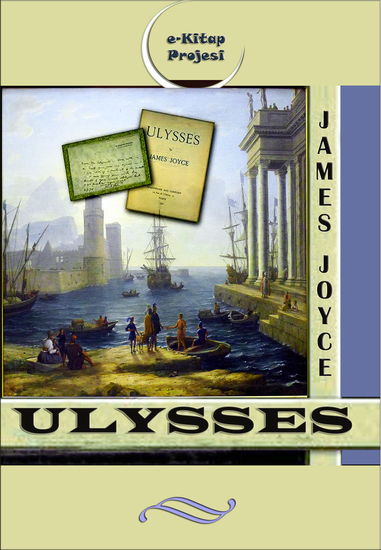
Ulysses - cover

Ulysses

James Joyce

Casa editrice: E-Kitap Projesi & Cheapest Books

  • 0
  • 0
  • 0

Sinossi

The book consists of 18 chapters, each covering roughly one hour of the day, beginning around 8 a.m. and ending sometime after 2 a.m. the following morning. Each chapter employs its own literary style, and parodies a specific episode in Homer's Odyssey. Furthermore, each chapter is associated with a specific colour, art or science, and bodily organ. This combination of kaleidoscopic writing with an extreme formal schematic structure renders the book a major contribution to the development of 20th-century modernist literature. The use of classical mythology as an organising framework, the near-obsessive focus on external detail, and the occurrence of significant action within the minds of characters have also contributed to the development of literary modernism. Nevertheless, Joyce complained that, "I may have oversystematised Ulysses," and played down the mythic correspondences by eliminating the chapter titles that had been taken from Homer.

As he was completing work on Dubliners in 1906, Joyce considered adding another story featuring a Jewish advertising canvasser called Leopold Bloom under the title Ulysses. Although he did not pursue the idea further at the time, he eventually commenced work on a novel using both the title and basic premise in 1914. The writing was completed in October 1921. Three more months were devoted to working on the proofs of the book before Joyce halted work shortly before his self-imposed deadline, his 40th birthday (2 February 1922).
This publication encountered censorship problems in the United States; serialisation was halted in 1920 when the editors were convicted of publishing obscenity. Although the conviction was based on the "Nausicaä" episode of Ulysses, The Little Review had fuelled the fires of controversy with dada poet Elsa von Freytag-Loringhoven's defence of Ulysses in an essay "The Modest Woman." Joyce's novel was not published in the United States until 1933.

With the appearance of both Ulysses and T. S. Eliot's poem, The Waste Land, 1922 was a key year in the history of English-language literary modernism.

In Ulysses, Joyce employs stream of consciousness, parody, jokes, and virtually every other established literary technique to present his characters. The action of the novel, which takes place in a single day, 16 June 1904, sets the characters and incidents of the Odyssey of Homer in modern Dublin and represents Odysseus (Ulysses), Penelope and Telemachus in the characters of Leopold Bloom, his wife Molly Bloom and Stephen Dedalus, parodically contrasted with their lofty models.

The book explores various areas of Dublin life, dwelling on its squalor and monotony. Nevertheless, the book is also an affectionately detailed study of the city, and Joyce claimed that if Dublin were to be destroyed in some catastrophe it could be rebuilt, brick by brick, using his work as a model. To achieve this level of accuracy, Joyce used the 1904 edition of Thom's Directory—a work that listed the owners and/or tenants of every residential and commercial property in the city. He also bombarded friends still living there with requests for information and clarification.
Disponibile da: 10/02/2024.
Lunghezza di stampa: 800 pagine.

Altri libri che potrebbero interessarti

  • Practice - cover

    Practice

    Ross Gay, Noah Davis

    • 0
    • 0
    • 0
    A 45-year-old Black man. A 24-year-old white man. Both writers. One a teacher; the other his student. Before the pandemic separated them, Ross Gay and one of his graduate poetry students, Noah Davis, met regularly to play one-on-one basketball. It was a real hard workout. After each session they were moved to exchange letters about basketball and so much more. Gay and Davis, who both attended college on sports scholarships, have taught and coached basketball, and love the sport—its beauty, its athleticism—see their letters as a way to work through some of the larger issues inherent in sports, from misogyny to race to competition, and as their friendship deepens, basketball becomes a springboard for talking how men relate to each other and to the world. All while never losing sight of how playing games brings them delight, which is, of course, Gay’s signature subject.
    Mostra libro
  • Free to Stand for Truth and Justice - cover

    Free to Stand for Truth and Justice

    Laurent Gbagbo

    • 0
    • 0
    • 0
    Ousted from power by the French army on April 11, 2011, following the disputed presidential election in Côte d'Ivoire of November 2010, Laurent Gbagbo was charged with crimes against humanity before the International Criminal Court (ICC) in The Hague, on December 5, 2011.
    
    This book, written from 2012 onwards, thanks to numerous prison visits and interviews, is the only one to have been produced with the participation of the Ivorian president during his incarceration and trial.
    This unique testimony is more than ever a document for history, because it sheds light on the manipulations of the 2010 elections, the collusion between Nicolas Sarkozy's France and the ICC to get rid of Laurent Gbagbo, and the stalling tactics and maneuvers that marred "Gbagbogate."
    Over meetings with François Mattei, Laurent Gbagbo looks back on his seven years in prison, explains what they mean and shares his vision for the future—that of a free man, come what may.
    Mostra libro
  • The Great Refusal - A New Vision of Resistance - cover

    The Great Refusal - A New Vision...

    Casey Gerald

    • 0
    • 0
    • 0
    In the tradition of Ta-Nehisi Coates’ Between the World and Me, bell hook’s All About Love, and even James Baldwin’s The Fire Next Time, comes a groundbreaking blend of personal and political commentary from acclaimed memoirist Casey Gerald, offering an iconoclastic reframe of resistance and rebellion to meet the current moment and remake the world on our terms. In 2019, 400 years after the first Africans were stolen and brought to American shores for enslavement, Casey Gerald made a bold and controversial proclamation on national television: “We’ve been given strategies to make it in this country, to endure this land… but there’s another very important tradition that each person has the right and opportunity and perhaps, at this very urgent moment, the responsibility to reclaim, and that is the strategy of flight, of escape.” His interviewer, Michel Martin, asked, “Where are we going?”The Great Refusal is the answer to Martin’s apt question. In a short yet powerful volume, Gerald maps the path forward, calling on the works of Black luminaries, writers, and activists, as well as his own experience stepping back from the limelight and reassessing our current strategies of resistance and endurance. He implores us to tend to our inner resources and restrengthen our own worlds. Much resistance, he argues, is an inherent dialogue with the oppressor, playing on their battlefield, a defense to their offensive. (He is a former football star, after all.) Now, again, we find ourselves on the shorelines of destruction. The strategies we’ve been taught – assimilation, respectability politics, meritocracy – are stalling out or degrading us further. What would rebellion look like if we stepped out of this cycle and imagined a different world, one on our terms? Marginalized Americans are in a gridlock fight for dignity in a system that is hellbent on never granting it. It’s time we understood our power, our peace, and our needs, and built them on our own instead of begging for scraps. Gerald offer’s a way — one that saved him, just as it once saved his forebears: the great refusal.
    Mostra libro
  • How to increase your magnetic feminine energy in today's world - Feminine energy tips - cover

    How to increase your magnetic...

    Parshwika Bhandari

    • 0
    • 0
    • 0
    I am Parshwika I published the feminine energy book few years back and many people listen to that audiobook and they liked it and got reviews from people so here I am publishing another feminine energy book based on my updated experience knowledge and more deep insights as I have grown alot in past couple of years being a female and as I am getting into more feminine side of me things gets more clear and more easy and overall increases my own happiness and joy, in this book I am covering yhr hidden feminine energy in today's world and what problem it is creating because of that and how to fix them or increase your feminine energy based on my own experience and knowledge helping you to increase your feminine energy to live happily ever after as feminine energy is one if the most powerful energy force on earth and is root of so many good things in a life of a female and also in human life in general and also for nature, so let's see you on other side which means let's meet you in audiobook.
    Mostra libro
  • The Importance of Not Being Ernest - My Life with the Uninvited Hemingway - cover

    The Importance of Not Being...

    Mark Kurlansky

    • 0
    • 0
    • 0
    The New York Times–bestselling author of Salt examines the intersections between his life and Ernest Hemingway’s in this mix of travel memoir and history. 
     
    By a series of coincidences, Mark Kurlansky’s life has always been intertwined with Ernest Hemingway’s legend, starting with being in Idaho the day of Hemingway’s death. The Importance of Not Being Ernest explores the intersections between Hemingway’s and Kurlansky’s lives, resulting in creative accounts of two inspiring writing careers. Travel the world with Mark Kurlansky and Ernest Hemingway in this personal memoir, where Kurlansky details his ten years in Paris and his time as a journalist in Spain—both cities important to Hemingway’s adventurous life and prolific writing. 
     
    Paris, Basque Country, Havana and Idaho.Get to know the extraordinary people he met there—those who had also fallen under the Hemingway spell, including a Vietnam veteran suffering from the same syndrome the author did, two winners of the Key West Hemingway look-alike contest, and the man in Idaho who took Hemingway hunting and fishing. 
     
    In The Importance of Not Being Ernest, find:A memoir full of entertaining and illuminative storiesLittle-known historical facts about Hemingway’s lifeAnecdotes about those who suffer from what the Kurlansky calls “hemitis” 
     
    Readers of Haruki Murakami’s What I Talk About When I Talk About Running, John Steinbeck’s Travels with Charley in Search of America, or The Boys will love The Importance of Not Being Ernest. 
     
    Praise for The Importance of Not Being Ernest 
     
    “An absolute delight! Full of personality, Kurlansky’s book will enchant history, literature, and Hemingway fans alike.” —Library Journal (starred review)
    Mostra libro
  • A Saga of the Seas - From their pens to your ears genius in every story - cover

    A Saga of the Seas - From their...

    Kenneth Grahame

    • 0
    • 0
    • 0
    Kenneth Grahame was born on 8th March 1859 in Edinburgh. 
    At age 5 his mother succumbed to puerperal fever.  His father, who had a drinking problem, now sent his 4 children to live with their grandmother at her large house in Cookham, Berkshire. Here the children lived in large open grounds next to the river.  These early experiences would in later years, be retold in his writing through a myriad of characters. 
    Grahame loved being a pupil at St Edward's School, Oxford and wanted to enroll at the university there but his guardian demurred on account of the cost. 
    Instead, a banking career was chosen for him, starting in 1879 at the Bank of England, where he rose steadily to the rank of its Secretary until retiring, with a pension, in 1908 due to ill health. 
    Alongside his commercial career Grahame had written and published various stories and essays in several periodicals. Some were anthologized as ‘Pagan Papers’ in 1893, and two years later ‘The Golden Age’ and later still ‘Dream Days’ and its masterpiece ‘The Reluctant Dragon’ became part of many home libraries.  His ability to view life through the lens of a young and curious child was superb, enabling the reader to easily identify with the character.   
    Grahame married Elspeth Thomson in 1899 and they had one child; Alastair, born semi-blind and plagued by health problems.  In a heart-rending tragedy he would later take his own life whilst attending Oxford University in 1920.   
    In 1908 Grahame reworked many of the bedtime stories he had fashioned for his son into the enduring favourite; ‘The Wind in the Willows’, describing the heart-warming adventures of Mr Toad and his friends.   
    Kenneth Grahame died in Pangbourne, Berkshire, on 6th July 1932.
    Mostra libro
