Rejoignez-nous pour un voyage dans le monde des livres!
Ajouter ce livre à l'électronique
Grey
Ecrivez un nouveau commentaire Default profile 50px
Grey
Abonnez-vous pour lire le livre complet ou lisez les premières pages gratuitement!
All characters reduced
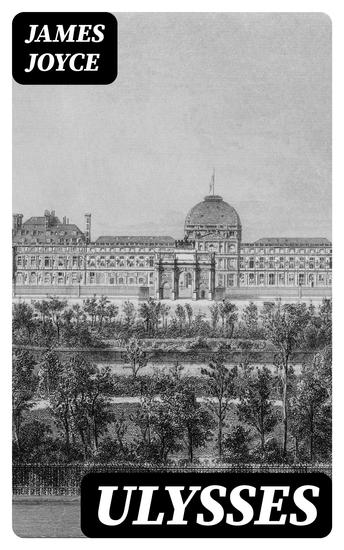
Ulysses - cover

Ulysses

James Joyce

Maison d'édition: DigiCat

  • 0
  • 0
  • 0

Synopsis

James Joyce's "Ulysses" is a monumental modernist novel that chronicles a single day in the life of Leopold Bloom as he traverses Dublin on June 16, 1904. The narrative employs a stream-of-consciousness technique that intricately weaves the mundane with the profound, showcasing a kaleidoscope of thoughts, emotions, and encounters. Joyce masterfully fuses a multitude of literary styles, from parody and pastiche to lyrical prose, all while paying homage to Homer's epic "Odyssey." Its bold structure and innovative use of language situate "Ulysses" as a cornerstone of early 20th-century literature, inviting readers to engage deeply with its themes of identity, alienation, and the search for meaning in everyday life. James Joyce (1882-1941), an Irish novelist and seminal figure in modernist literature, was deeply influenced by his own upbringing and experiences in Dublin. His previous works, such as "A Portrait of the Artist as a Young Man" and "Dubliners," laid the groundwork for the exploration of personal and cultural complexities that he would fully realize in "Ulysses." Joyce's innovative narrative style was driven by a desire to capture the essence of human consciousness and the intricate web of human relationships. "Ulysses" is a must-read for anyone interested in exploring the depths of human experience through innovative narrative form. It challenges and invites readers to participate in an intricately woven tapestry of life, encouraging a profound reconsideration of the ordinary. Joyce's work remains as relevant today, offering insightful reflections on the human condition that resonate across time and place.
Disponible depuis: 16/08/2022.
Longueur d'impression: 1513 pages.

D'autres livres qui pourraient vous intéresser

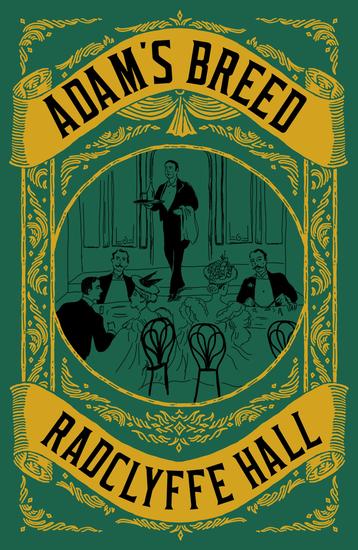
  • Adam's Breed - cover

    Adam's Breed

    Radclyffe Hall

    • 0
    • 0
    • 0
    Gian-Luca has a rocky start in life, his mother dying in childbirth, his father unknown, and he is sent to grow up with his grandparents amongst an Italian immigrant community on Old Compton Street. He becomes a waiter, where he learns the value of hard work, and soon lands a promotion to head waiter in a fine-dining restaurant. He excels in this position, and it is not long before he meets Maddelena, to whom he gets married. It seems he has found a happy ending.
    However, despite his marriage to Maddelena and his achievements in his work, he finds he is not happy, after all. Life loses its joy, and he comes to despise those he serves in the restaurant, seeing in the diners the ugly side of society. Disconsolate, he sets out to seek a more fulfilling life, and becomes a hermit, trying to reconnect with nature, and hoping to find peace outside of society.
    Despite winning awards upon its publication, Adam's Breed sank into obscurity following the censorship of Hall's later novel The Well of Loneliness. An early example of immigrant narratives, yet still relevant today, it is time Gian-Luca's stirring tale found its way back to the canon.
    Voir livre
  • Buffalo Bill Cody: Stories from the Old West - cover

    Buffalo Bill Cody: Stories from...

    William Cody, Bill Buffalo

    • 0
    • 0
    • 0
    William Frederick Cody, known as Buffalo Bill, is one of the great icons of the pioneer years in the early American West. His exploits provide much insight into the life on the plains, with its Indians, cowboys, rough riders, and overall rugged existence. You are sure to enjoy this selection of entertaining stories from the Old West, written by the Honorable William F Cody.
    Voir livre
  • The Epic Poems - cover

    The Epic Poems

    William Shakespeare

    • 0
    • 0
    • 0
    Before the Stage, There Was the Page: Discover Shakespeare the Poet.
    
    While the world knows William Shakespeare for his legendary plays, it was his sweeping narrative poems that first established him as a literary titan in the eyes of the Elizabethan elite. This collection brings together his longer, epic-style works—masterpieces of desire, betrayal, and political ruin that showcase a level of linguistic ornament and psychological intensity rarely seen on the stage.
    
    This collection explores the pillars of Shakespeare's poetic genius:
    
    The Master of Classical Adaptation: Witness the Bard reimagining the myths of ancient Rome and Greece, breathing fresh, visceral life into tales of tragic desire and legendary honor.
    
    The Psychology of the Verse: Experience the internal monologues of characters caught in moments of extreme crisis, rendered with the same complexity found in his greatest dramatic soliloquies.
    
    Formal Perfection: Explore his command of demanding poetic structures, from the flowing "Sesta Rima" to the stately "Rhyme Royal," demonstrating a technical virtuosity that defined the English Renaissance.
    
    Themes of Power and Virtue: Delve into narratives that examine the corruption of authority and the resilience of the human spirit, serving as a poetic mirror to the political tensions of his time.
    
    Shakespeare's epic poems offer a richer, more descriptive immersion into his world than his scripts alone. They are essential for anyone seeking the full breadth of his literary legacy and linguistic beauty.
    
    Experience the Bard's most intimate and ornate creations. Buy "The Epic Poems of William Shakespeare" today and complete your library of the world's greatest writer.
    Voir livre
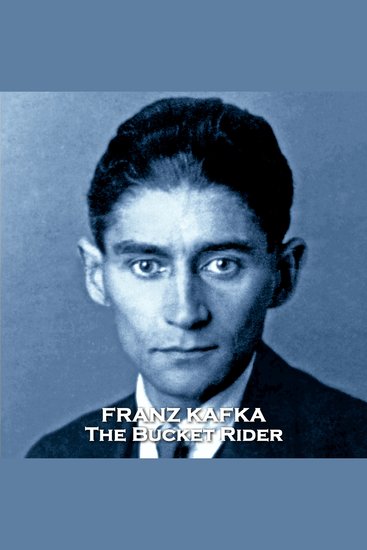
  • The Bucket Rider - A poor man seeks compassion but is found wanting - cover

    The Bucket Rider - A poor man...

    Franz Kafka

    • 0
    • 0
    • 0
    Franz Kafka was born on 3rd July 1883 in Prague, then in Bohemia, the eldest of 6, into a middle-class Jewish family. 
     
    Life for the young Kafka and his passion for literature was often made an ordeal by his over-bearing and domineering entrepreneur of a father.   
     
    In 1889 Kafka was sent to the Deutsche Knabenschule, an elementary school in Prague. His father would only allow him to be educated in German-speaking schools and even went so far as to limit visits to the synagogue to four a year. 
     
    In 1901 he graduated from the classics-oriented Altstädter Gymnasium. Kafka did well there and across a large range of subjects.  He now enrolled at the Charles Ferdinand University, to study chemistry, but quickly switched to law for which he obtained his degree in June 1906 and then performed the mandatory year of unpaid service as clerk at the civil and criminal courts. 
     
    A job at an Italian insurance company left him little time to write and after a year he took another job with the Worker's Accident Insurance Institute for the Kingdom of Bohemia where he stayed until ill health led to his resignation in 1922. 
     
    Although he saw work as a means to pay the bills and to allow him time to write, he received several promotions and was noted as a good employee. 
     
    By 1917 Kafka was suffering from tuberculosis, which required frequent periods of convalescence. Interspersed with this, were several intense affairs before he settled in Berlin with Dora Diamant, a 25-year-old kindergarten teacher who herself having left the ghetto now influenced Kafka's interest in the book of Jewish law, the Talmud. 
     
    Kafka’s on-going health was littered with problems. Apart from TB there were several other ailments, including migraines, insomnia, boils, depression, all usually brought on by excessive stresses and strains. He attempted to counteract all of this by naturopathic treatments, a vegetarian diet and consuming large quantities of unpasteurized milk. 
     
    His tuberculosis still worsened. He returned to Prague, where he died on 3rd June 1924. He was 40. 
     
    His literary works are few in number but towering in influence.  His masterpieces include ‘The Trial’, ‘The Metamorphosis’ as well as a number of short stories which reveal facets of humankind that truthfully could only be born from Kafka’s brain and pen.
    Voir livre
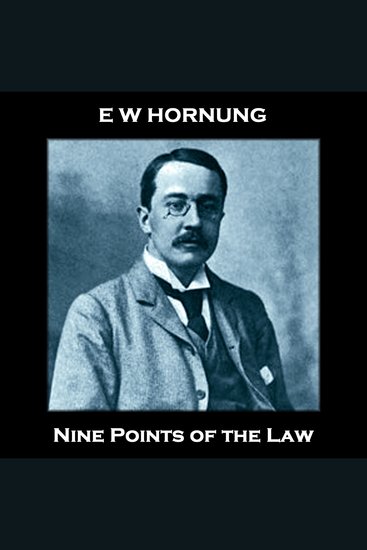
  • Nine Points of the Law - From their pens to your ears genius in every story - cover

    Nine Points of the Law - From...

    E W Hornung

    • 0
    • 0
    • 0
    Ernest William Hornung was born in Middlesbrough, England on 7th June 1866, the third son and youngest of eight children.   
    Although spending most of his life in England and France he spent two years in Australia from 1884 and that experience was to colour and influence much of his written works. 
    His most famous character A. J. Raffles, ‘the gentleman thief’, was published first in Cassell's Magazine during 1898 and was to make him famous across the world as the new century dawned.  
    Hornung also wrote several stage plays and was a gifted poet. 
    Spending time with the troops in WWI he published Notes of a Camp-Follower on the Western Front during 1919, a detailed account of his time there.  This was especially close to his heart as his son, and only child, was killed at the Second Battle of Ypres on 6th July 1915.   
    Ernest William Hornung died in Saint-Jean-de-Luz, in the south of France on 22nd March 1921.
    Voir livre
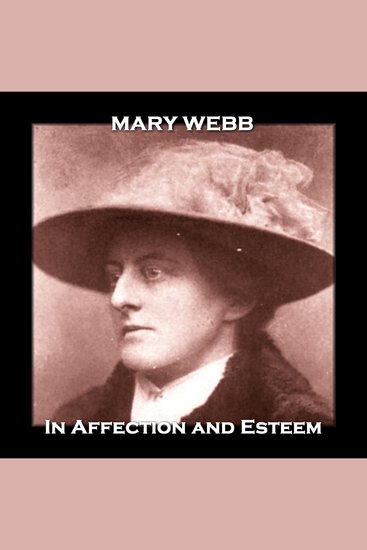
  • In Affection and Esteem - From their pens to your ears genius in every story - cover

    In Affection and Esteem - From...

    Mary Webb

    • 0
    • 0
    • 0
    Mary Gladys Meredith was born on 25th March 1881 at Leighton Lodge in the village of Leighton, near Shrewsbury in Shropshire.  
    Mary was home-schooled by her father before being sent to a finishing school in Southport in 1895. Her longs walks in the countryside helped her develop a heightened sense of observation and description, of both people and places, which later infused both her poetry and prose. 
    When she was 20 she developed symptoms of Graves' disease, a thyroid disorder that caused bulging protuberant eyes and throat goitre. This caused life-long ill health and was a possible contributor to her early death.  
    Mary was first published as a teenager when her brother sent to a local newspaper her poem on a recent rail accident.  Mary, who was in the habit of destroying her work was appalled though placated when she discovered that it had received some positive appreciation in readers letters. 
    1912 brought marriage to Henry Bertram Law Webb, a teacher. He supported her literary work which, in 1917, resulted in the publication of her novel ‘The Golden Arrow.’ 
    A few years later they acquired a property in London where, it was hoped, recognition of her literary talents would be more easily recognised.   
    Her 1924 novel, ‘Precious Bane’, won the Prix Femina Vie Heureuse, the prestigious French literary prize awarded by an all-female jury. 
    Most of her poetry and various other works were only published after her death. 
    By 1927 her health was deteriorating and her marriage failing.   
    Mary Webb died on 8th October 1927 at St Leonards-on-Sea, East Sussex.  She was 46.
    Voir livre