¡Acompáñanos a viajar por el mundo de los libros!
Añadir este libro a la estantería
Grey
Escribe un nuevo comentario Default profile 50px
Grey
Suscríbete para leer el libro completo o lee las primeras páginas gratis.
All characters reduced
ULYSSES (Modern Classics Series) - Exploring the Depths of Modernist Identity and Artistry in Dublin - cover

ULYSSES (Modern Classics Series) - Exploring the Depths of Modernist Identity and Artistry in Dublin

James Joyce

Editorial: Good Press

  • 0
  • 0
  • 0

Sinopsis

James Joyce's "Ulysses" is a monumental work in modernist literature, celebrated for its innovative narrative techniques and rich exploration of the inner workings of the human mind. Set in Dublin on a single day, June 16, 1904, the novel mirrors Homer's "Odyssey" while delving into the mundane experiences of its characters, particularly Leopold Bloom, Stephen Dedalus, and Molly Bloom. Joyce employs stream-of-consciousness as a literary style, inviting readers to engage with the characters' thoughts and emotions in a manner that reflects the complexities of everyday life. The book is steeped in linguistic experimentation, presenting a mosaic of different styles, voices, and perspectives that challenge traditional narrative forms and engage with themes of identity, time, and the ordinary epic of life. James Joyce, an Irish expatriate, drew on his own experiences in Dublin to craft this intricate narrative, which symbolizes not just a personal odyssey but a broader commentary on the nature of human existence. His pioneering techniques were influenced by his education, cultural background, and the burgeoning modernist movement of the early 20th century, all of which underscore his desire to break literary conventions and push boundaries. "Ulysses" is recommended for readers seeking a profound engagement with literature and a deeper understanding of the human condition. Its intricacies reward careful study, making it a crucial text for anyone interested in the evolution of narrative form and the exploration of consciousness in fiction.
Disponible desde: 10/01/2024.
Longitud de impresión: 900 páginas.


Otros libros que te pueden interesar

  • Normal Social Life The (Unabridged) - cover

    Normal Social Life The (Unabridged)

    H. G. Wells

    • 0
    • 0
    • 0
    Herbert George Wells (21 September 1866 - 13 August 1946) was an English writer. Prolific in many genres, he wrote dozens of novels, short stories, and works of social commentary, history, satire, biography and autobiography. His work also included two books on recreational war games. Wells is now best remembered for his science fiction novels and is often called the "father of science fiction", along with Jules Verne and the publisher Hugo Gernsback.
    THE NORMAL SOCIAL LIFE: Produces an increasing surplus of energy and opportunity, more particularly under modern conditions of scientific organisation and power production; and this through the operation of rent and of usury tends to.
    Ver libro
  • August Heat - From their pens to your ears genius in every story - cover

    August Heat - From their pens to...

    W F Harvey

    • 0
    • 0
    • 0
    William Fryer Harvey AM was born on 14th April 1885 into a wealthy Quaker family in Leeds, West Yorkshire. 
    He was educated at the Quaker Bootham School in Yorkshire and Leighton Park School in Reading before university at Balliol College, Oxford.  
    His health was fragile and he poured his energies into writing short stories and in 1910 published his first collection ‘Midnight House’. 
    In the Great War he was with the Friends' Ambulance Unit and then served as a surgeon-lieutenant in the Royal Navy.  There he received the Albert Medal for Lifesaving but lung damage received at that time troubled him for the rest of his life. 
    He continued to write short stories, and even a memoir, but by 1925 ill health had forced his retirement to any outside work.  Three years later he published his second collection which contained his macabre classic ‘The Beast with Five fingers’, only one more collection would come from his pen in his lifetime. 
    For many years of his life he now lived in Switzerland with his wife but a yearning to be home saw them come back to England in 1935. 
    W F Harvey died in Letchworth on the 4th June 1937. He was 52.
    Ver libro
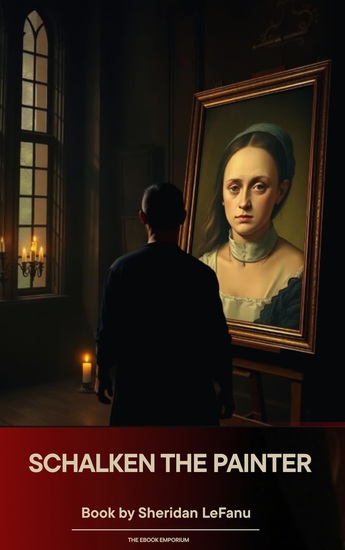
  • Schalken the Painter - cover

    Schalken the Painter

    Joseph Sheridan Le Fanu

    • 0
    • 0
    • 0
    "He was not a man of this world, and the gold he paid with had a cold, ancient gleam."
    
    In the workshops of 17th-century Leyden, the young and talented artist Godfried Schalken falls in love with Rose, the beautiful niece of his master, Gerard Douw. But their romance is shattered by the arrival of a mysterious suitor: Minheer Vanderhausen. Blue-skinned, breathless, and draped in magnificent but outdated finery, Vanderhausen offers a chest of gold so immense that Douw cannot refuse. Rose is bartered away to this living corpse, disappearing into a nightmare from which there is no return. Years later, Schalken is granted one final, terrifying glimpse of his lost love—and the horrific entity she now serves in the shadows.
    
    The Horror of the Visual: Le Fanu, himself an admirer of art, uses the techniques of the Dutch masters to tell his story. He describes scenes as if they were paintings, utilizing chiaroscuro—the intense contrast between deep shadows and bright light—to hide the grotesque features of the supernatural antagonist. The result is a story that feels as textured and atmospheric as an oil painting come to life.
    
    A Tale of Moral Decay: At its heart, the story is a critique of avarice. Gerard Douw's willingness to sell his niece for a chest of gold is the "true" horror that invites the supernatural in. Le Fanu explores the idea that human greed can be more monstrous than any phantom, leading to a tragedy that haunts the protagonist until his dying day.
    
    The Legacy of the "Demon Lover": Schalken the Painter is a foundational text in the "demon lover" tradition of Gothic fiction. It avoids the typical "clanking chains" of 18th-century ghosts, opting instead for a quiet, physical, and deeply uncanny presence. The final image of the story—the "living" painting—remains one of the most famous and frightening endings in horror literature.
    
    Don't look too closely at the shadows. Purchase this masterpiece of the macabre today.
    Ver libro
  • Kidnapped - cover

    Kidnapped

    Robert Louis Stevenson

    • 0
    • 0
    • 0
    The narrative begins with young David Balfour's attempt to claim his inheritance, which leads to his kidnapping and the unfolding of a gripping tale of betrayal, friendship, and survival. Along the way, David encounters characters such as Alan Breck Stewart, a Jacobite, and together they navigate the treacherous Scottish Highlands, facing numerous challenges and adventures.
    Ver libro
  • The Two Barques - cover

    The Two Barques

    Arthur Conan Doyle

    • 0
    • 0
    • 0
    The Two Barques is a short story by Arthur Conan Doyle first published in the Pearson's Magazine in march 1897. 2nd story of the Captain Sharkey saga.In Kingston, an elderly logwood-cutter saw Captain Sharkey's pirate barque, the Happy Delivery, careening at Torbec on the south-west of Hispaniola, as well as Sharkey himself, with four men, buccaneering on the outlying island of La Vache. Stephen Craddock, an adventurer comes to the Governor Sir Edward Compton with a plan for the extirpation of Sharkey. He want to use the sister ship of the Happy Delivery, the White Rose, and set sail for the Island of La Vache, where Sharkey is slaying the wild oxen. When Sharkey will see the White Rose he will surely mistake it for his own vessel which he is awaiting, and he will come on board to his own undoing. The plan is accepted by the Governor and Craddock set sail to La Vache with a crew of volunteers. When they arrive to La Vache, no sign of Sharkey. They search him in the forest for a few days but finally they decide to return to their boat. When they arrive on board something is strange, as if it was not the same ship, and suddenly they are captured by Sharkey on the deck. They are on the pirate ship the Happy Delivery which came back from its careening upon the very day that they left in the forest. Then the White Rose is scuttled in the bay. Craddock, bruised and wounded in soul and body, is thrown into a dark sail-room. For two days, the Happy Delivery set sail to Jamaica. When he arrives to Port-Royal, Sharkey, with that diabolical cunning and audacity which were among his main characteristics, is simulating the part which Craddock would himself have played had he come back victorious. Sharkey exhibits Craddock on the deck so that the other side could fall into the trap but the later has sprung the bulwarks and is swimming for his life. He is hit and hit again by pistol shots but is still swimming. Irritated, Sharkey takes his musket and fired a fatal blow on Craddock.
    Ver libro
  • Morality of the Profession of Letters The (Unabridged) - cover

    Morality of the Profession of...

    Robert Louis Stevenson

    • 0
    • 0
    • 0
    Robert Louis Stevenson was a Scottish novelist, essayist, poet and travel writer. Born and educated in Edinburgh, Stevenson suffered from serious bronchial trouble for much of his life, but continued to write prolifically and travel widely in defiance of his poor health. As a young man, he mixed in London literary circles, receiving encouragement from Andrew Lang, Edmund Gosse, Leslie Stephen and W. E. Henley, the last of whom may have provided the model for Long John Silver in Treasure Island.
    THE MORALITY OF THE PROFESSION OF LETTERS: The profession of letters has been lately debated in the public prints; and it has been debated, to put the matter mildly, from a point of view that was calculated to surprise high-minded men, and bring a general contempt on books and reading.
    Ver libro