Join us on a literary world trip!
Add this book to bookshelf
Grey
Write a new comment Default profile 50px
Grey
Subscribe to read the full book or read the first pages for free!
All characters reduced
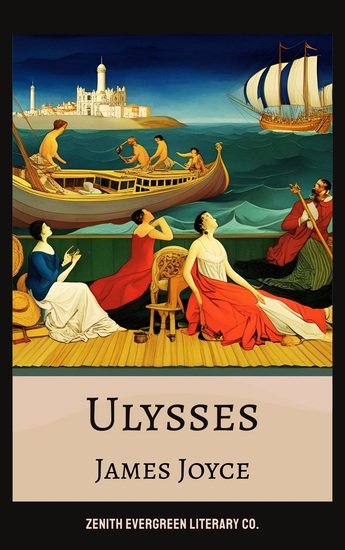
Ulysses - A Monument of Modernism and Masterpiece of Stream-of-Consciousness Fiction - cover

Ulysses - A Monument of Modernism and Masterpiece of Stream-of-Consciousness Fiction

James Joyce, Zenith Evergreen Literary Co.

Publisher: Zenith Evergreen Literary Co.

  • 0
  • 0
  • 0

Summary

Bold, brilliant, and boundary-breaking—this is literature like you've never read it before.

Ulysses by James Joyce is more than a novel—it's a literary odyssey. Set over the course of a single day, June 16th, 1904, it follows Leopold Bloom through the streets of Dublin in a sweeping narrative that mirrors the structure of Homer's Odyssey.

Joyce's groundbreaking style—stream of consciousness, rich symbolism, linguistic play, and deep psychological insight—makes Ulysses a foundational text of modern literature and one of the most studied and admired novels of all time.

💬 "The most important novel of the 20th century." — The Modern Library
A must-read for fans of Virginia Woolf, Franz Kafka, and Thomas Pynchon.

🧠 Why Ulysses Still Matters Today
A cultural cornerstone of modernism and banned books history

Delivers an unmatched exploration of consciousness and identity

A literary challenge and triumph for adventurous readers

📣 Take the Journey Through Dublin and the Self.
Buy Ulysses today and enter the mind of a literary genius whose voice still echoes through every great novel written since.
Available since: 04/16/2025.
Print length: 791 pages.

Other books that might interest you

  • A Rare Recording of Lawrence Ferlinghetti Reading His Own Poems - cover

    A Rare Recording of Lawrence...

    Lawrence Ferlinghetti

    • 0
    • 0
    • 0
    Lawrence Monsanto Ferlinghetti (March 24, 1919 - February 22, 2021), born in Yonkers, NY, was an American poet, painter, social activist, and co-founder of City Lights Booksellers & Publishers. An author of poetry, translations, fiction, theatre, art criticism, and film narration, Ferlinghetti was best known for his second collection of poems, A Coney Island of the Mind (1958), which has been translated into nine languages and sold over a million copies. The following recording includes Ferlinghetti reading the poems, Baseball Canto, Travels in America Deserta, See It Was Like This When, and Underwear.
    Show book
  • When Others Dont Understand Your Illness - 5 Ways to Feel Well When You're Sick and Alone - cover

    When Others Dont Understand Your...

    Heather Coleske

    • 0
    • 0
    • 0
    A diagnosis and treatment plan for a chronic illness has brought your world crashing down - When Others Don’t Understand Your Illness can help get your well-being back on track again. 
    Stress in our everyday life is common but add the shock of diagnosis and grief of the loss of health, and it’s a perfect storm of stress and overthinking, which can lead to depression and anxiety. 
    This book teaches you how to leverage your existing resources rather than expending your finite energy on reinventing the wheel. 
    This chronic illness book can help you alter your view of the future! It offers a well-being plan that can propel you from feeling sick and sad to thriving! If you’re feeling overwhelmed by your new reality and tired of sifting through the myriad of conflicting advice about everything from fatigue to fibromyalgia and dealing with the indifference of people around you, this book may help to declutter, prioritize, and put things into perspective. 
    The book covers:5 Ways to feel well - practical ways to incorporate and optimize simple things you already have at your disposal to improve your wellbeingUnderstanding autoimmune disease and moodNavigating relationshipsHow to Live with pain - strategies for managing pain before it manages youWays to help you feel better when you’re feeling sick and aloneCoping with loss - future prospects including hopes and dreams are often lost when chronic illnesses strike, and their loss is always accompanied by griefStress managementWays to stop overthinkingAnxiety techniques that are simple yet effective 
    Living with chronic illness is complicated, but this practical guide to intentional physical, mental, spiritual, and relational well-being offers a pathway to flourishing. For anyone coming to terms with a diagnosis, there is hope to live your best life by developing a personalized well-being plan.
    Show book
  • Frazzlebrain - Break Free from Anxiety Anger and Stress Using Advanced Discoveries in Neuropsychology - cover

    Frazzlebrain - Break Free from...

    PhD Gina Simmons Schneider

    • 0
    • 0
    • 0
    If you feel frazzled, you dwell in good company. Racing between the demands of work, health, family, and friends, many people report feelings of worry, irritability, and increasing stress. While we often cannot control stressful life events, we can learn to control our brain's response to those circumstances and reduce our suffering. 


    Drawing from the latest research and more than twenty-five years of clinical experience, Dr. Gina Simmons Schneider explains the link between anxiety, anger, and stress and shares groundbreaking remedies from neuropsychology. These tools will strengthen your resilience and expand your capacity for happiness. 


    In Frazzlebrain, you'll discover how to: 


    ● Soften your response to stress 


    ● Overcome toxic self-criticism 


    ● Tame hostile and cynical thinking 


    Each chapter offers exercises, case examples, and self-improvement skills to help you achieve a calmer, happier, healthier lifestyle.
    Show book
  • The Middle Temple Murder - cover

    The Middle Temple Murder

    J. S. Fletcher

    • 0
    • 0
    • 0
    "The Middle Temple Murder" by J. S. Fletcher is a detective novel set in the early 20th century, specifically during the post-World War I era. The story revolves around the mysterious death of an elderly man found dead in Middle Temple Lane, captivating readers with its intrigue and investigation.  
    The protagonist, Frank Spargo, is a newspaper sub-editor who becomes drawn into the murder investigation after discovering the body of the victim, John Marbury. Marbury's connection to the legal profession, as well as his association with a character named Ronald Breton, adds depth to the mystery.  
    At the beginning of the narrative, Spargo, after finishing a night shift at the newspaper office, stumbles upon a crime scene where Marbury has been reported dead. Intrigued by the circumstances, he learns that Marbury was found in a suspicious position, suggesting foul play. Spargo starts piecing together clues, including a scrap of paper found in Marbury’s pocket that bears Breton’s name and address, indicating a possible link between them. 
    As the story unfolds, it explores themes of deception, intrigue, and the complexities of the legal world, with Spargo and Breton working together to uncover the truth behind Marbury’s untimely death. The opening serves to set the stage for a complex mystery filled with unexpected connections and a quest for truth.
    Show book
  • The Art of Conflict-Free Negotiations - 6 Steps to Winning Without Conflict How to Analyze People and Understand Their True Intentions Dreams and Desires - cover

    The Art of Conflict-Free...

    Halbert Ward

    • 0
    • 0
    • 0
    Say Goodbye to Deadlocks and Hello to Deals! 
    Wanna know how to read the room better, be good at assessing relationships, and be an expert in resolving conflicts? 
    Want to coach someone and be a mediator between two parties but are unsure of what to do or ask? 
    Finding ways how to know if you're winning their side without any verbal cues? 
    If any of these questions prompted a yes from you please read on... 
    Ever since we were young, we have been dealing with conflicts and negotiations without even realizing what we're doing is the actual thing. Getting good grades, more time to spend with our friends during weekends, and a better salary benefit the moment we start our lives as working individuals. We've been doing negotiations every time... the question is, are you always getting the best of it? 
    Whether you are dealing with workplace conflicts, brokering deals, or simply striving for mutually beneficial outcomes, the ability to negotiate effectively is a fundamental asset. Let Halbert Ward be your guru, as he presents "The Art of Conflict - Free Negotiations," a finely crafted manual that will teach you successful negotiation skills, the proper mindset of a negotiator, and how to deal with emotions. Let him be your guide on how to do negotiations with finesse and integrity, ensuring mutually beneficial outcomes and sustainable relationships in every interaction. 
    Packed with insider tips, real-world examples, and actionable strategies, "The Art of Conflict-Free Negotiations" empowers you to negotiate with confidence, integrity, and effectiveness, ensuring win-win outcomes and fostering lasting relationships in any negotiation scenario. Keep one handy, polish those negotiation skills, and who knows? Maybe this is the key to getting that "Yes" you've been waiting for!
    Show book
  • The Ethics of Technology - Moral Challengers - cover

    The Ethics of Technology - Moral...

    Craig Dames

    • 0
    • 0
    • 0
    In an age where technology permeates nearly every aspect of our lives, understanding the ethical foundations behind its development and use has never been more critical. Tech ethics, at its core, explores the moral principles that guide our decisions regarding the design, implementation, and impact of technology. As digital tools become increasingly powerful and integrated into society, they bring with them profound questions about responsibility, fairness, and the human consequences of innovation. 
    The roots of technology ethics can be traced back to classical moral philosophy. Thinkers like Aristotle, Kant, and Mill laid the groundwork for how we approach right and wrong, justice, and duty. These age-old theories—virtue ethics, deontology, and utilitarianism—are still highly relevant in today's tech-driven world. For instance, when we ask whether a self-driving car should prioritize the life of a passenger over a pedestrian, we are invoking these very moral frameworks to guide the decision-making process. In this way, ethical theory provides a lens through which we can evaluate the choices we make as developers, users, and regulators of technology. 
    Modern concerns surrounding tech ethics often revolve around issues that were unimaginable even a few decades ago. Digital privacy, algorithmic bias, and autonomous systems challenge us to reinterpret traditional moral values in new contexts. This requires a dynamic understanding of ethics—one that can evolve alongside technological change. Unlike in the past, where tools were relatively neutral and required human operation, today's technologies often act with a degree of independence, raising the stakes of their ethical implications. Machines that learn, adapt, and decide are not just tools; they become agents of action whose behavior must be morally accountable.
    Show book