Join us on a literary world trip!
Add this book to bookshelf
Grey
Write a new comment Default profile 50px
Grey
Subscribe to read the full book or read the first pages for free!
All characters reduced
Dubliners - cover

Dubliners

James Joyce

Publisher: Pharos Books

  • 0
  • 0
  • 0

Summary

"The more I know of the world, the more I am convinced that I shall never see a man whom I can really love. I require so much!" ― Jane Austen, Sense and Sensibility Sense and Sensibility (1811) by Jane Austen tells the tale of the two Dashwood sisters, Elinor and Marianne. They are personifications of good sense and sensibility, respectively. Despite their divergent dispositions, the two women undergo similar experiences as they lose the men they love. The sisters learn that sense must combine with sensibility if personal happiness is to be found in a society where status and wealth dictates the rules of love.
Available since: 11/01/2026.
Print length: 232 pages.

Other books that might interest you

  • The Voice of the City - Further Stories of the Four Million - cover

    The Voice of the City - Further...

    O. Henry

    • 0
    • 0
    • 0
    Complete and unabridged, with 54 full-page plates by Thomas Cole, John Frederick Kensett and Asher Brown Durand. New York talking to itself: a shop girl deciding how to spend her lunch hour, a millionaire's son on a park bench, a waiter who was once a gentleman, and the Fool-Killer walking up a Southern road looking for custom. O. Henry wrote these at the rate of a story a week for the New York World, from hotel rooms and bar tables, and died two years after the book appeared, at forty-seven and in debt. Complete and unabridged. Fifty-four plates by Childe Hassam, Albert Bierstadt and others follow the city from Fifth Avenue in winter to the Canadian Rockies, matching O. Henry's wandering eye.
    Show book
  • A Miscellany of Odds & Ends - cover

    A Miscellany of Odds & Ends

    Mary Grayer Clarke

    • 0
    • 0
    • 0
    These eighteen stories and poems all have a certain amount of truth in them.
    
    From the doggie letter to his breeder to a ghost story. Can you see where one begins and the other ends in each of them?
    Show book
  • Stories About Miners And Mining - An interesting array of tales from around the world - cover

    Stories About Miners And Mining...

    Bret Harte, D H Lawrence, E T A...

    • 0
    • 0
    • 0
    Man has learnt to control his dominion by the use of what initially lay about him; wood and stone for shelter and building as well as resources from the plant and animal worlds over which he slowly obtained dominion.  But as he organised into Nations and Empires, he needed more with which to keep the whole machine spinning.  Society was growing and consuming more.  But many of the richer seams of fuel and minerals lay buried underground.  These riches needed exploiting, brought to the surface to be used and sold.   
     
    In this volume our authors detail sharp-eyed narratives on people whose lives were connected and directed by what happened underground. 
     
    1 - Stories About Mines and Mining - An Introduction 
    2 - Odour of Chrysanthemums by D H Lawrence 
    3 - The Mine Cart by Ryunosuke Akutagawa 
    4 - The Luck of Roaring Camp by Bret Harte 
    5 - An Unexpected Reunion by Johann Hebel 
    6 - The Mines of Falun - Part 1 by E T A Hoffman 
    7 - The Mines of Falun - Part 2 by E T A Hoffman 
    8 - Her Turn by D H Lawrence
    Show book
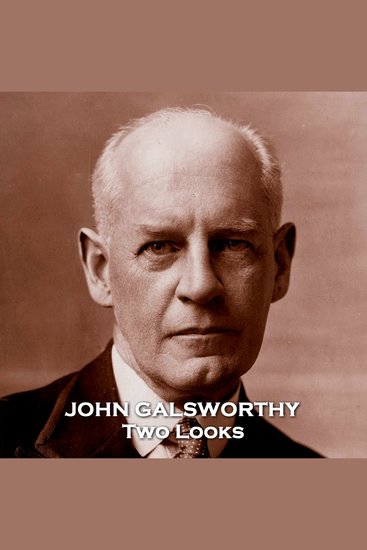
  • Two Looks - Short story from a Nobel Prize winning author - cover

    Two Looks - Short story from a...

    John Galsworthy

    • 0
    • 0
    • 0
    John Galsworthy was born on the 14th August 1867 on the family estate, Parkfield, in Kingston-upon-Thames.  His family’s wealth came from the shipping industry 
    At age nine he began his education at Saugeen, a Bournemouth preparatory school, before moving to Harrow school in 1881, distinguishing himself as an athlete.  
    Galsworthy attended New College, Oxford to read law and left with a second-class degree with honours in 1889. The bar called him in 1890 but Galsworthy decided he would rather run the family’s shipping business. This also meant travelling to destinations such as Vancouver, South Africa and Australia. 
    In 1895 Galsworthy began a decade long affair with Ada Nemesis Pearson Cooper, the wife of his first cousin. It was only when, in 1905, she divorced and married Galsworthy that their affair became known. 
    His literary career began in 1897 with a short story volume, ‘From the Four Winds’, with the pseudonym John Sinjohn as were three further works. Under his own name, in 1904, came ‘The Island Pharisees’, a novel of social observation, seasoned with flashes of satire and propaganda. He also switched from small, independent publishers to the larger Heinemann and to whom he remained for the duration of his career. 
    1906 saw first major play, ‘The Silver Box’, and the novel ‘The Man of Property’. Each to considerable acclaim. The latter was the first in ‘The Forsyte Saga’ trilogy written between 1906 and 1921. It dealt with the questions of status, class and materialism through Soames Forsyte, who is acutely aware of his ‘new money’ status. Jealous of his wife, his machinations drive her into the arms of another. Soames engages in a terrible revenge with terrible consequences.  
    His social agenda was enlightened particularly in his condemnation over the use of solitary confinement in prisons, his attacks on theatrical censorship and campaigning for animal rights. 
    Galsworthy, having been passed over for active service, spent much of the First World War working as an orderly in a field hospital in France. 
    Despite his it was only in 1920 that he had his first blockbuster play ‘The Skin Game’, a melodrama dealing with ethics, property and class.  
    In 1920 ‘In Chancery’ also arrived with further discourse on the marital disharmony between Soames Forsyte and his wife.  
    The appreciation of his work gradually shifted from plays to novels, particularly through his detailing English social difference, tension and pretension with the Forsytes.  A second trilogy, ‘A Modern Comedy’, followed, examining his love for his daughter Fleur and the English commercial upper-middle class, its ideologies and Soames’ poisonous materialism.  
    Having rejected a knighthood in 1918 he was appointed, in 1929, to the Order of Merit. Galsworthy spent his last years writing a third Forsythe trilogy, ‘End of the Chapter’.   
    In 1932 he was awarded the Nobel Prize, but by now failing health meant he was too ill to attend the ceremony. 
    John Galsworthy died at his Hampstead home of a brain tumour on 31st January, 1933. He was cremated and his ashes scattered from an aeroplane over the South Downs.
    Show book

  • Beryl the Croucher and the Rest of England - From their pens to your ears genius in every story - cover

    Beryl the Croucher and the Rest...

    Thomas Burke

    • 0
    • 0
    • 0
    Thomas Burke was born Sydney Thomas Burke on November 29th, 1886 in Eltham, London (at the time it was part of Kent). 
    An author in the early years of the 20th Century Burke brought his skills of pen and eye to parts of London, specifically the Limehouse district of the East End, to write with drive and vigour about the characters he met and the places that he knew.  Whether he turned that material into fiction or non-fiction the words seep quality.  His publications ranged from these wonderful vignettes of down-at-heel London to writings on homosexuality and the English Countryside. 
    Thomas Burke died in the Homeopathic Hospital in Queens Square, Bloomsbury on 22 September 1945.
    Show book
  • The Tale of the Hands of God - From their pens to your ears genius in every story - cover

    The Tale of the Hands of God -...

    Rainer Maria Rilke

    • 0
    • 0
    • 0
    René Karl Wilhelm Johann Josef Maria Rilke was born into a troubled marriage on the 4th December 1875 in Prague, then part of the Austro-Hungarian Empire.  His mother, having previously lost a baby girl, would dress the young boy up in girl’s clothing.   
    Later his father dispatched him to a military academy at age 10 but after a miserable 5 years the young Rilke left due to illness and instead entered first Prague and then Munich and finally Berlin university to study art history, philosophy and literature. 
    His initial forays into literature was in poetry.  His intense, mystical and lyrical style was much admired and over time inspired many in succeeding generations.    
    His short prose collection ‘Stories of God’, written in an impassioned burst over several nights was published in 1900 and offers a beguiling view of much of Rilke’s influences and outlook.  
    The following year he married the pioneering sculptor and artist Clara Westhoff.  The union produced one child, a daughter Ruth.   
    He lived in Paris for most of the Century’s first decade where he mixed with many great minds of the time.  Although he continued to write he also worked as a secretary to the sculptor, Rodin.   
    It was only after they settled in Switzerland in 1919 that his writing output was in full flow.  Here he wrote profusely in both German and French, which included much on his previous travels, his left-wing sympathies, his religious and existential thoughts, all part of a unique and consummate style. 
    From 1923 on, Rilke increasingly struggled with his health which was now in constant decline and often spent time rehabilitating at a sanatorium.   
    Rainer Maria Rilke died of leukaemia on the 29th December 1926 in Montreux, Switzerland.  He was 51.
    Show book