Join us on a literary world trip!
Add this book to bookshelf
Grey
Write a new comment Default profile 50px
Grey
Subscribe to read the full book or read the first pages for free!
All characters reduced
Dubliners - cover

Dubliners

James Joyce

Publisher: Edicions Perelló

  • 0
  • 0
  • 0

Summary

Through fifteen stories set in early twentieth-century Dublin, James Joyce explores the everyday lives of children, young people, and adults marked by moral, social, and emotional paralysis. His characters—clerks, artists, resigned women, aimless dreamers—experience small, intimate revelations, sudden moments of awareness that illuminate, if only briefly, the truth of their lives.

With a sober, precise, and deeply innovative style, Joyce abandons conventional dramatism to reveal the grandeur and the tragedy of the ordinary. Dubliners is a work of eloquent silences and minimal gestures, in which each story unveils the complexity of the human soul and turns the city of Dublin into a living character—oppressive and endearing at once. An essential book for understanding the birth of modern narrative.
Available since: 12/24/2025.
Print length: 230 pages.
Other books that might interest you

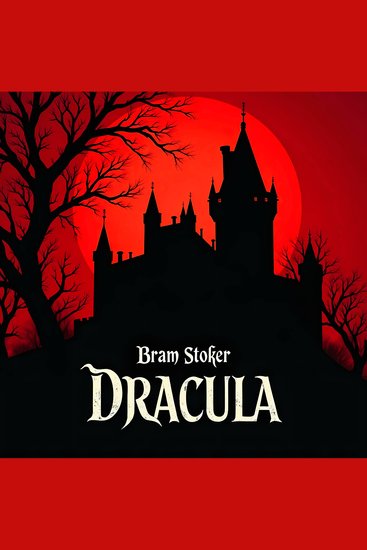
  • Dracula - cover

    Dracula

    Bram Stoker

    • 0
    • 0
    • 0
    Dracula by Bram Stoker is a gothic horror classic that tells the chilling tale of Count Dracula, a vampire from Transylvania who travels to England in search of new blood. Through journal entries, letters, and newspaper clippings, the story unfolds as a group of brave individuals, led by Professor Van Helsing, confront the ancient and sinister vampire. With its dark atmosphere, suspenseful plot, and timeless themes of fear and courage, Dracula remains one of the most influential works in the horror genre.
    Show book
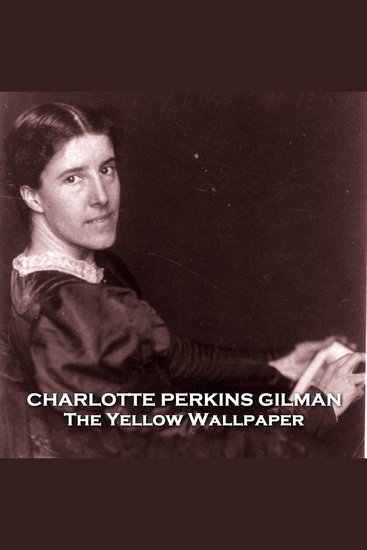
  • The Yellow Wallpaper - From their pens to your ears genius in every story - cover

    The Yellow Wallpaper - From...

    Charlotte Perkins Gilman

    • 0
    • 0
    • 0
    Charlotte Perkins Gilman was born on 3rd July 1860 in Hartford, Connecticut, to an unaffectionate mother and a father who abandoned her and her older brother to a life of poverty. 
    Inevitably her schooling was limited and by 15 she had attended seven different schools but received only four years education.  However Charlotte was resourceful and did spend time with her father’s aunts – the suffragist Isabella Beecher Hooker and the ‘Uncle Tom Cabin’s’ author, Harriet Beecher Stowe as well as many hours at the public library studying ancient civilisations. 
    In 1878, she enrolled in classes at the Rhode Island School of Design where she met Martha Luther and they developed a close relationship until Luther married in 1881. Charlotte was devastated and detested romance and love until she met and married the artist Charles Walter Stetson.  
    Their only child, Katharine Beecher Stetson, was born in 1885 but left Charlotte with post-natal depression, then often dismissed as a case of hysteria or nerves.  Unsuited to domestic life she ruptured her life and moved to California with Katherine.  She divorced in 1894 and then sent Katharine east to live with her father and his second wife confirming that his paternal rights be acknowledged and that Katherine establish a relationship with her father. 
    After her mother died in 1893, Charlotte moved back east and became involved with her first cousin, Wall Street attorney, Houghton Gilman who she married in 1900. After his death she moved back to California, where Katherine now lived.   
    Her most popular story is ‘The Yellow Wallpaper’ which touched on her own post-partum depression and underlined the need for women to be responsible for their mental and physical well-being, as the narrator is ordered by her husband/doctor to take compete rest in her room where she is isolated and becomes obsessed with the revolting yellow wallpaper.   
    She wrote other notable short stories the best of which we also include.   
    Charlotte lectured widely for social reform, wrote important non-fiction works that questioned our patriarchal system and left a legacy as a leading and positive spokesperson for feminism.  
    She was diagnosed with incurable breast cancer in 1932 and, as she wrote in her suicide note and autobiography, she ‘chose chloroform over cancer’    
    Charlotte Perkins Gilman took her own life on 17th August 1935, aged 75, in Pasadena, California.
    Show book
  • Oscar Wilde : Four Stories - Lord Arthur Savile's Crime; The Canterville Ghost; The Sphinx Without a Secret; The Model Millionaire - cover

    Oscar Wilde : Four Stories -...

    Oscar Wilde

    • 0
    • 0
    • 0
    The four tales gathered here reveal Oscar Wilde’s gift for blending wit, irony, and moral reflection within the form of the short story.
    
     Lord Arthur Savile’s Crime is a darkly comic exploration of fate and free will, where polite society collides with the absurd. 
    
    
    The Canterville Ghost playfully turns the traditional ghost story on its head, offering satire as sharp as it is humorous. 
    
    
    In The Sphinx Without a Secret, Wilde meditates on mystery and illusion, showing how beauty and enigma may dissolve under the scrutiny of truth.
    
    
     Finally, The Model Millionaire provides a tender moral fable, reminding us that generosity and kindness carry more value than wealth or charm.


    Head Stories Audio presents "Oscar Wilde - Four Stories", with narration and original music by Simon Hester.
    Show book
  • Anne Lisbeth - cover

    Anne Lisbeth

    Hans Christian Andersen

    • 0
    • 0
    • 0
    In this haunting and morally profound tale by Hans Christian Andersen, Anne Lisbeth explores what happens when love is delayed—and conscience awakens too late. 
    Anne Lisbeth once rose above her station by serving as nurse to a noble child, enjoying comfort, admiration, and pride. But in doing so, she turned away from her own son, leaving him to grow up unloved, neglected, and ultimately lost to the sea. Years later, when the weight of her choices finally stirs, Anne Lisbeth is forced into a harrowing reckoning—one shaped by guilt, superstition, and the relentless voice of conscience. 
    Set against cold shorelines, moonlit paths, and quiet churchyards, this dark psychological fairy tale unfolds as a journey through remorse, spiritual terror, and redemption hard-won. Ghostly visions blur with inner truth, and the boundary between the living and the dead dissolves as a mother confronts the cost of her ambition and neglect. 
    Narrated with solemn clarity by Jenna Kitchen, Anne Lisbeth is a powerful, adult fairy tale—somber, human, and deeply moving—reminding listeners that while love may be withheld, the soul is never beyond awakening.
    Show book
  • The Lifted Veil - cover

    The Lifted Veil

    George Eliot

    • 0
    • 0
    • 0
    George Eliot’s The Lifted Veil was first published in Blackwood’s Edinburgh Magazine in 1859 and has now become one of the author’s most widely read and critically discussed stories. Told from the point of view of a young, egocentric, and morbid clairvoyant man, Latimer, it is a dark fantasy portrait of an artist whose visionary powers merely blight his life. The story reflected the scientific interest of the time in the physiology of the brain, mesmerism, phrenology, and experiments in revivification. It also is a reflection of the author’s moral philosophy. 
    The Lifted Veil is a significant part of the Victorian tradition of horror fiction, along with Mary Shelley’s Frankenstein, Robert Louis Stevenson’s The Strange Case of Dr. Jekyll and Mr. Hyde, and Bram Stoker’s Dracula.
    Show book
  • The Blue Castle - cover

    The Blue Castle

    L.M Montgomery

    • 0
    • 0
    • 0
    First published in 1926, The Blue Castle is L. M. Montgomery’s quietly radical novel of self-emancipation and moral courage. 
    Valancy Stirling is twenty-nine years old and has never truly lived. Trapped beneath the suffocating expectations of her family and a rigid social order that values obedience over truth, she moves through life silently—until a shocking medical diagnosis forces her to confront the possibility that time has been wasted beyond recovery. 
    What follows is not a dramatic rebellion, but a series of deliberate choices. Valancy begins to speak honestly. She leaves the life that has diminished her. And, in defiance of polite society, she aligns herself with the mysterious and socially suspect Barney Snaith, proposing marriage on her own terms. 
    Together, they withdraw from convention to a remote lakeside existence—a place of quiet labor, emotional clarity, and unresolved secrets. Yet freedom, once claimed, does not erase the past. It reshapes it. 
    Written with restraint, psychological insight, and understated wit, The Blue Castle stands apart from Montgomery’s earlier work as a mature exploration of autonomy, dignity, and the courage required to live truthfully when certainty is no longer guaranteed. 
    Narrated by Amy Jean Page, this audiobook offers a reflective and emotionally intelligent listening experience for lovers of classic literature and character-driven storytelling.
    Show book