Join us on a literary world trip!
Add this book to bookshelf
Grey
Write a new comment Default profile 50px
Grey
Subscribe to read the full book or read the first pages for free!
All characters reduced
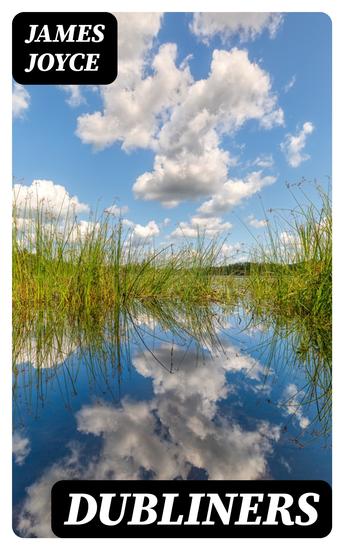
Dubliners - cover

Dubliners

James Joyce

Publisher: DigiCat

  • 0
  • 0
  • 0

Summary

In "Dubliners," James Joyce presents a meticulously crafted collection of fifteen interconnected short stories that illuminate the lives of Dublin's inhabitants in the early 20th century. This seminal work employs a realist literary style, characterized by its rich details and psychological depth, offering poignant portrayals of the paralysis and disillusionment permeating Irish society. Each story captures the ordinary yet profound moments of everyday life, marking a significant departure from romanticized narratives and placing Joyce at the forefront of modernist literature. The vignettes range from childhood innocence to the bittersweet realizations of adulthood, ultimately converging into a shared experience of epiphany and often, melancholic resignation. James Joyce, an iconic figure in literature, drew inspiration from his own tumultuous experiences as a native Dubliner. Formative encounters with the political, cultural, and social upheavals of his hometown influenced his narrative voice and thematic concerns. Joyce's defiance of traditional literary conventions and his commitment to authenticity resonate through "Dubliners," as he uncovers the complexities of human motives and societal constraints, informed by his deep-seated love for Dublin and its multifaceted populace. "Dubliners" is an essential read for those interested in the intricacies of human emotions and the socio-political contexts that shape them. Joyce's keen observations offer readers a timeless mirror reflecting the struggles of identity, aspiration, and the inevitable entrapment in one's environment. This collection remains a pivotal exploration of not just Dublin's vibrant life, but also the universal quest for meaning in the human experience.
Available since: 11/13/2022.
Print length: 280 pages.
Other books that might interest you

  • Wonderful Wizard of Oz The [The Wizard of Oz series #1] - cover

    Wonderful Wizard of Oz The [The...

    L. Frank Baum

    • 0
    • 0
    • 0
    Dorothy and her canine pal Toto live a quiet life on a Kansas farm with Uncle Henry and Aunt Em. But one day, the little girl and her dog find themselves spirited away from the fields of Kansas, to the magical land of Oz! Dorothy and Toto meet many friends on the yellow-brick road to Emerald City, where she hopes to find a way home to Kansas - but when she arrives, the city's mysterious ruler, the Wizard of Oz, is not what she expects!
    Show book
  • The Voyage Out - The Lost Manuscript - cover

    The Voyage Out - The Lost...

    Virginia Woolf

    • 0
    • 0
    • 0
      
    "The Voyage Out" is the debut novel written by Virginia Woolf, a prominent English modernist writer. Published in 1915, the novel follows the journey of Rachel Vinrace, a young woman who embarks on a voyage to South America with her aunt and uncle. The novel explores themes of self-discovery, social conventions, and the constraints placed upon women in early 20th-century society. 
     
    As Rachel sets sail on her voyage, she encounters a diverse group of passengers, each representing different social classes, backgrounds, and personalities. Through her interactions with them, Rachel undergoes a transformative journey of personal growth and awakening. Woolf skillfully captures Rachel's internal thoughts and emotions, delving into her inner world as she navigates her way through the complexities of life and relationships. 
     
    "The Voyage Out" also provides a critical examination of societal norms and gender roles during the Edwardian era. Woolf challenges the traditional expectations placed upon women and explores the limitations and frustrations they face. Rachel's journey serves as a metaphor for breaking free from societal constraints and seeking personal fulfillment and independence. 
     
    Virginia Woolf's writing style in "The Voyage Out" is characterized by its lyrical prose, stream-of-consciousness narrative technique, and keen observations of human psychology. Through vivid descriptions and introspective passages, Woolf explores themes of identity, love, and the search for meaning in a rapidly changing world 
    . 
    "The Voyage Out" is a significant novel in Woolf's body of work and serves as a precursor to her later, more experimental novels. It provides an early glimpse into Woolf's mastery of character development, psychological insight, and her unique literary style that would go on to shape the landscape of modernist literature.
    Show book
  • The Hidden History Of Mark Twain - By His Daughter Susy Clemens - cover

    The Hidden History Of Mark Twain...

    Susy Clemens

    • 0
    • 0
    • 0
    Samuel Langhorne Clemens known by his pen name Mark Twain, was an American writer, humorist, entrepreneur, publisher, and lecturer. He was lauded as the "greatest humorist the United States has produced,"[and William Faulkner called him "the father of American literature" His novels include The Adventures of Tom Sawyer (1876) and its sequel, the Adventures of Huckleberry Finn (1884), the latter often called "The Great American Novel". Twain was raised in Hannibal, Missouri, which later provided the setting for Tom Sawyer and Huckleberry Finn. He served an apprenticeship with a printer and then worked as a typesetter, contributing articles to the newspaper of his older brother Orion Clemens. He later became a riverboat pilot on the Mississippi River before heading west to join Orion in Nevada. He referred humorously to his lack of success at mining, turning to journalism for the Virginia City Territorial Enterprise. His humorous story, "The Celebrated Jumping Frog of Calaveras County", was published in 1865, based on a story that he heard at Angels Hotel in Angels Camp, California, where he had spent some time as a miner. The short story brought international attention and was even translated into French. His wit and satire, in prose and in speech, earned praise from critics and peers, and he was a friend to presidents, artists, industrialists, and European royalty. Twain earned a great deal of money from his writings and lectures, but he invested in ventures that lost most of it—such as the Paige Compositor, a mechanical typesetter that failed because of its complexity and imprecision. He filed for bankruptcy in the wake of these financial setbacks, but in time overcame his financial troubles with the help of Henry Huttleston Rogers. He eventually paid all his creditors in full, even though his bankruptcy relieved him of having to do so.
    Show book
  • Twenty-Six Men and a Girl - From their pens to your ears genius in every story - cover

    Twenty-Six Men and a Girl - From...

    Maxim Gorky

    • 0
    • 0
    • 0
    Alexei Maximovich Peshkov was born on 28th March 1868, in Nizhny Novgorod, Russia. 
    Better known as Maxim Gorky he was orphaned at 11 and ran away from home at 12.  At 19 he had already attempted suicide and thereafter travelled, by foot, across the Russian Empire for 5 years. 
    His first book ‘Essays & Stories’ in 1898 was a sensation and so began a long career as an author of short stories, novels and plays.  Gorky saw writing as a moral and political act that would help to change the unjust world around him.  He was an ardent early advocate of the emerging Marxist movement and publicly opposed the Tsarist regime leading several times to his arrest.  
    In 1904 he began his own theatre but the censor banned every play and Gorky was forced to abandon the project. 
    But Gorky was a financially successful author, editor, and playwright and gave monies to political parties as well as for civil rights and social reform.  The brutal shooting of workers, which set in motion the Revolution of 1905, pushed Gorky more decisively toward radical solutions.  
    In 1906 he went to the United States to raise funds for the Bolsheviks. Those experiences including a scandal over travelling with his lover and not his wife deepened his contempt for the ‘bourgeois soul.’ 
    Gorky now moved to Capri in Italy, both for health reasons and to escape the increasingly repressive times in Russia.  
    An amnesty for the 300th anniversary of the Romanov dynasty saw him return to Russia in 1914. His politics remained close to the Bolshevik cause.  But soon, after the 1918 revolution, his essays referred to Lenin as a tyrant for his senseless arrests and repression.  He was soon appealing to the outside world for food aid after the catastrophic crop failure. 
    In October 1921 Gorky returned to Italy, now in Fascist hands, and settled in Sorrento until 1932.  His health worsened with the onset of tuberculosis. 
    He wrote several successful books there but now decided to find an understanding with the communist regime. Stalin invited him home and his return was hailed as a major propaganda victory.  He was decorated with the Order of Lenin, and a province, a park, and various streets re-named in his honour. 
    But he had his faults too.  In 1933, Gorky co-edited a book on the White Sea-Baltic Canal and denied even a single prisoner died during its construction, but thousands had. As well, knowing that some Nazis were homosexual, a phrase was attributed to him that said ‘exterminate all homosexuals and fascism will vanish’.  Although he was himself was quoting another he was decidedly homophobic. 
    With the increase of Stalinist repression in 1935 Gorky was placed under unannounced house arrest. 
    Maxim Gorky died on the 18th June 1936 from pneumonia.  He was 68. 
    Stalin and Molotov were among those who carried Gorky's urn of ashes at his funeral.
    Show book
  • Oval Portrait The - The Soundscape Audiobook - cover

    Oval Portrait The - The...

    Edgar Allan Poe

    • 0
    • 0
    • 0
    Experience Edgar Allan Poe's mysterious tale of a life-like oval portrait hidden in an abandoned house through the power of a soundscape audiobook. 
    Root & Twig Sound's fourth production takes you into the mountains of the Italian Apennines with immersive sound design, riveting voiceover by Phil Dragash and haunting original music by Alexander Amadeo. 
    --- 
    A Root & Twig Sounds Production 
    Written by Edgar Allan Poe 
    Original text published in April of 1842 
    Produced as a Soundscape Audiobook in October of 2024 
    Read and Performed by Phil Dragash 
    Produced and Directed by Phil Dragash and A.Y. Barker 
    Original Music Composed by Alexander Amadeo 
    Cover Art by Phil Dragash 
    © Root & Twig Sounds, 2024 
    --- 
    The mission of Root & Twig Sounds is to be a beacon of classic stories spectacularly done for the modern ear, helping the world remember its great storytelling heritage. Find Root & Twig Soundscape audiobooks on our website at www.rootandtwigsound.com and wherever audiobooks are sold.
    Show book
  • Lord Arthur Savile's Crime and Other Stories (Unabridged) - cover

    Lord Arthur Savile's Crime and...

    Oscar Wilde

    • 0
    • 0
    • 0
    Oscar Wilde (16 October 1854 - 30 November 1900) was an Irish poet and playwright. After writing in different forms throughout the 1880s, he became one of the most popular playwrights in London in the early 1890s.
    Lord Arthur Savile's Crime and Other Stories is a collection of short semi-comic mystery stories that were written by Oscar Wilde and published in 1891.
    Show book