Join us on a literary world trip!
Add this book to bookshelf
Grey
Write a new comment Default profile 50px
Grey
Subscribe to read the full book or read the first pages for free!
All characters reduced
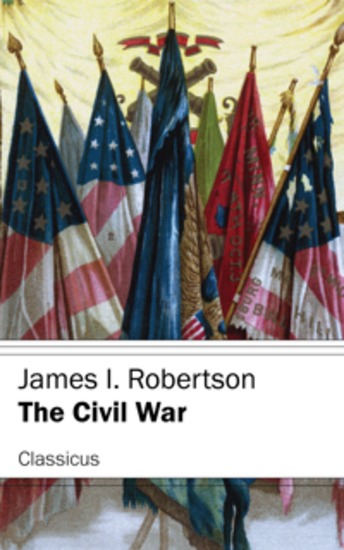
The Civil War (Classicus Edition) - cover

The Civil War (Classicus Edition)

James I. Robertson

Publisher: Classicus

  • 0
  • 0
  • 0

Summary

James I. Robertson’s The Civil War is a clear, thoughtful, and deeply informed introduction to the American Civil War, written by one of the most respected historians of the conflict. Originally prepared for the U.S. Civil War Centennial Commission, this short work distills the causes, events, and consequences of the war into an accessible narrative that captures both its complexity and human cost.     Organized around eleven key themes, the book covers the road to secession, the structure of the Union and Confederate governments, the major campaigns and turning points, and the experiences of soldiers and civilians alike. Robertson explores not only battlefield strategy and military leadership, but also the war’s broader social and political impact, particularly its role in ending slavery and redefining the United States. His writing is careful, balanced, and grounded in a lifetime of scholarship, offering readers a concise yet comprehensive understanding of the war’s lasting significance.     James I. Robertson, who served as executive director of the U.S. Civil War Centennial Commission and later taught at Virginia Tech, was widely regarded as a leading expert on the Civil War era. In The Civil War, he brings his expertise to a general audience with clarity and purpose, avoiding sensationalism while never losing sight of the war’s scale or tragedy. For readers seeking a reliable, engaging overview of the American Civil War—its origins, major events, and enduring legacy—this book remains a trusted and enduring resource.
Available since: 03/31/2025.
Other books that might interest you

  • Grit - HBR Emotional Intelligence Series - cover

    Grit - HBR Emotional...

    Harvard Business Review

    • 0
    • 0
    • 0
    In the face of hardship, you need perseverance and determination. 


    You need grit. But how do you build it? 


    This book explores how you can persist in difficult situations. You'll learn how to convince yourself to do hard things, find support in trying circumstances, and know when you're pushing yourself too hard. 


    This volume includes the work of: Angela Duckworth, Misty Copeland, Shannon Huffman Polson, and Tomas Chamorro-Premuzic. 


    How to be human at work. The HBR Emotional Intelligence series features smart, essential reading on the human side of professional life from the pages of Harvard Business Review. Each book in the series offers proven research showing how our emotions impact our work lives, practical advice for managing difficult people and situations, and inspiring essays on what it means to tend to our emotional well-being at work. Uplifting and practical, these books describe the social skills that are critical for ambitious professionals to master.
    Show book
  • The Neoliberal Revolution - How Neoliberalism Transformed Global Economies - cover

    The Neoliberal Revolution - How...

    Arlo Holders

    • 0
    • 0
    • 0
    Neoliberalism is a term widely used to describe a set of economic policies and ideas that emphasize the importance of free markets, deregulation, privatization, and limited government intervention. Emerging in the mid-20th century, neoliberalism represented a distinct shift away from the welfare state and Keynesian economics, which had dominated Western economies in the post-World War II era. At its core, neoliberalism advocates for the belief that markets, if left to operate freely, will create wealth, drive economic growth, and improve human well-being. This chapter introduces the key tenets of neoliberal thought and traces its rise to prominence. 
    The intellectual origins of neoliberalism can be traced back to economists and thinkers such as Friedrich Hayek, Milton Friedman, and Ludwig von Mises, who were critical of state intervention in the economy. They argued that government efforts to regulate markets, redistribute wealth, and promote social welfare were inefficient and counterproductive. Instead, they believed that economic freedom, unencumbered by regulation or state control, would lead to more prosperous societies. These ideas gained traction in the 1970s when the world was facing economic stagnation, inflation, and high unemployment, a period often referred to as the “stagflation” crisis. 
    As a response to these challenges, neoliberalism became the intellectual and policy framework that justified sweeping changes in global economic practices. It was championed by leaders such as British Prime Minister Margaret Thatcher and U.S. President Ronald Reagan, who implemented reforms based on neoliberal principles. These included reducing taxes, privatizing state-owned industries, cutting social welfare programs, and embracing global free trade. The goal was to increase individual freedom and market efficiency by minimizing the role of the state in economic affairs.
    Show book
  • Benin Empire - Art Warfare and the Kingdom of Bronze - cover

    Benin Empire - Art Warfare and...

    Rolf Hedger

    • 0
    • 0
    • 0
    The Benin Empire, one of the most powerful and influential kingdoms in West Africa, flourished for over 1,000 years. Its capital, Benin City, located in present-day southern Nigeria, was an epicenter of art, culture, and political power. The empire’s historical significance extends beyond its impressive architectural feats, remarkable artistry, and military prowess, as it was also a hub of trade and diplomacy. 
    The origins of the Benin Empire can be traced back to the early 11th century, with a history deeply intertwined with the Kingdom of Ife, from which the Benin people are believed to have descended. The development of the kingdom was largely shaped by its early rulers, the Obas, whose leadership and vision helped lay the foundation for the Benin Empire. The Benin monarchy, a vital institution in the kingdom, solidified the rule of the Obas and their divine connection to the people. 
    At its peak, the Benin Empire extended its influence over a vast region in West Africa, establishing a complex political and social structure. The monarchy not only commanded political and military power but also served as a central force in religious and cultural life. The empire was renowned for its rich heritage in art, including the world-famous Benin Bronzes, which showcased the advanced craftsmanship and symbolic significance of Benin artisans. These bronzes, intricate sculptures, and plaques, which depicted scenes of royalty, warriors, and historical events, remain symbols of the empire’s grandeur.
    Show book
  • Charmides - cover

    Charmides

    Plato

    • 0
    • 0
    • 0
    "Charmides" is a dialogue written by Plato that delves into the nature of wisdom and self-knowledge. The conversation takes place between Socrates and Charmides, a young man renowned for his beauty and noble heritage. Socrates challenges Charmides' claim to possess self-control or temperance, arguing that true self-knowledge requires an examination of one's own nature. This leads to a discussion on the nature of wisdom and how it is cultivated through inquiry and self-examination, rather than being possessed as a physical object. Read in English, unabridged.
    Show book
  • Why One Way? - Defending an Exclusive Claim in an Inclusive World - cover

    Why One Way? - Defending an...

    John F. MacArthur

    • 0
    • 0
    • 0
    A concise guide to understanding how and why the ancient Christian faith makes sense for today and a blueprint for communicating truth to a "truthless" and cynical generation.The book is centered around 6 key principles: objectivity, rationality, veracity, authority, incompatibility and integrity. In the ultimate apologetic, John MacArthur presents a case for Christianity that serves as a logical explanation as much as a solid defense.
    Show book
  • Why So Many Jobs Feel Useless in Today’s World - Discover why so many jobs feel useless today! Unleash captivating audio insights for profound understanding - cover

    Why So Many Jobs Feel Useless in...

    Bastian Cresswell

    • 0
    • 0
    • 0
    Why So Many Jobs Feel Useless in Today’s World:  
    ⭐⭐ Simplified Audio Guide with Explanations ⭐⭐ 
    Are you seeking to advance in understanding the modern job landscape and find purpose in your work? 
    Looking for a comprehensive resource that provides all the insights you need to navigate today's work environment? 
    Look no further! 
    This guide is your ultimate companion for deepening your understanding, applying your skills, and engaging in practical reflections on the modern job market. With this, you're prepared for a fulfilling professional journey. 
    Updated to reflect current work trends and dynamics. 
    Key features of this enriched guide: 
    - Profound insights about discovering purpose and connection in today's work landscape. 
    - Detailed explanation of the modern workplace environment. 
    - Effective strategies for finding meaning and engagement in your career. 
    Our guide stands out with comprehensive coverage, crucial for unlocking your potential in the work world. Concepts are explored with depth and precision. 
    Please note that this guide is an independent resource intended solely for your benefit. 
    Designed with a structured format and easy-to-understand language, our guide ensures smooth transitions between topics. Say goodbye to complex jargon and embrace clear, precise, and insightful content. 
    Ready to explore the depths of meaningful work? Click the BUY NOW button, secure your guide, and embark on your journey to understanding why so many jobs feel useless in today's world! 
    Why wait? Start your journey towards a more meaningful career today!
    Show book