Join us on a literary world trip!
Add this book to bookshelf
Grey
Write a new comment Default profile 50px
Grey
Subscribe to read the full book or read the first pages for free!
All characters reduced
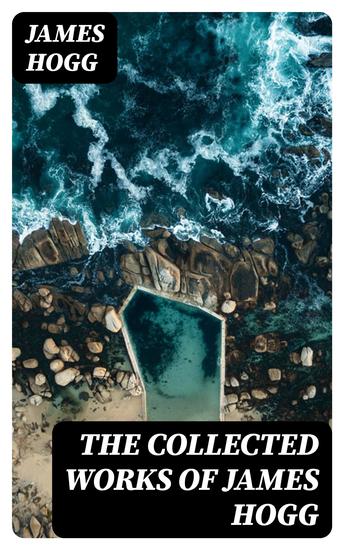
The Collected Works of James Hogg - cover

The Collected Works of James Hogg

James Hogg

Publisher: DigiCat

  • 0
  • 0
  • 0

Summary

In "The Collected Works of James Hogg," readers are invited to explore the rich tapestry of Hogg's literary creations, encompassing poetry, prose, and tales that reflect the intricate interplay of Scottish culture, folklore, and personal introspection. Hogg's distinctive narrative style, characterized by a vivid realism infused with a Romantic sensibility, immerses the audience in the psychological landscapes of his characters. This comprehensive compilation not only showcases Hogg's pioneering contributions to Scottish literature but also situates his work within the broader context of 19th-century Romanticism, addressing themes of identity, spirituality, and the natural world. James Hogg, often hailed as the 'Ettrick Shepherd,' drew upon his pastoral upbringing in the Scottish Borders to craft stories imbued with a deep sense of place and character. His experiences as a shepherd and his engagement with the oral traditions of Scotland profoundly influenced his writing, allowing him to create an authentic voice that resonated with both contemporary and future audiences. Hogg's unique perspective on the tensions between rural life and burgeoning industrialization provides a critical lens through which to understand his works. "The Collected Works of James Hogg" is an essential addition to any literary library, offering insights into the complexities of human experience through the eyes of one of Scotland's most innovative writers. Whether you are a scholar, a lover of literature, or a curious reader, Hogg's nuanced exploration of emotion, nature, and societal change will undoubtedly leave a lasting impression.
Available since: 11/13/2022.
Print length: 1130 pages.
Other books that might interest you

  • Hunting - You've Got to Be Kidding! - cover

    Hunting - You've Got to Be Kidding!

    Kevin Aelred Dettler

    • 0
    • 0
    • 0
    Hunting: You've got to Be kidding! is a wonderful true story about a man with a dream. Written by Kevin A Dettler, it is a humorous and emotional story of his endeavor to achieve what only 120 hunters in the world had accomplished. The book takes you through a chronological order of years as the author hunts all the big game species that call North America home. Readers are captivated as Kevin, in his unique way, relates the emotional, financial, and spiritual aspects required to fulfill the dream. That being one of the 120(now about 140) worldwide hunters to receive the award from Safari Club international for collecting and registering all 29 species, thus "The North American 29 award". You will be entertained as the book's focus dwells, not on the hunting, but on the mental processes associated with hunting trophy big game animals. Best of all are the many humorous "you've got to be kidding" moments! It really is a story of faith in God and perseverance. Enjoyed by non-hunters also, including men and women. 
    Show book
  • Fancies versus Fads - cover

    Fancies versus Fads

    G K Chesterton

    • 0
    • 0
    • 0
    The last volume of Chesterton's collected essays, Gathered from the London Mercury, the New Witness, and the Illustrated London News, it is the only volume from after WWI, and is most serious, philosophical, and socially direct collection. 
    "The problem is not so much Prohibition with a large P as prohibition with a small one. I mean, I am interested not so much in liquor as in liberty. I want to know on what principle the prohibitionists are proceeding in this case, and how they think it applies to any other case. And I cannot for the life of me make out. They…do not attack liquor; they do quite simply attack liberty. I mean that they are satisfied with saying about this liberty what can obviously be said about any liberty – that it can be, and is, abominably abused. If that had been a final objection to any form of freedom, there never would have been any form of freedom." 
    "So long as we combine ceaseless and often reckless scientific speculation with rapid and often random social reform, the result must inevitably be not anarchy but ever-increasing tyranny. There must be a ceaseless and almost mechanical multiplication of things forbidden. The resolution to cure all the ills that flesh is heir to, combined with the guesswork about all possible ills that flesh and nerve and brain-cell may be heir to – these two things conducted simultaneously must inevitably spread a sort of panic of prohibition. Scientific imagination and social reform between them will quite logically and almost legitimately have made us slaves."
    Show book
  • Written in the Stars - A Charity Anthology - cover

    Written in the Stars - A Charity...

    Various Various

    • 0
    • 0
    • 0
    This festive charity anthology has short stories from a variety of authors, including international bestsellers and award-winning writers. There’s something for everyone, with tales that will make you laugh, make you cry, or make you sleep with the light on. It’s the perfect book to curl up with on a cold winter’s night.
    
    The authors included in this collection are A.A. Abbott, Angela Marsons, Beverley Harvey, Caron McKinlay, Diane Saxon, D.S. Butler, Emma Tallon, Eva Jordan, Gina Kirkham, Helen Walters, Jen Faulkner, John Harkin, Joy Ellis, Keri Beevis, Laura Stewart, Louise Beech Marrisse Whittaker, Mike Walters, Natasha Boydell, Patricia Dixon, Rob Sinclair (writing as CJ Stone), Stephen Edger, and Valerie Keogh.
    Show book
  • Simply Keynes - cover

    Simply Keynes

    Roger Backhouse

    • 0
    • 0
    • 0
    Born in Cambridge, England, to an upper-middle-class family, John Maynard Keynes (1883-1946) attended Eton College and King’s College, Cambridge, where he received a BA in mathematics in 1904. From an early age, he evinced an optimism about improving human life and believed in the power of government to change things for the better. During World War I, Keynes served in the Treasury and his success in this role led to his appointment as a representative to the Versailles peace conference in 1919. While this experience was ultimately frustrating and disillusioning, it laid the foundation for his later work during the Great Depression and World War II, when his ideas gained increasing influence and were gradually adopted by economic policymakers throughout the world. 
    In Simply Keynes, Professor Roger Backhouse provides a comprehensive introduction to Keynes and Keynesianism, arguing that Keynes should be seen not only as an economist, but also as a moral philosopher who believed the state had a moral obligation to intervene for the greater good. Beginning with the economist’s early life and the context in which his ideas arose, Professor Backhouse chronicles the transformation of economics in the so-called “Age of Keynes,” the opposition that arose in the 1970s, and the revival of Keynesianism following the 2007-08 global financial crisis. 
    For 100 years, the ideas of John Maynard Keynes have been central to discussions and decision-making about economics, free markets, and the role of government in capitalist systems. With admirable concision and clarity, Simply Keynes allows the lay reader to understand not only the critical importance of Keynes’s ideas in recent history, but also their continued relevance in our own day and into the future.
    Show book
  • Are You Thinking What I'm Thinking? A Patchwork Journey Through My Life so far - cover

    Are You Thinking What I'm...

    Kenneth Radley

    • 0
    • 0
    • 0
    Kenneth Radley's Are You Thinking What I'm Thinking? A patchwork journey through my life... so far - is a richly layered, deeply personal memoir told in an engaging patchwork style - weaving together reflections from across six decades of an expansive life. 
    From his early life we are taken through some rapid development in the 1960s. Then the tectonic socio-cultural shifts throughout the 1970s. And later appearing in more than 30 feature films, performing as B1 in the highly successful and culturally iconic Bananas in Pyjamas, to selling wine, cab driving, fronting a hard-hitting rock band in the Melbourne pub scene, teaching, building houses, playing and umpiring Australian football and navigating family life within the creative industries - Radley crafts a collection of vivid vignettes that balance wit, philosophical inquiry, and grounded realism. 
    Readers interested in Australian cultural history, performance, and television and film will find rare, behind-the-scenes gems throughout. Anecdotes involving the Bananas years, working on set from an actor's perspective, creative struggles, the joy and passion in his work. The reader is treated to some fascinating encounters with industry characters that offer unique insights and deep reflections. 
    The regular moments of humour feel lived-in rather than performed, full of well-timed understatement and irony. 
    This work offers so much more than a timeline of events; it becomes a meditation on memory, cultural change, identity, work, and the intersections between art, family life and self-discovery. 
    It is a fascinating, authentic and heartfelt piece reflecting the complexity, fun and humour of a man that is truly thankful for his life and filled with genuine love and appreciation of those close to him. 
    it is quite a journey... so far.
    Show book
  • Death on Ireland's Eye - The Victorian Murder Trial that Scandalised a Nation - cover

    Death on Ireland's Eye - The...

    Dean Ruxton

    • 0
    • 0
    • 0
    A tragic death, a murder trial and a 170-year-old mystery – but what really happened?
    Shortly after Maria Kirwan died in a lonely inlet on Ireland's Eye, it was decided that she had drowned accidentally during a day spent with her husband on the picturesque island. This inquest verdict appeared to conclude the melancholy events that consumed the fishing village of Howth, Co Dublin, in September 1852.
    But not long afterwards, suspicion fell upon Maria's husband, William Burke Kirwan, as whispers of unspeakable cruelty, an evil character and a secret life rattled through the streets of Dublin. Investigations led to William's arrest and trial for murder.
    The story swelled into one of the most bitterly divisive chapters in the dark annals of Irish criminal history. Yet questions remain: Does the evidence stand up? What role did the heavy hand of Victorian moral outrage play? Was William really guilty of murder, or did the ever-present 'moral facts' fill in gaps where hard proof was absent?
    Now, this compelling modern analysis revisits the key evidence, asking sober questions about the facts, half-facts and fantasies buried within the yellowed pages of the Ireland's Eye case files.
    Show book