Join us on a literary world trip!
Add this book to bookshelf
Grey
Write a new comment Default profile 50px
Grey
Subscribe to read the full book or read the first pages for free!
All characters reduced
The Country of the Neutrals (As Far As Comprised in the County of Elgin) From Champlain to Talbot - Enriched edition - cover

The Country of the Neutrals (As Far As Comprised in the County of Elgin) From Champlain to Talbot - Enriched edition

James H. Coyne

Publisher: DigiCat

  • 0
  • 0
  • 0

Summary

In "The Country of the Neutrals (As Far As Comprised in the County of Elgin), From Champlain to Talbot," James H. Coyne presents a meticulous historical exploration of the neutral territories in Southwestern Ontario, focusing on the intricate interplay of indigenous and colonial narratives. Coyne's literary style is both engaging and profoundly scholarly, combining rich descriptive passages with rigorous research. This work is situated in the context of early Canadian history, offering insights into the social and political dynamics that shaped the region from the time of Samuel de Champlain to the settlement by Col. Talbot, thereby illuminating the fabric of colonial encounters and indigenous experiences in a historically significant landscape. James H. Coyne, a noted historian and scholar, possesses a deep-rooted interest in the interactions between European settlers and Native communities, influenced by his academic background in history and anthropology. His dedication to uncovering the nuances of these interactions is evident throughout his work, reflecting a commitment to representing the voices often marginalized in historical narratives. Coyne's extensive research draws from archival sources, oral histories, and ethnographic studies, underscoring his determination to present a comprehensive account of the Neutrals. This book is highly recommended for scholars, students, and history enthusiasts intrigued by early Canadian history, indigenous studies, and frontier narratives. Coyne's meticulous scholarship and compelling storytelling offer a unique perspective that enriches the reader's understanding of a pivotal yet often overlooked chapter in Canadian heritage. A vital addition to the library of anyone keen to grasp the complexities of colonial history in Ontario.

In this enriched edition, we have carefully created added value for your reading experience:
- Hand‐picked Memorable Quotes shine a spotlight on moments of literary brilliance.
- Interactive footnotes clarify unusual references, historical allusions, and archaic phrases for an effortless, more informed read.
Available since: 09/04/2022.
Print length: 45 pages.
Other books that might interest you

  • Playing Possum - How Animals Understand Death - cover

    Playing Possum - How Animals...

    Susana Monsó, Mark Rowlands

    • 0
    • 0
    • 0
    When the opossum feels threatened, she becomes paralyzed. Her body temperature plummets, her breathing and heart rates drop to a minimum, and her glands simulate the smell of a putrefying corpse. Playing Possum explores what the opossum and other creatures can teach us about how we and other species understand mortality, and demonstrates that the concept of death, far from being a uniquely human attribute, is widespread in the animal kingdom. 


    With humor and empathy, Susana Monsó tells the stories of ants who attend their own funerals, chimpanzees who clean the teeth of their dead, dogs who snack on their caregivers, crows who avoid the places where they saw a carcass, elephants obsessed with collecting ivory, and whales who carry their dead for weeks. Monsó, one of today's leading experts on animal cognition and ethics, shows how there are more ways to conceive of mortality than the human way, and challenges the notion that the only emotional reactions to death worthy of our attention are ones that resemble our own. 


    Blending philosophical insight with new evidence from behavioral science and comparative psychology, Playing Possum dispels the anthropocentric biases that cloud our understanding of the natural world, and reveals that, when it comes to death and dying, we are just another animal.
    Show book
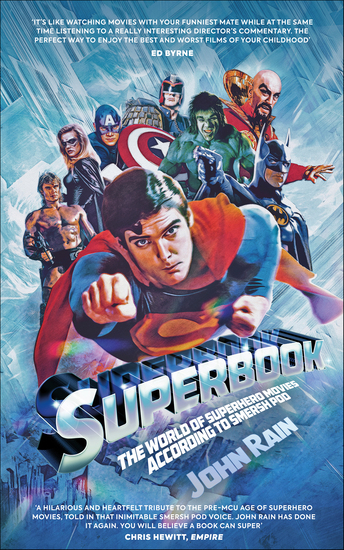
  • Superbook - The World of Superhero Movies According to Smersh Pod - cover

    Superbook - The World of...

    John Rain

    • 0
    • 0
    • 0
    If you mention the word ‘superhero’ these days, everyone and their mum can tell you a potted history of it all, because they’ve sat through numerous phases, extended TV series, and animated side-specials of expansive character-development, culminating in extraordinary final chapters, with the screen literally stacked full of characters battling one another while your eyes bleed with excitement and spectacle.
    
    But before 1997, people would generally only think of a few things: Christopher Reeve smiling as he keeps a watchful eye over Earth’s atmosphere, Michael Keaton running around Gotham while dressed in molded rubber. Nicholas Hammond's Spider-Man being hauled up a wall on a rope, pretending to grip it, while also being a foot away from it. Bill Bixby trying not to get angry, Flash Gordon arriving in another galaxy, that was essentially a soft porn film, Dolph Lundgren mumbling in broken English while Frank Langella hammed behind a mask, and how Michael Crawford dressed like a bird was the closest thing Disney had to a cinematic universe.
    
    Despite starting on a high in 1978, by 1997 there could be no doubt that the genre was dead. Out was the sheen of verisimilitude, and in were Bat-credit-cards, ugly CGI, slashed budgets, rubber nipples and Martin Sheen in a girdle.
    
    So, whatever happened to the heroes? Join John Rain as he walks through every film of note from 1978 to 1997, and examines just what went wrong, and how. Is it a bird? Is it a plane? No, it’s SUPERBOOK.
    Show book
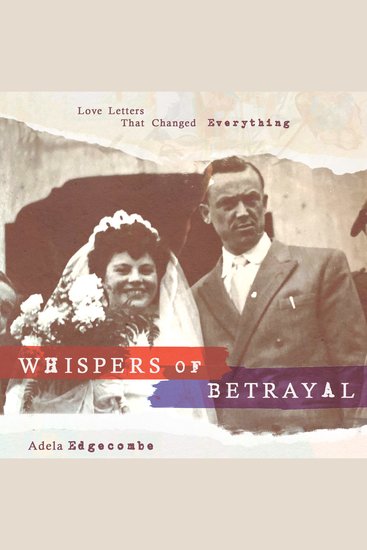
  • Whispers of Betrayal - Love Letters That Changed Everything - cover

    Whispers of Betrayal - Love...

    Adela Edgecombe

    • 0
    • 0
    • 0
    On a journey of discovery into her parents history of love and fame in war torn Italy, Adela Edgecombe discovered a secret deception within love letters and from family who had been tight-lipped about the scandals for decades.            Bestselling author Jincy Willett describes the story as follows: "Since every human personality is at root mysterious, all families present us with an abundance of mysteries, the chief of which is often how marriages ever happened in the first place. In her family memoir, Adela Edgecombe tackles that mystery head-on, uncovering a web of circumstances peculiar to place and time. The place is the Province of Salerno, Italy; the time,1944, the depths of World War II. A young American GI meets an impoverished Italian family, grows to care for them, and, as he leaves for the front, promises a nine-year-old child that one day he will return and help them. And does the man, against all odds, keep that promise? Judging from the fairy-tale wedding that took place in Passiano in 1951 and was featured in Life Magazine, it would seem so.           "Edgecombe explores that fairy tale moment, how it came to pass, and what followed after. She digs fearlessly into the mystery of an unhappy marriage that began with such photogenic joy and hope. Read Whispers of Betrayal for a well-researched, surprising, and moving tale which reminds us that the casualties of war are many and varied."
    Show book
  • Community Third Edition - The Structure of Belonging - cover

    Community Third Edition - The...

    Peter Block

    • 0
    • 0
    • 0
    With increasing violence, widening ideological divides, and growing economic inequality, a deeper sense of community is desperately needed. Yet typical ways of engaging people civically and organizationally remain unchanged. In Community, Peter Block explores how authentic community can emerge from fragmentation and offers practical steps to foster transformation.This updated third edition draws on decades of implementing Block’s ideas and includes the following:New stories and examples demonstrating community building as a more powerful approach to social problems than traditional policies and programsExpanded resources and a discussion guide designed for classroom and training program useA new closing chapter covering broader implications of the book's ideas for organizational transformationFresh content exploring the creative economy's relationship to belonging and social capital’s role in authentic engagementUpdated examples showing how community principles apply to today’s workplace and virtual world challenges
    Show book
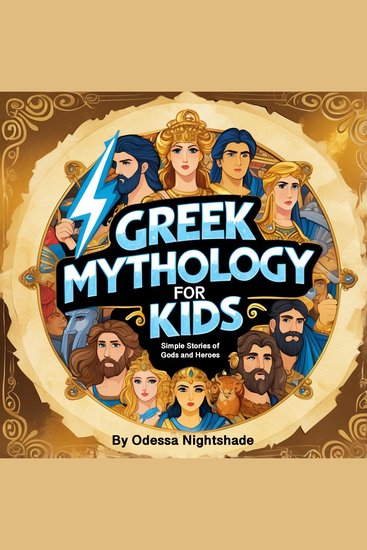
  • Greek Mythology for Kids - Simple Stories of Gods and Heroes - cover

    Greek Mythology for Kids -...

    Odessa Nightshade

    • 0
    • 0
    • 0
    Greek mythology is a collection of ancient stories that have been passed down for centuries, each telling tales of gods, heroes, and creatures that shaped the ancient Greek world. These myths were more than just stories; they were a way for the ancient Greeks to understand the world around them, the forces of nature, and the workings of their society. Through mythology, they explained the origin of the world, the relationships between gods and mortals, and the struggles that defined human existence. In this book, we’ll explore some of the most important myths, focusing on the gods, goddesses, and heroes that continue to capture the imagination of children and adults alike. 
    One of the fascinating aspects of Greek mythology is its variety. From the mighty Zeus, ruler of the heavens, to the brave Heracles, known for his twelve famous labors, each story is filled with adventure, mystery, and valuable life lessons. These stories often involve epic journeys, fierce battles, and daring feats, but they also teach lessons about friendship, loyalty, bravery, and the consequences of pride. As we dive into the myths, you’ll encounter gods who control the elements, heroes who fight against impossible odds, and creatures like the mighty Minotaur and the terrifying Medusa, all of whom play essential roles in the adventures that make up these ancient tales. 
    Greek mythology also has a special connection to the human experience. Although the gods were powerful, they had their flaws—jealousy, pride, and anger—making them relatable to people of all ages. The gods’ actions often mirrored the struggles and emotions that humans face every day. While gods and goddesses lived in a realm above humanity, they frequently interacted with mortals, and their actions had direct consequences for the human world.
    Show book
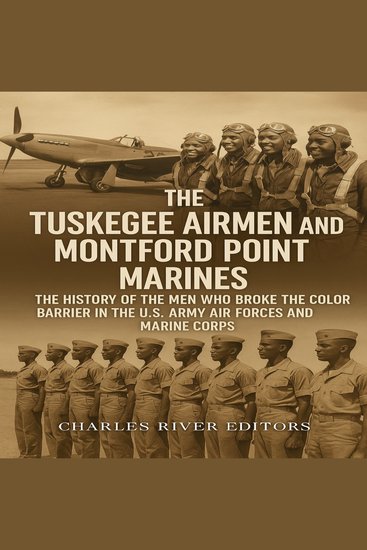
  • Tuskegee Airmen and Montford Point Marines The: The History of the Men Who Broke the Color Barrier in the US Army Air Forces and Marine Corps - cover

    Tuskegee Airmen and Montford...

    Charles River Editors

    • 0
    • 0
    • 0
    The United States has no shortage of famous military units, from the Civil War’s Iron Brigade to the 101st Airborne, but one would be hard pressed to find one that had to go through as many hardships off the field as the Tuskegee Airmen, a group of African American fighter pilots who overcame Jim Crow at home and official segregation in the military to serve their country in the final years of World War II. In fact, it required a concerted effort by groups such as the National Association for the Advancement of Colored People (NAACP) and the extreme circumstances brought about by World War II that the military eventually decided to establish the “Tuskegee Experiment.” 
    The black crews trained at Tuskegee before being sent overseas, and even then, they faced discrimination from those who didn’t trust them to do more than escort bombers flown by white pilots. However, as the men proved their worth in the heat of battle, some of the squadrons’ red markings helped them earn the nickname “Red Tails,” and their track record was so good that eventually the white pilots of American bombers wanted to fly with them. As Tuskegee airman Roscoe Brown eloquently put it, “They have a saying that excellence is the antidote to prejudice; so, once you show you can do it, some of the barriers will come down.” 
    In the summer of 1942, the first group of African American recruits stepped off a bus into the pine woods of North Carolina, bound for an experiment the Marine Corps had long vowed never to attempt. Their destination - Montford Point, a hastily constructed satellite to the new Camp Lejeune - was more than a training ground. It was a compromise with democracy, a segregated doorway into an institution that had defined itself for generations by who could not enter. The Corps’ exclusivity had a racial edge, as the Marines had barred black men outright from 1798 all the way up the start of the Second World War. 
    Show book