Join us on a literary world trip!
Add this book to bookshelf
Grey
Write a new comment Default profile 50px
Grey
Subscribe to read the full book or read the first pages for free!
All characters reduced
Unified Address Systems - cover

Unified Address Systems

James Carter

Translator A AI

Publisher: Publifye

  • 0
  • 0
  • 0

Summary

Unified Address Systems explores the critical role of standardized addressing in today's technology and history. It highlights how address standardization and geocoding have become essential for efficient logistics, optimized route planning, and enhanced data accuracy. The book argues that transitioning from inconsistent, localized addressing to standardized, geocoded systems marks a significant paradigm shift. This evolution enables unprecedented efficiency and interoperability.

 
The book traces the development of address systems from rudimentary methods to current national and international standards. It delves into the technical aspects of geocoding and address validation, explaining the underlying algorithms and databases. Case studies of local pilot programs illustrate innovative addressing solutions. The book examines the impact of standardized addressing on sectors like emergency services, transportation, and urban planning.

 
This book distinguishes itself by offering a holistic examination of address systems, encompassing historical, technical, and societal perspectives. It's structured to provide a comprehensive understanding, beginning with historical development and then moving into technical aspects and real-world impacts. Finally, it considers emerging technologies like blockchain and the Internet of Things and their potential to enhance location-based services.
Available since: 02/20/2025.
Print length: 82 pages.

Other books that might interest you

  • Byzantine Empire - A History of the Byzantine Empire and Constantinople - cover

    Byzantine Empire - A History of...

    History Retold

    • 0
    • 0
    • 0
    This Audiobook Reveals the Extraordinary History of a Forgotten Civilization. 
    Prepare to be enthralled by "Byzantine Empire: A History of the Byzantine Empire and Constantinople" 
    – an audiobook that will transport you to the epicenter of a civilization that once epitomized grandeur and sophistication. 
    The Byzantine Empire, renowned for its breathtaking capital, Constantinople, was a realm of magnificence and intrigue. Our audiobook presents an enthralling and comprehensive account of this ancient civilization, masterfully weaving together historical facts with compelling storytelling. 
    Delve into the heart of this awe-inspiring world, discovering its origins, zenith, and eventual decline that marked the end of an era. 
    As you immerse yourself in this captivating book, you'll encounter powerful emperors and empresses, cunning generals, and ordinary people who lived through remarkable times. 
    So why wait? 
    Get your Copy Today! And allow the tale of the Byzantine Empire and Constantinople to take you on a thrilling journey through history.
    Show book
  • Blue - A History of Postpartum Depression in America - cover

    Blue - A History of Postpartum...

    Rachel Louise Moran

    • 0
    • 0
    • 0
    New motherhood is often seen as a joyful moment in a woman's life; for some women, it is also their lowest moment. For much of the twentieth century, popular and medical voices blamed women who had emotional and mental distress after childbirth for their own suffering. By the end of the century, though, women with postpartum mental illnesses sought to take charge of this narrative. In Blue: A History of Postpartum Depression in America, Rachel Louise Moran explores the history of the naming and mainstreaming of postpartum depression. Coalitions of maverick psychiatrists, psychologists, and women who themselves had survived substantial postpartum distress fought to legitimize and normalize women's experiences. They argued that postpartum depression is an objective and real illness and fought to avoid it being politicized alongside other fraught medical and political battles over women's health. 


    Based on insightful oral histories and in-depth archival research, Blue reveals a secret history of American motherhood, women's political activism, and the rise of postpartum depression advocacy amid an often-censorious conservative culture. By breaking new ground with the first book-length history of postpartum mental illness in the twentieth century, Moran brings mothers' battles with postpartum depression out of the shadows and into the light.
    Show book
  • Peacemaker - U Thant and the Forgotten Quest for a Just World - cover

    Peacemaker - U Thant and the...

    Thant Myint-U

    • 0
    • 0
    • 0
    In the early 1960s, a peaceful world was an imaginable goal. The United Nations was widely respected and regarded as humankind's best hope for resolving global conflicts. African and Asian nations, having recently won their freedom from colonial domination, sought dignity and influence on the world stage. At the helm of their efforts was U Thant, a practicing Buddhist from a remote town in Burma who, as the UN's first non-Western secretary-general, became the Cold War era's preeminent ambassador of peace. From the moment of his predecessor's death in 1961, Thant faced a deluge of violent conflicts. Crucially, during the Cuban Missile Crisis, he played an indispensable role in defusing tensions and helping both superpowers find a way back from nuclear confrontation. For years Thant also challenged Washington over its war in Vietnam, identifying paths to peace that could have saved the lives of millions. 
      
    Drawing on newly declassified documents, Thant's grandson, historian Thant Myint-U, gives a riveting account of how his grandfather's gentle yet willful disposition shaped his determination to avoid a third world war, give voice to the newly decolonized world, create a fairer international economy, and safeguard the environment. Rather than a vestige of an idealistic past, U Thant's fight for peace is central to a fresh understanding of our world today.
    Show book
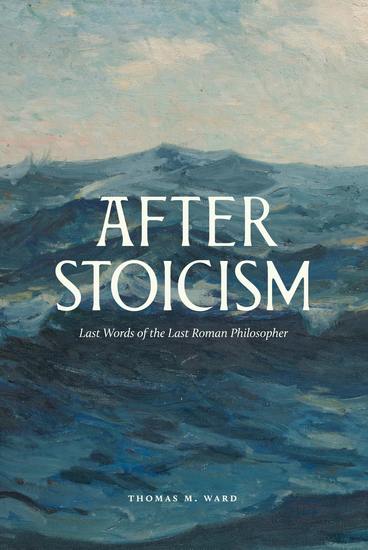
  • After Stoicism - Last Words of the Last Roman Philosopher - cover

    After Stoicism - Last Words of...

    Thomas Ward

    • 0
    • 0
    • 0
    The Stoic philosophers of antiquity recognized something we often forget. Good fortune does not guarantee happiness, and bad fortune does not guarantee misery. Boethius was the last philosopher of ancient Rome and a Christian theologian. He was also an illustrious senator who suffered a spectacular reversal of fortune. Falsely accused of treason and sentenced to death, he spent several months in prison awaiting his execution. For consolation he turned to the Stoics he had spent his life studying. They helped him to remember that the good things he once enjoyed—wealth, power, fame—could not make him truly happy. Also, that the injustice he suffered need not make him miserable. But the Stoics were not the only philosophers Boethius sought for consolation. The Stoics had taught that the highest happiness we can hope for is tranquility—serene indifference despite all the trials of life. But for Boethius, tranquility was not enough. He reached for something beyond Stoicism. Something that promised true happiness, come what may. This book is a guide through Boethius’s The Consolation of Philosophy. It shows how Boethius, in his darkest hour, took everything noble from Stoicism and fused it with a rational and religious conviction that there is a hope for happiness through and beyond the suffering of this life.  
    Show book
  • Hillbilly Nationalists Urban Race Rebels and Black Power - Interracial Solidarity in 1960s-70s New Left Organizing - cover

    Hillbilly Nationalists Urban...

    James Tracy, Amy Sonnie

    • 0
    • 0
    • 0
    Some of the most important and little-known activists of the 1960s were poor and working-class radicals. Inspired by the Civil Rights movement, the Black Panthers, and progressive populism, they started to organize significant political struggles against racism and inequality during the 1960s and into the 1970s. 


    Historians of the period have traditionally emphasized the work of white college activists who courageously took to the streets to protest the war in Vietnam and continuing racial inequality. Poor and working-class whites have often been painted as spectators, reactionaries, and, even, racists. But authors James Tracy and Amy Sonnie disprove that narrative. 


    Through over ten years of research, interviewing activists along with unprecedented access to their personal archives, Tracy and Sonnie tell a crucial, untold story of the New Left. Their deeply sourced narrative history shows how poor and working-class individuals from diverse ethnic, rural and urban backgrounds cooperated and drew strength from one another. The groups they founded redefined community organizing, and transformed the lives and communities they touched.
    Show book
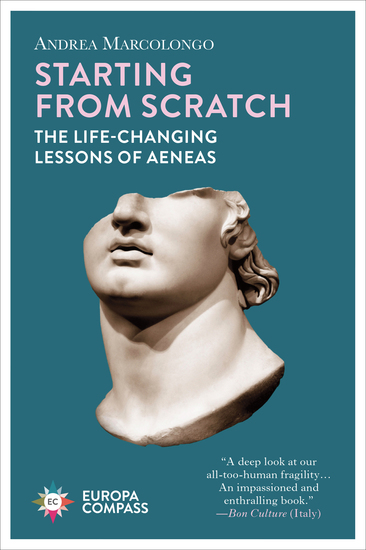
  • Starting from Scratch - The Life-Changing Lessons of Aeneas - cover

    Starting from Scratch - The...

    Andrea Marcolongo

    • 0
    • 0
    • 0
    With an “inimitable voice combined with flawless erudition,” this new analysis of the Aeneid “illuminates its subject with a modern light” (Le Monde). 
     
    From the bestselling author of The Ingenious Language comes a meditation on rebuilding, recovery, and renewal that is also a fascinating portrait of antiquity’s most complex and surprisingly modern hero. 
     
    In times of peace and prosperity, one can turn to Homer to learn valuable life lessons, to experience the thrills and terrors of war, and to read about hair-raising adventures in distant lands. But when things do not go as planned, when we unexpectedly find ourselves at the center of an epoch-defining upheaval, then, writes Andrea Marcolongo, we must look to Virgil’s Aeneas for an example of adaptability and resilience. 
     
    In Marcolongo’s fresh, nuanced portrayal, Virgil’s Aeneas emerges as a multiform, deeply human hero, striking in his vulnerability and capacity for empathy. His journey of rebirth and rebuilding, from the ruins of Troy to the shores of Italy, teaches us that when all seems lost, with hope, perseverance, and a little bit of luck, we can seek and find new beginnings. 
     
    “Marcolongo is today’s Montaigne . . . There is wisdom and grace here to last the ages.” —André Aciman, New York Times–bestselling author of Call Me by Your Name, now a major motion picture 
     
    “A deep look at our all-too-human fragility . . . An impassioned and enthralling book.” —Bon Culture (Italy) 
     
    “Through her personal reacquaintance with [the Aeneid] at a time of great distress, Andrea Marcolongo has brought it, as it were, back into the conversation and outside the confines of academia . . . An excellent translation by Will Schutt brilliantly serves Andrea Marcolongo’s passionate endorsement of a work of literature written two millennia ago.” —Reading in Translation 
     
    “Andrea Marcolongo has brought us a book from the future.” —La Stampa (Italy)
    Show book