Join us on a literary world trip!
Add this book to bookshelf
Grey
Write a new comment Default profile 50px
Grey
Subscribe to read the full book or read the first pages for free!
All characters reduced
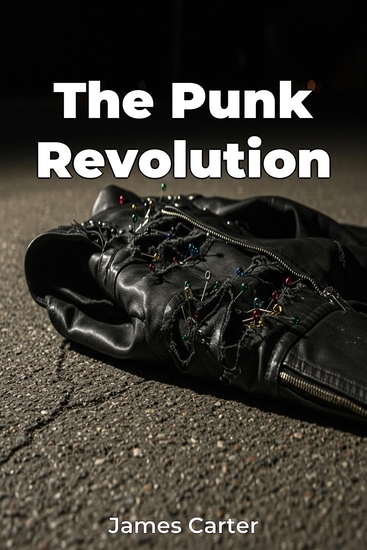
The Punk Revolution - cover

The Punk Revolution

James Carter

Translator A Ai

Publisher: Publifye

  • 0
  • 0
  • 0

Summary

"The Punk Revolution" explores how punk rock emerged as a powerful force of rebellion and creative independence. This cultural movement, born from social unrest and political disillusionment in the 1970s, challenged music industry norms and became a symbol of dissent. The book examines punk's DIY ethic, which allowed artists to bypass traditional power structures. One intriguing fact is how punk's message evolved from nihilistic rage into more nuanced social commentary.

 
The book systematically examines punk's origins in the US and UK, its DIY development through independent record labels and fanzines, and the evolution of its lyrical content. It highlights how economic recession and social alienation fueled the genre's rise. By challenging corporate control, punk demonstrated the potential for marginalized voices to thrive.

 
The book's value lies in its comprehensive and interdisciplinary perspective, offering insights into punk's impact on music history and broader cultural attitudes.
Available since: 02/24/2025.
Print length: 57 pages.
Other books that might interest you

  • Animals in Ancient Rome: The History of the Roles that Different Animals Played across the Roman Empire - cover

    Animals in Ancient Rome: The...

    Editors Charles River

    • 0
    • 0
    • 0
    Rome's complex relationship with animals goes right back to its foundation myth, and even today, the wolf remains a symbol of the Eternal City, forming part of the logo for the capital's football team, A. S. Roma. According to tradition, the city of Rome was founded by Romulus, who, with his brother Remus, was nursed and sheltered by a she-wolf. That tale, widely believed as a historical fact by ancient Romans, had a profound influence on Roman culture, and in part that shaped Roman attitudes toward their animals. The actual cave where Romulus and Remus were said to have been raised, the Lupercal, is thought to have been situated on the Palatine Hill in the very heart of Rome, and there was a claim by some archaeologists it had been found in 2007. True or not, the story of the wolf and its link to the beginnings of Rome continues to intrigue modern citizens, and the recent return of a family of wolves to the outskirts of Rome was greeted with wild enthusiasm. 
    	Other than the tale of the she-wolf with Romulus and Remus, the overriding images and stories of Roman animals that have come down through popular culture to modern times largely concern the vicious animal fights put on in the Colosseum, stories of Christians being thrown to the lions, and Hannibal's invasion of Italy with elephants. Indeed, the widely accepted view is that Romans were uncommonly brutal to their animals and had little empathy for them, and in terms of the Romans' scientific knowledge about animals, it appears much of it came to them from the Greeks.
    Show book
  • Akkadian Empire The: A Captivating Guide to the First Ancient Empire of Mesopotamia and How Sargon the Great of Akkad Conquered the Sumerian City-States - cover

    Akkadian Empire The: A...

    Captivating History

    • 0
    • 0
    • 0
    Was the first empire really started by an abandoned orphan who rose to greatness? 
    Was there an empire older and more important than mighty Egypt? There were a few, but the Akkadian Empire, born out of the cradle of civilization, is thought to be the first. And it was a game-changer. Its creation inspired conquerors and other empire-builders throughout history and spawned two world powers. Its epics, legends, and beliefs influence religions and cultures even today—and make for some darn good listening. 
    Known mostly through clay tablets and stelae, the truth about the Akkadian Empire has intrigued and at times eluded scholars and historians. Victory reliefs made grandiose claims, and propaganda was rampant. Legendary poems countered cautionary tales about arrogance and oppression. We will discuss the men who ruled the empire and the legends that define what we know about them. 
    Some of the treasures you’ll discover about the Akkadian Empire includes:Why the Sumerians were an important part of the empireThe grand wealth and cruelty that accompanied Queen Puabi to her graveHow the first empire-builder the world has ever known rose up from mysterious and legendary originsWhat made Sargon so great?How an empire made up of city-states wanting independence was constantly on the verge of breaking apartThe epic adventures of Gilgamesh—how he slew a forest monster and the tragic consequences for earning the wrath of the godsHow did Naram-sin achieve god-like status? 
    Scroll up and click the “add to cart” button to learn more about the Akkadians and the first known empire!
    Show book
  • Scotland and the Low Countries 1124–1994 - cover

    Scotland and the Low Countries...

    Grant G. Simpson

    • 0
    • 0
    • 0
    Essays exploring Scotland’s connections with Belgium, the Netherlands, and Luxembourg, from the twelfth century to the twentieth century. 
     
    This collection of essays presents historical approaches to the links which have existed for over 800 years between Scotland and one of the areas of continental Europe closest to her: the Low Countries.  
     
    Topics include: Flemish settlers in twelfth-century Scotland; the Count of Holland who claimed the Scottish throne in 1291; the Flemish aspect of the Auld Alliance with France; the view of Scotland taken by a Netherlands-born chronicler, Jean Froissart; Scotland’s late-medieval involvement in diplomacy with Guelders and in wool-exports to the Netherlands; the contacts of Scottish patrons with Netherlandish painters in the fifteenth and sixteenth centuries; Scots pursuing military careers and studies in the arts and law in the Low Countries in early modern times; parallels between Belgian Art Nouveau painting and the work of some Glasgow artists around 1900; comparisons between Scotland and the Low Countries in the twentieth century in the realms of social housing and oil exploration.  
     
    These varied studies add detailed background to the subject of Scotland within Europe: a question now much debated. This volume is the third in the Mackie Monographs series, based on the Mackie Symposia held in the University of Aberdeen, which have as their theme the historical study of Scotland’s overseas contacts.
    Show book
  • Prayers Before the Eucharist - cover

    Prayers Before the Eucharist

    St. John Henry Cardinal Newman

    • 0
    • 0
    • 0
    When thinking of Saint John Henry Newman, many associations come to mind: scholar, writer, intellectual. But rarely do we associate “mystic” with this new saint. 
    And yet, his faith was not merely an intellectual exercise. Newman held a deep and passionate devotion to Our Lord in the Eucharist. 
    In honor of his canonization, we have collected his Prayers and Meditations before the Eucharist in order to bring his beautiful and profound love for Christ in the Sacrament to a new generation of Catholics. 
    His prayers place a singular focus on God’s mercy, perfections, and love for us that transcends the depravity of our sins, and engages God in frequent and familiar conversation, moving the heart to friendship with Christ.
    Show book
  • Axum Empire - The African Kingdom That Controlled the Red Sea Trade - cover

    Axum Empire - The African...

    Rolf Hedger

    • 0
    • 0
    • 0
    The Axum Empire was one of the most influential civilizations in ancient Africa, flourishing between the 4th and 7th centuries AD. It was located in what is today northern Ethiopia and parts of Eritrea, strategically positioned along the Red Sea trade routes. This placement not only allowed Axum to thrive economically but also made it a key player in global trade between Africa, the Middle East, and Asia. The kingdom of Axum’s rise to prominence marked a pivotal moment in African history, shaping the culture, economy, and politics of the region for centuries. 
    The origins of the Axum Empire are somewhat shrouded in mystery, but its establishment is often linked to the rise of the city of Axum (also spelled Aksum) around the 1st century AD. According to various historical accounts, Axum was originally a small kingdom that grew in power through trade, conquest, and political alliances. It eventually became one of the most advanced civilizations of its time, possessing advanced knowledge of agriculture, architecture, and metallurgy. 
    At its height, the Axum Empire was an extraordinary political and economic entity. The kingdom controlled an extensive territory that stretched from modern-day Ethiopia and Eritrea to parts of Sudan and Arabia. Axum became a major center for trade, exporting goods such as ivory, gold, frankincense, and myrrh, while also importing luxury goods from Roman, Indian, and Arabian merchants. The city of Axum itself was known for its monumental obelisks, palaces, and sophisticated urban planning.
    Show book
  • Inquiry into the Human Mind An - On the Principles of Common Sense - cover

    Inquiry into the Human Mind An -...

    James Reid

    • 0
    • 0
    • 0
    Though now little known outside specialist philosophical circles, the Scottish philosopher Thomas Reid (1710-1796) is remembered both for the founding of the Scottish School of Common Sense and his major work, An Inquiry into the Human Mind: on the Principles of Common Sense (1764).  
     
    With his feet firmly on the ground, he challenged the speculative ideas of David Hume and George Berkeley, who regarded ideas in the mind as a basis for the external world. Instead, the pugnacious but lively Reid took a much more ‘common sense’ view in basing his ideas of reality on sensus communis. Starting from a Ciceronian, stoical platform, he developed his views on more rational attitudes towards reality - ‘direct realism’. In embarking upon An Inquiry he took a critical stance specifically against John Locke and the Treatise of Human Nature (1739) as he declared in his opening statement. ‘I THOUGHT it unreasonable...upon the authority of philosophers, to admit a hypothesis, which, in my opinion, overturns all philosophy, all religion and virtue, and all common sense: and finding that all the systems concerning the human understanding which I was acquainted with, were built upon this hypothesis, I resolved to inquire into this subject anew, without regard to any hypothesis. WHAT I now humbly present...is the fruit of this inquiry, so far only as it regards the five senses; in which I claim no other merit, than that of having given great attention to the operations of my own mind, and of having expressed, with all the perspicuity I was able, what I conceive every man, who gives the same attention, will feel and perceive.’ 
     
    Thomas Reid became professor of moral philosophy at the University of Glasgow, which underscored his importance, though he swam against the main philosophical tide. Even Hume, on reading An Inquiry, acknowledged that the work ‘is wrote in a lively and entertaining manner’. By restricting himself to an examination of the five senses ‘and the principles of human mind which are employed about’...Reid concluded ‘we have attempted an inquiry only into one little corner of the human mind; that corner which seems to be most exposed to vulgar observation, and to be most easily comprehended’. An Inquiry is read in a characterful manner by James Gillies.
    Show book