Join us on a literary world trip!
Add this book to bookshelf
Grey
Write a new comment Default profile 50px
Grey
Subscribe to read the full book or read the first pages for free!
All characters reduced
My Six Years with the Texas Rangers - cover

My Six Years with the Texas Rangers

James B. Gillett

Publisher: DigiCat

  • 0
  • 0
  • 0

Summary

In "My Six Years with the Texas Rangers," James B. Gillett offers a captivating first-hand account of life within one of America's most storied law enforcement agencies. Written in a vivid and engaging narrative style, the book combines biographical elements with thrilling accounts of Gillett's experiences as a Texas Ranger, capturing the perilous nature of frontier law enforcement in the early 20th century. Each chapter immerses readers in dramatic encounters, revealing both the heroic and often gritty realities faced by the Rangers as they navigated a landscape marked by violence and lawlessness. James B. Gillett, born in the heart of Texas in the late 19th century, was a man shaped by the times he lived in. His tenure with the Texas Rangers from 1890 to 1896 inspired him to pen this memoir as a testament to his dedication and service. Having witnessed the complexities of justice and community on the Texas frontier, Gillett's insights reflect a deep understanding of both the heroism and challenges confronting lawmen in an evolving society. For readers interested in American history, law enforcement, or the vivid tapestry of the Texas frontier, Gillett's work stands as a compelling testament to bravery and dedication. "My Six Years with the Texas Rangers" is not just a memoir; it is a window into a critical period in American history, making it an essential read for anyone intrigued by the legacy of the Wild West.
Available since: 11/24/2023.
Print length: 177 pages.


Other books that might interest you

  • Jekyll Can’t Hyde - cover

    Jekyll Can’t Hyde

    Jodi Lynn Pavlock

    • 0
    • 0
    • 0
    Get ready for a rollercoaster of emotions as Jodi takes you on a wild, witty, and heartfelt journey through love, deception, and self-discovery. In this refreshingly candid account, Jodi shares the story of how she fell for the charm of not one, but two narcissists, and the swift of drama that followed. With a mix of bombshells and raw honesty, she unveils the reality of living under the spell of manipulation and emotional highs and lows. Narcissistic abuse is something not talked about often enough, but in Jodi's personal story, you will learn of the hell she lived through. From the sweet promises that drew her into the painful truths that set her free, Jodi's story is a relatable, eye-opening account of love turned upside down. "Jekyll Can’t Hyde" is a powerful survival guide. Through her ups and downs, Jodi shows there's always a way out, a way to reclaim your strength, and a way to find joy again. Packed with wit, wisdom, and a touch of humor, this book will inspire you to see the light at the end of the tunnel and remind you that no matter how dark it gets, brighter days are just around the corner.
    Show book
  • Farming Grace - A Memoir of Life Love and a Harvest of Faith - cover

    Farming Grace - A Memoir of Life...

    Paulo Scott

    • 0
    • 0
    • 0
    Sometimes your past must be plowed before your future can be planted… 
    Her great-great-grandma came to California in a covered wagon more than a hundred years ago, and her family has farmed in the Sacramento Valley ever since, but a life of farming was the last thing she wanted… until the day fate brings her back to the farm. 
    Nineteen-year-old Paula Scott leaves California when the almonds are in bloom for college in Reno, Nevada where cocaine, casinos, and her first honest-to-goodness boyfriend will break her farmgirl heart, but her story doesn’t end in the desert with a broken heart. 
    When life knocks us down, we get back up, we try again, we marry and maybe divorce, but in the midst of our down and dirty, raw and real, painfully ordinary lives, sometimes the extraordinary breaks through, and we see God. 
    Because God sees us.
    Show book
  • King John Henry III and England’s Lost Civil War - cover

    King John Henry III and...

    John Paul Davis

    • 0
    • 0
    • 0
    This sweeping history of thirteenth century England examines how the successive reigns of two very different kings established the English way of life. 


    In 1204, the great Angevin Empire was fragmenting under King John's rule. Unable to withstand France's invasion of Normandy, John also faced difficult relations with the papacy, and rising dissent among his barons. By the time John died in 1216, the failed Magna Carta gave way to civil conflict, and more than half of the country had fallen to the dauphin of France. These troubles were then passed, along with the crown, to John's nine-year-old son, Henry III. 


    Even with a regency government commanding the ship of state, Henry faced a dire threat to his royal authority. But the First Baron's War came to an end as Henry aligned himself with the pope and offered a revised Magna Carta. While this may have ensured short-term survival, living up to the promises of this foundational contract would create a more significant challenge—and lay the groundwork for the Second Baron's War.
    Show book
  • Notorious Outlaws of the Wild West - cover

    Notorious Outlaws of the Wild West

    Editors Charles River

    • 0
    • 0
    • 0
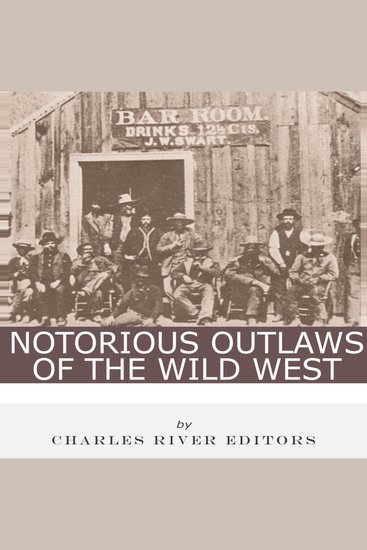
    The Wild West has made legends out of many men after their deaths, but like Wild Bill Hickok, Jesse James was a celebrity during his life. However, while Hickok was (mostly) a lawman, Jesse James was and remains the most famous outlaw of the Wild West, with both his life of crime and his death remaining pop culture fixtures. Eventually James, his brother and their infamous gang became the most hunted outlaws in the country, but Jesse would famously be done in by the brother of his most trusted gang members. After Jesse moved in with the Ford brothers, Bob Ford began secretly negotiating turning in the famous outlaw to Missouri Governor Thomas Crittenden. On April 3, 1882, as the gang prepared for another robber, Jesse was famously shot in the back of the head by Bob Ford as he stood on a chair fixing a painting. While conspiracy theories have continued to linger that somehow James was not killed on that day, the Ford brothers would celebrate their participation in his murder, Bob himself would be murdered a few years later, and Jesse James’s legacy had been ensured. 
    Alongside Jesse James, Butch Cassidy and the Sundance Kid were two of the most notorious outlaws of the west. The duo had a full-fledged gang known as the Wild Bunch conducting robberies in the Southwest, and they became legendary for their shootouts and their escapes from the law. Eventually, Butch Cassidy and his most famous acquaintance fled as far east as New York City and as far south as Argentina.  
    With a wit as quick as his trigger, Billy the Kid had a bullet and a wisecrack for every man he killed, and his notoriety only grew when exaggerated accounts of his actions in Lincoln County eventually earned The Kid a bounty on his head. There was plenty of gunplay in the outlaw’s life to help him become a well known if not celebrated figure in the West, but the legendary and controversial nature of his death has also helped him endure.
    Show book
  • D L Moody - A Biography of One of America's Great Evangelists - cover

    D L Moody - A Biography of One...

    Kevin Belmonte

    • 0
    • 0
    • 0
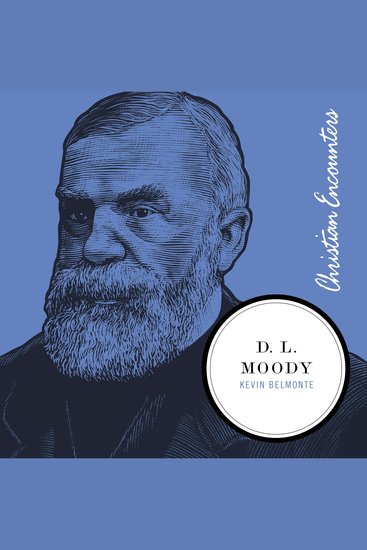
    A plainspoken follower of Jesus, Dwight L. Moody embodies passionate,unflinching obedience to God. It’s 1860, the eve of America’s Gilded Age. A manin a gray, woolen suit stands in a dilapidated building in Chicago’s “LittleHell,” a slum forgotten by the world. He is surrounded by grimy children,attentive and watchful in this makeshift school Moody established just forthem. 
    They are waiting for Abraham Lincoln to speak. Why America’sgreatest president and one of America’s most celebrated spiritual giants areamong the poorest of the poor is just the beginning of D.L. Moody, a biography with a novel-like narrative style thatunveils the eternal power one life can have. 
    This book reintroduces the unlikely accomplishments of a mandesperate to obey God’s call and shows how one committed heart can impact thekingdom of God and the spiritual heritage of a nation. 
    We learn about life through the lives of others. Their experiences,their trials, their adventures become our schools, our chapels, ourplaygrounds. Christian Encounters, a series of biographies from Thomas NelsonPublishers, highlights important lives from all ages and areas of the Church throughprose as accessible and concise as it is personal and engaging. Some arefamiliar faces. Others are unexpected guests. Whether the person is D.L. Moody,Sergeant York, Saint Nicholas, John Bunyan, or William F. Buckley, we are nowliving in the world that they created and understand both it and ourselvesbetter in the light of their lives. Their relationships, struggles, prayers, anddesires uniquely illuminate our shared experience.
    Show book
  • “They Know I Know Everything” - My Life in French Africa - cover

    “They Know I Know Everything” -...

    Robert Bourgi

    • 0
    • 0
    • 0
    A key figure in French Africa, Robert Bourgi, for the first time ever in a book, discusses his life, his relationship with his mentor Jacques Foccart and all the "missions" he undertook over almost forty years, on behalf of African and French presidents, including the leading lights of the Right (Jacques Chirac, Nicolas Sarkozy, Charles Pasqua, Jacques Toubon, Dominique de Villepin, Claude Guéant, François Fillon etc.). He reveals the financing networks of French political parties, based on his personal notes that he kept for 40 years. He also describes the sensitive cases in which he was involved—the liberation of French journalists from Lebanon in the 1980s; rehabilitation of Mobutu Sese Seko; the liberation of the French hostage, Clothilde Reiss, in Iran; the rescue of Laurent Gbagbo; the resignation of Jean-Marie Bockel; the appointment of French ambassadors to Africa; his lobbying of the Élysée Palace on behalf of African heads of state. From Félix Houphouët-Boigny and Laurent Gbagbo (Ivory Coast) to Mobutu Sese Seko (DR Congo), via Blaise Compaoré (Burkina Faso), Mathieu Kérékou (Benin), Abdoulaye Wade and Macky Sall (Senegal), Mohamed ould Abdel Aziz (Mauritania) and Gnassingbé Eyadéma (Togo), Pascal Lissouba, Denis Sassou Nguesso (Congo), and above all Omar and Ali Bongo (Gabon), this book throws light on the psychology of numerous presidents, south of the Sahara, and their regimes, giving the reader a fresh look at France's African policy over several decades.
    Show book