Join us on a literary world trip!
Add this book to bookshelf
Grey
Write a new comment Default profile 50px
Grey
Subscribe to read the full book or read the first pages for free!
All characters reduced
My Six Years with the Texas Rangers - Frontier Law Enforcement Adventures in the Wild West - cover

My Six Years with the Texas Rangers - Frontier Law Enforcement Adventures in the Wild West

James B. Gillett

Publisher: Good Press

  • 0
  • 0
  • 0

Summary

In "My Six Years with the Texas Rangers," James B. Gillett offers a riveting firsthand account of his experiences as a ranger, capturing the essence of a tumultuous period in American frontier history. Gillett's vivid storytelling combines elements of adventure and memoir, crafted in a straightforward yet engaging prose style that immerses the reader in the gritty realities of law enforcement in early 20th-century Texas. The book serves not only as a personal narrative but also as a historical document, illuminating the challenges faced by lawmen in combating crime and maintaining order in a rapidly evolving society steeped in both lawlessness and burgeoning democracy. James B. Gillett, born into a family of Texas ranchers, became a Texas Ranger in an era marked by both violence and heroic deeds. His background provided him with intimate knowledge of the land and its people, and his dedication to justice propelled him into situations that tested his resolve and moral compass. Drawing from his rich experiences, Gillett's writing reflects a blend of admiration and critique of the very institution he served, offering nuanced insights into the complexities of law enforcement. This compelling narrative is highly recommended for readers interested in the historical dimensions of the American West and those yearning for authentic accounts of life on the frontier. Gillett'Äôs engaging prose and profound reflections make "My Six Years with the Texas Rangers" an essential read for anyone seeking to understand the legacy of the Texas Rangers and the cultural fabric of an era defined by both heroism and tumult.
Available since: 12/24/2023.
Print length: 177 pages.

Other books that might interest you

  • Feudalism - The Structure of Medieval Society - cover

    Feudalism - The Structure of...

    Harris Ropes

    • 0
    • 0
    • 0
    Feudalism emerged in Western Europe as a response to the collapse of centralized authority following the fall of the Roman Empire. As Roman institutions crumbled in the 5th century, Europe descended into a period of instability and fragmentation. Without the protection and infrastructure once provided by Rome, people turned to local leaders for safety and organization. These leaders—often wealthy landowners or military figures—became the foundation of a new social and political structure that emphasized land ownership, loyalty, and mutual obligation. 
    The early roots of feudal practices can be traced to the relationships that formed during this chaotic period. In the absence of a strong central government, powerful individuals began offering protection to those around them in exchange for service or labor. Over time, this informal system developed into a structured hierarchy, with clearly defined roles and responsibilities. Lords granted land, known as fiefs, to their vassals, who in return pledged loyalty and military support. This mutual dependency became the backbone of medieval society and formalized the relationships that had organically formed during the earlier periods of uncertainty. 
    Localized power became the defining feature of feudal Europe. With no single empire to unify the continent, authority became decentralized. Kings often ruled in name only, while real control rested in the hands of regional lords and nobles. These lords governed their own territories, enforced laws, and maintained private armies. In turn, they depended on the support of lesser vassals and knights, who managed smaller portions of land and fulfilled military duties. This layered structure ensured that each level of society relied on those above and below, creating a rigid yet stable social order.
    Show book
  • Cleopatra - Last Pharaoh of Egypt - cover

    Cleopatra - Last Pharaoh of Egypt

    Omar Khalil

    • 0
    • 0
    • 0
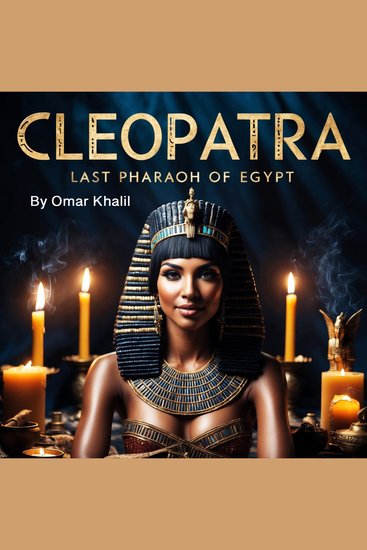
    Cleopatra VII was born into the powerful Ptolemaic dynasty, a Greek ruling family that had governed Egypt since the time of Alexander the Great. As the daughter of Ptolemy XII, she was raised in a world of immense political intrigue and royal rivalries. Unlike many of her predecessors, Cleopatra was highly educated, mastering several languages, including Egyptian—an unusual skill among the Greek rulers of Egypt. Her intelligence, charm, and deep understanding of politics set her apart as a leader destined for greatness. 
    From a young age, Cleopatra was immersed in the complexities of governance. She studied philosophy, mathematics, and diplomacy, acquiring knowledge that would later aid her in navigating the dangerous world of ancient power struggles. While her early years were marked by luxury, they were also shadowed by uncertainty. Egypt, under her father’s rule, was heavily dependent on Rome, and political instability threatened the Ptolemaic dynasty. Cleopatra observed these tensions closely, preparing herself for the inevitable challenge of ruling a divided kingdom. 
    When Ptolemy XII died in 51 BCE, Cleopatra, at just eighteen years old, ascended to the throne alongside her younger brother, Ptolemy XIII. According to Egyptian tradition, royal siblings often married to secure dynastic rule, and Cleopatra was expected to govern jointly with her brother-husband. However, she had little interest in sharing power. She quickly demonstrated her political ambition, seeking to rule Egypt independently. Her intelligence and strategic mindset made her a formidable leader, but her brother’s advisors viewed her as a threat.
    Show book
  • Muromachi Period - Ashikaga Shoguns and the Rise of Feudal Japan - cover

    Muromachi Period - Ashikaga...

    Rolf Hedger

    • 0
    • 0
    • 0
    The Muromachi Period, spanning from 1336 to 1573, marked a significant turning point in Japanese history, characterized by the rise of the Ashikaga Shogunate and the gradual shift toward decentralized feudal rule. This period emerged following the fall of the Kamakura Shogunate, as Ashikaga Takauji established his military government in Kyoto. The political, social, and cultural transformations that unfolded during this time laid the foundation for the later Sengoku era, a period of constant warfare among regional warlords. 
    The decline of the Kamakura Shogunate stemmed from mounting dissatisfaction among the samurai class, who had grown discontent with the Hojo regents’ rule. The Mongol invasions of Japan in 1274 and 1281 had placed immense strain on the government, as victory brought no financial rewards for the warriors who had fought to defend the nation. With no lands to distribute as compensation, loyalty to the shogunate weakened, creating an opportunity for ambitious leaders to challenge its authority. Amid this unrest, Emperor Go-Daigo launched the Kenmu Restoration (1333–1336), an effort to reestablish imperial rule. However, his failure to recognize the interests of the samurai led to his downfall. 
    Ashikaga Takauji, originally a supporter of the emperor, turned against him and seized power, defeating both imperial and Kamakura loyalists. In 1336, Takauji established his own military government, known as the Muromachi Bakufu, in Kyoto. Unlike the Kamakura Shogunate, which ruled from a distant military capital, the Muromachi Shogunate was strategically located in the heart of Japan’s cultural and political sphere. Takauji’s rule was solidified in 1338 when he was officially
    Show book
  • The Penniless Peer - Strong-Willed Heroine: - cover

    The Penniless Peer -...

    Barbara Cartland

    • 0
    • 2
    • 0
    Eighteen-year-old Fenella is a mischievous as her freckled elfin beauty and feline green eyes suggest – but beneath that puckish charm she hides her ardent desire to do all in her power to make her beloved cousin Periquine, Lord Corbury, happy. When to her chagrin the dashing Lord returns from the Napoleonic War after fighting with Wellington, penniless and passionately in love with another – a woman of great wealth and even greater beauty, whom he cannot marry without wealth of his own, Fenella sacrifices her private passion to his wellbeing. Laying her life and her love on the line, she joins Periquine in a swashbuckling and death-defying life of crime as highwaymen, robbers and smugglers. Will their exploits reap the riches he needs? And will Fenella’s all-conquering love remain unrequited? Only when Perequine faces losing her forever will he find the answer in his heart...
    Show book
  • Rise and Fall of the Crusader States The: The History of the Outremer in the Holy Land - cover

    Rise and Fall of the Crusader...

    Charles River Editors

    • 0
    • 0
    • 0
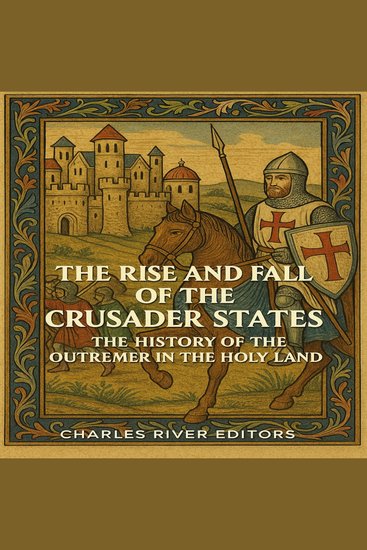
    Of the many campaigns during the Middle Ages, few are as remarkable or seemingly impossible to win at the start as the First Crusade (1095-99), and the true crowning achievement of that crusade, which resulted in two centuries of Western European Christian states in the Middle East and the permanent firing of the European imagination, was the conquest of Jerusalem on July 15, 1099 after three weeks of siege. That victorious siege came four years after the call for a crusade first went out, and had the Crusaders not taken Jerusalem, the First Crusade would not likely have been followed by any more and the campaign might have been no more than an historical footnote of what could have been.  
    Despite the successful First Crusade, the Crusader States were relatively small and weak, and while they tried to be a bulwark of Christianity in the Holy Land, the Crusader States were reconquered centuries before modern European colonialism began. Nonetheless, the Crusades and the Crusader States galvanized the Christians of Western Europe to expand their world. While it remains unclear how much that world expanded in practical terms such as trade, or how it affected later attitudes during the expansion to the New World and other regions, it definitely engaged the European mind in both positive and negative ways. As such, the crusades soon achieved near-mythic status in the European literature and remain among the most important events of the Middle Ages. 
    At the same time, the Crusader States were not one homogenized region but actually several distinct territories that had their own unique histories and interests. In fact, many of them were founded a century apart, with the Kingdom of Antioch established in 1097 and the Duchy of Cyprus in 1191, and they stretched across the Near East and the Mediterranean. As such, each one had different political, religious, and economic characteristics.
    Show book
  • Lincoln's Legacy: The Epic American Journey - Dive into Lincoln's Legacy! Experience thrilling audio guides for an immersive historical journey - cover

    Lincoln's Legacy: The Epic...

    Gareth Holloway

    • 0
    • 0
    • 0
    Lincoln's Legacy: The Epic American Journey 
    ⭐⭐ Discover Simplified Insights and Explanations ⭐⭐ 
    Are you aiming to advance in your career and deepen your understanding through a transformative exploration of Lincoln's impact on America? 
    Searching for a comprehensive resource that covers all aspects of Lincoln's profound influence on the nation's journey? 
    Your search ends here! 
    This audiobook is your go-to companion for enhancing your knowledge, applying historical insights, and engaging with in-depth discussions. With this resource, you're prepared for a successful understanding of Lincoln's legacy. 
    Key features of this enriched guide: 
    - Profound insights into Lincoln's transformative impact on America 
    - In-depth explanations of Lincoln's leadership and decisions 
    - Effective strategies for understanding and reflecting on historical events 
    Our guide stands out with thorough coverage, which is crucial for truly appreciating Lincoln's contributions. Concepts are explored in detail with accuracy and depth. 
    Please note that this audiobook is an independent resource, crafted for your knowledge and exploration of history. 
    Crafted with clear structure and accessible language, our audiobook ensures seamless progression through topics. Goodbye confusing jargon, welcome clear, precise, and insightful content. 
    So, why wait? Click the BUY NOW button, secure your audiobook, and embark on your journey to rediscover Lincoln's transformative American legacy! 
    Begin your path to understanding with "Lincoln’s Legacy: The Epic American Journey" today!
    Show book