Join us on a literary world trip!
Add this book to bookshelf
Grey
Write a new comment Default profile 50px
Grey
Subscribe to read the full book or read the first pages for free!
All characters reduced
Women Adapt Well - cover

Women Adapt Well

Jade Earing

Translator A AI

Publisher: Publifye

  • 0
  • 0
  • 0

Summary

"Women Adapt Well" explores the impressive adaptability of women through psychological data, focusing on cognitive flexibility, emotional regulation, and social navigation. It unpacks how women leverage these skills to navigate complex social environments and life's multifaceted challenges. The book highlights how women's adaptability isn't just about resilience but also about actively shaping their environments and outcomes, which contributes to gender equality and social justice.

 
The book progresses by first establishing a theoretical foundation in adaptability theory, and then delves into how women use cognitive flexibility for problem-solving and decision-making, emotional regulation to manage relationships and stress, and social navigation to build support systems. By integrating empirical data from diverse cultural contexts and personal narratives, "Women Adapt Well" provides a comprehensive, inclusive perspective.

 
A key strength is its focus on intersectionality, acknowledging how factors like race, ethnicity, and socioeconomic status interplay with gender to shape individual experiences.
Available since: 02/27/2025.
Print length: 77 pages.


Other books that might interest you

  • Ugh As If!: Clueless - cover

    Ugh As If!: Clueless

    Veronica Litt

    • 0
    • 0
    • 0
    A sweet and sly exploration of the Jane Austen–inspired teen movie and its evergreen imperative to be kind, do better, and find the activist within
     
    We are totally butt-crazy in love with Clueless. Since the movie’s premiere in 1995, pop culture has mined Amy Heckerling’s high school comedy for inspiration, from Iggy Azalea and Charli XCX’s “Fancy” music video to Cher’s iconic yellow plaid suit appearing at every Halloween party.
     
    In Ugh As If!, Veronica Litt argues that this seemingly fluffy teen romp is the quintessential thinking woman’s movie, one in which the audience is asked to seriously consider the beauty and power of naïveté. Cher Horowitz’s gradual pivot from oblivious it girl to burgeoning activist is a powerful reminder that even the most unlikely people can change for the better and contribute to their communities. In this bright, shiny film, pursuing a more just society isn’t just possible — it’s enjoyable. This fun, feminine, feel-good movie is a counter-narrative to nihilism, a refusal to give into cynicism, hopelessness, and passivity. Almost without viewers noticing, Clueless teaches Cher, and us, how to become better. Like the film it examines, Ugh As If! nudges even the most jaded viewer into feeling hopeful about the future.
    Show book
  • Receive Inspiration guidance & support SELF HEALING TOOLS Coaching session & meditations - infinite consciousness ultimate self love rediscover your true self strength hope a balance life - cover

    Receive Inspiration guidance &...

    LoveAndBloom

    • 0
    • 0
    • 0
    No matter how old you are, how your life is happy or chaotic, there are spirit guides always there for you. Your spirit guides are your energetic teams that include angels. They have a higher perspective to give you guidance in your life. All of us can communicate with our spirit guides. It is easier if we do it through meditation and communicate telepathically.  
    Besides connecting to a spirit guide, you can also receive guidance from your own intuition. Your intuition is your compass. You have a gut feeling to do something and go in a certain direction. The only thing we need to build up is a relationship with our intuition. We need to trust ourselves.  
    In this course, we will Opening our intuition Build trust within ourselvesConnect to angels Receive guidance from spirit guides Open our portal to be creative Get insights from within And much more 
    Show book
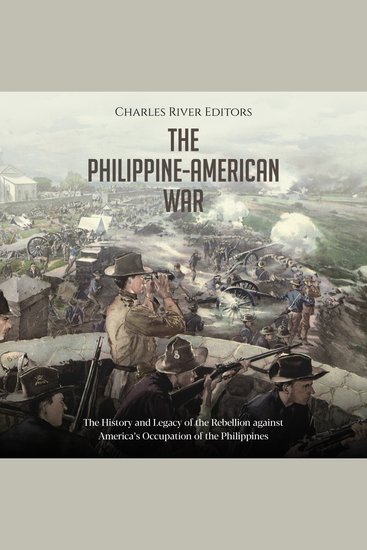
  • Philippine-American War The: The History and Legacy of the Rebellion against America’s Occupation of the Philippines - cover

    Philippine-American War The: The...

    Editors Charles River

    • 0
    • 0
    • 0
    On April 27, 1898 six American ships of the line, led by the Olympia with Commodore George Dewey aboard, headed toward Manila Bay. After several days of sailing over the South China Sea, Dewey hoped to sail past the Spanish fort at Corregidor to arrive at Manila without detection, and sailed without lights in order to do so. He made it into the bay, where the naval battle with the Spanish South Pacific Squadron began in the wee hours of May 1, 1898. Dewey was a student of the Mahanian school of naval strategy, so called for the aggressive Alfred T. Mahan, a top naval strategist and President of the Naval War College. As such, he concentrated his efforts on the offensive, preferring to meet the Spanish fleet on his own terms and to avoid, if it all possible fire from land-based batteries that lined Manila Bay. He refused to engage the batteries on land, sailing straight past the firing batteries and toward the Spanish fleet. Dewey issued his most famous command just before 6:00 that morning, “You may fire when ready, Gridley!”  
    The leader of an 1896 insurgency against the Spanish, Emilio Aguinaldo y Famy, had left the Philippines in an agreement following Spanish promises of reform that never materialized. As a recognized Filipino leader, he was brought to Manila by an American ship within days of the American victory at Manila, but the events that followed were to prove controversial and lead to U.S. control of the Philippines, along with a revolution of the Filipino people that would prove to be far longer and more costly than the Spanish-American war itself. The Philippines had no meaningful connection to Cuba except as a Spanish colony, and Spanish forces in the islands were no threat to the U.S. Pacific coast, but the island chain appeared to offer a convenient location for a naval base in an age when warships were coal-powered and needed coaling bases. 
    Show book
  • The Kubark Counterintelligence Interrogation Manual - cover

    The Kubark Counterintelligence...

    Central Intelligence Agency

    • 0
    • 0
    • 0
    Released by the Freedom of Information Act. This document is a thorough description of how the CIA recommends interrogating a subject. To get the information that is needed there is nothing withheld short of torture. For example in "Threats and Fears," the CIA authors note that "the threat of coercion usually weakens or destroys resistance more effectively than coercion itself. The threat to inflict pain, for example, can trigger fears more damaging than the immediate sensation of pain." Under the subheading "Pain," the guidelines discuss the theories behind various thresholds of pain, and recommend that a subject's "resistance is likelier to be sapped by pain which he seems to inflict upon himself" such rather than by direct torture. The report suggests forcing the detainee to stand at attention for long periods of time. A section on sensory deprivations suggests imprisoning detainees in rooms without sensory stimuli of any kind, "in a cell which has no light," for example.
    Show book
  • The Gothic Cathedral - Architecture of Faith - cover

    The Gothic Cathedral -...

    Harris Ropes

    • 0
    • 0
    • 0
    The origins of Gothic architecture lie in the transition from the Romanesque style that dominated Europe in the early medieval period. Romanesque churches, with their thick walls, small windows, and rounded arches, provided a sense of solidity but limited natural light and height. By the 12th century, new architectural innovations emerged, driven by a desire for greater verticality, spacious interiors, and an infusion of divine light. These aspirations led to the birth of the Gothic style, first appearing in France before spreading across Europe. 
    One of the key figures in this transition was Abbot Suger of the Abbey of Saint-Denis, near Paris. In the 1130s, he initiated the reconstruction of the abbey church, incorporating pointed arches, ribbed vaults, and extensive stained glass windows. Suger believed that light was a manifestation of the divine, and through these architectural changes, he sought to transform the church into a place of spiritual illumination. His innovations set a precedent for what would become the defining characteristics of Gothic architecture. 
    The pointed arch, a hallmark of the Gothic style, replaced the rounded arch of the Romanesque period. This architectural shift was more than an aesthetic change; it allowed for greater structural efficiency, enabling builders to construct taller and more spacious interiors. The ribbed vault, another significant innovation, helped distribute weight more evenly, allowing for thinner walls and the introduction of expansive stained glass windows. These windows, often adorned with biblical scenes, served both a decorative and didactic function, educating the largely illiterate medieval population about religious narratives.
    Show book
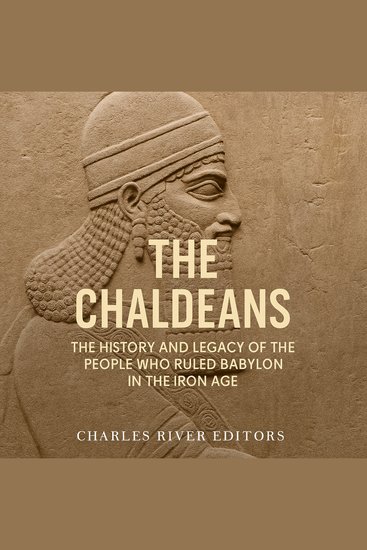
  • Chaldeans The: The History and Legacy of the People Who Ruled Babylon in the Iron Age - cover

    Chaldeans The: The History and...

    Charles River Editors

    • 0
    • 0
    • 0
    Today, Babylon has become a byword for greed, excess, and licentiousness, mostly due to its mention in the Bible, but a closer examination reveals that Babylon was so much more, and even perhaps the most important city in the ancient world. Ancient Babylon was home to great dynasties that produced some of the world’s most influential leaders, most notably Hammurabi and Nebuchadnezzar, and these rulers invoked their wills on the entire ancient Near East and have been remembered as both progressive and cruel all at the same time. Babylon was also the seat of culture in ancient Mesopotamia and the place where scholars made amazing scientific advances that would not be eclipsed for several centuries. Babylon was also instrumental in the development of the region’s religions, and naturally, Westerners have been fascinated by the close connections between some of the Mesopotamian religious texts, which include a flood story, a creation story and a story of the righteous sufferer, and their parallels in the Hebrew Bible.  
    	The Chaldeans were among the last of the native Mesopotamian peoples to rule ancient Babylon. Before them, Akkadians, Kassites, Assyrians, and others ruled the land situated in the middle of Mesopotamia, and before them, the Sumerians ruled southern Mesopotamia and briefly most of the region in the late 3rd millennium BCE. Understanding ancient Mesopotamia requires knowing studying how different city-states and ethnic groups were often vying for power, asserting themselves and their ethnic identities while simultaneously accepting core elements of Mesopotamian culture – notably language, science, religion, and historiography – as they played a role in the region’s development.  
    	What makes the Chaldeans unique, however, is that they can be traced to the Levant. Sometime in the late 2nd millennium BCE, the Chaldeans began a trek across the region, as many people did at that time, and eventually occupied land along the Euphrates River.
    Show book