Join us on a literary world trip!
Add this book to bookshelf
Grey
Write a new comment Default profile 50px
Grey
Subscribe to read the full book or read the first pages for free!
All characters reduced
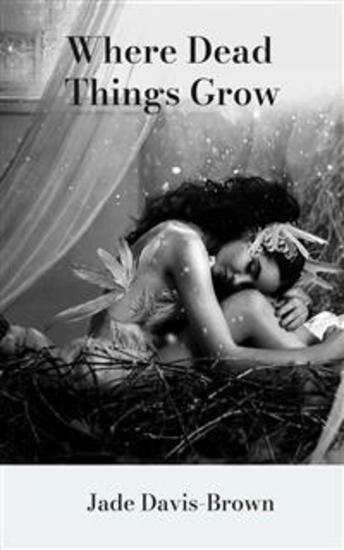
Where Dead Things Grow - cover

Where Dead Things Grow

Jade Davis-Brown

Publisher: BooxAi

  • 0
  • 0
  • 0

Summary

Exposed. I speak freely, spilling words, once kept, that I now share. Poets, we cannot be contained in what we share. Every emotion is magnified by our lives. Even ones that we have never lived. Yet we feel because we just know. That we are the some that dare to become.
Available since: 04/26/2022.
Print length: 152 pages.

Other books that might interest you

  • George Bernard Shaw: Arms And The Man - cover

    George Bernard Shaw: Arms And...

    George Bernard Shaw

    • 0
    • 0
    • 0
    Arms and the Man is a satirical drama play written by George Bernard Shaw published in 1898.  It has become one of the most popular of his plays. Like his other works, Arms and the Man questions conventional values and uses war and love as his satirical targets. He delightfully pops the bubble of the 'brave soldier' always wishing to charge into battle and shows (I think) how people stay the same whether in uniform or not and are not magically changed into different people. A cautious soldier can be just as admirable as a reckless one.
    Show book
  • The Wolf - cover

    The Wolf

    Mike Blake

    • 0
    • 0
    • 0
    The Wolf poem :: was inspired by William Blake's - 'The Tyger'. 
    It has the same regular form & meter as The Tyger. 
    With tempo and stanza (of the quatrain type), and is about one single animal in the natural world. 
    Where it differs from William Blake's poem is that the Poem Tyger has more religious connotations, not surprising for the times in which it was written. 
    Whereas 'The Wolf' written by myself, has more of Natures influences. 
    It's also about the possible demise totally of the Wolf through man, and a warning of this. 
    As we take care of The Wolf and other similiar 'top predator' animals, 
    so we automatically take care of the natural habitat that they live in - something that is increasing in peoples consciousness today. 
    To see more Poems by the same Author please follow the link below: 
    https://www.amazon.com/-/e/B00SG40RM8 
    **If you enjoy reading this Poem, can you Please leave your feedback, many thanks. 
    To contact the Author: Please add me Mike Miko on Facebook & then message me, thanks. https://www.facebook.com/mike.cco1 I will then contact the Author your behalf. or on 
    Twitter: miko_1_dollar ~ Tumblr : ccobes ~ 
    Instagram: Wild.Poetry.Webs / wild_poetrys 
    TikTok: @Wild_Poetrys 
    FB: https://www.facebook.com/New.Poets.Corner/
    Show book
  • The wound dresser - cover

    The wound dresser

    Walt Whitman

    • 0
    • 0
    • 0
    What does true compassion look like in the midst of war?
    
    The Wound-Dresser by Walt Whitman is one of the most tender and powerful poems ever written about the human cost of conflict. Drawn from Whitman's real-life experience as a volunteer nurse during the American Civil War, the poem offers a deeply personal account of caring for wounded soldiers amid pain, fear, and loss.
    
    Rather than focusing on battle or glory, Whitman turns his attention to quiet acts of mercy—washing wounds, holding hands, and offering comfort to the dying. His free-verse style gives voice to empathy, love, and the dignity of suffering humanity.
    
    This eBook presents the poem in a clear, accessible format, allowing readers to experience one of the most moving expressions of compassion in American literature.
    
    Inside this eBook, you'll encounter:
    
    A firsthand poetic response to the Civil War
    
    Themes of empathy, service, and human connection
    
    Whitman's revolutionary free-verse style
    
    A timeless meditation on suffering and care
    
    Frequently studied in literature and history courses, The Wound-Dresser remains essential reading for anyone interested in war poetry, caregiving, and the moral power of compassion.
    
    Witness the quiet heroism behind the front lines. Buy now and experience one of Walt Whitman's most heartfelt works.
    Show book
  • The Poetry of Rainer Maria Rilke - Collection from the hugely celebrated Austrian poet - cover

    The Poetry of Rainer Maria Rilke...

    Rainer Maria Rilke

    • 0
    • 0
    • 0
    René Karl Wilhelm Johann Josef Maria Rilke was born into a troubled marriage on the 4th December 1875 in Prague, then part of the Austro-Hungarian Empire.  His mother, having previously lost a baby girl, would dress the young boy up in girl’s clothing.   
    Later his father dispatched him to a military academy at age 10 but after a miserable 5 years the young Rilke left due to illness and instead entered first Prague and then Munich and finally Berlin university to study art history, philosophy and literature. 
    His initial forays into literature was in poetry.  His intense, mystical and lyrical style was much admired and over time inspired many in succeeding generations.    
    His short prose collection ‘Stories of God’, written in an impassioned burst over several nights was published in 1900 and offers a beguiling view of much of Rilke’s influences and outlook.  
    The following year he married the pioneering sculptor and artist Clara Westhoff.  The union produced one child, a daughter Ruth.   
    He lived in Paris for most of the Century’s first decade where he mixed with many great minds of the time.  Although he continued to write he also worked as a secretary to the sculptor, Rodin.   
    It was only after they settled in Switzerland in 1919 that his writing output was in full flow.  Here he wrote profusely in both German and French, which included much on his previous travels, his left-wing sympathies, his religious and existential thoughts, all part of a unique and consummate style. 
    From 1923 on, Rilke increasingly struggled with his health which was now in constant decline and often spent time rehabilitating at a sanatorium.   
    Rainer Maria Rilke died of leukaemia on the 29th December 1926 in Montreux, Switzerland.  He was 51.
    Show book
  • An Orange A Syllable - cover

    An Orange A Syllable

    Gillian Sze

    • 0
    • 0
    • 0
    The latest book by Gillian Sze, author of the Pat Lowther Memorial Award–winning book Quiet Night Think
    		 
    This prosimetrical work is a meditation on motherhood, language, and art. The central speaker witnesses the earliest utterances of her child and launches into a poetic inquiry of words themselves, asking, How to measure one’s mouth by its words? The speaker seeks an answer amidst the language that surrounds her — words misspoken, mispronounced, remembered, unwritten — and, in doing so, struggles with signification and significance.
    		 
    Each prose poem in the five-part collection darts between the many meanings of “fit” — as in “a sudden burst of emotion” or “to be the right size and shape,” and the archaic “fytte” (a section of a poem). A text becomes an open mouth, a square day of a calendar, or a bare fragment of a narrative. The final section of the book is an intimate and ekphrastic engagement with the work of Danish painter Vilhelm Hammershøi. Drawn to Hammershøi’s paintings of the empty rooms of his apartment, the speaker recognizes a familiar space of art’s insistence.
    		 
    An Orange, A Syllable details a period of maternal and artistic transformation.
    Show book
  • The Essential Muriel Rukeyser - Poems - cover

    The Essential Muriel Rukeyser -...

    Anonymous

    • 0
    • 0
    • 0
    The definitive edition of selected work from a poet whose influence continues to be widely felt today, introduced by Natasha Trethewey 
     
    Engaging closely with the violence, oppression, and injustice that she witnessed in her lifetime, Muriel Rukeyser was one of the seminal poets of the mid-twentieth century. Closely informed by issues relating to equality, social justice, feminism, and Judaism, her impassioned poetry was often seen as a mode of social protest, but it was also heralded for its deep emotional impact; its personal perspective; forthright discussion of the female experience, particularly sex and single parenthood at a time when these topics were largely taboo; and its wide-ranging exploration of genre and form. As Adrienne Rich wrote: “Muriel Rukeyser’s poetry is unequalled in the twentieth-century United States…She pushes us…to enlarge our sense of what poetry is about in the world, and of the place of feelings and memory in politics.” 
    The Essential Muriel Rukeyser represents the curation of Rukeyser’s most enduring and urgent work, gathered in one volume that spans the many decades of her life and career, and with an introduction from Natasha Trethewey, one of our most important contemporary poets.
    Show book