Join us on a literary world trip!
Add this book to bookshelf
Grey
Write a new comment Default profile 50px
Grey
Subscribe to read the full book or read the first pages for free!
All characters reduced
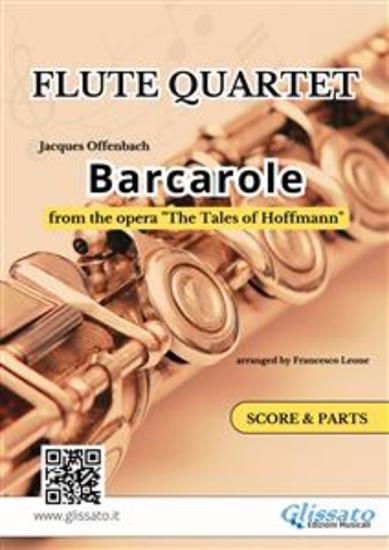
Flute Quartet "Barcarole" by Offenbach - score & parts - from the opera "The Tales of Hoffmann" - cover

Flute Quartet "Barcarole" by Offenbach - score & parts - from the opera "The Tales of Hoffmann"

Jacques Offenbach, a cura di Francesco Leone

Publisher: Glissato Edizioni Musicali

  • 0
  • 0
  • 0

Summary

Experience the renowned theme "Barcarole" from Jacques Offenbach's opera "The Tales of Hoffmann," beautifully arranged for C Soprano Flute Quartet by Francesco Leone. This elegant piece, famously featured in the film "Life Is Beautiful" (La vita è bella) by Roberto Benigni, brings its enchanting melodies to your flute ensemble.
Includes:

	Full Score
	Set of Parts for C Soprano Flute Quartet

Features:


	Famous Theme: Francesco Leone's arrangement captures the timeless and enchanting qualities of Offenbach's "Barcarole," ensuring an engaging and memorable performance.
	Intermediate Level: This arrangement is tailored for intermediate-level flutists, providing a balanced challenge that is both rewarding and accessible.
	Complete Package: Includes a full score and individual parts for each member of the quartet, facilitating a smooth rehearsal and performance process.

Why Choose This Arrangement? This arrangement is perfect for flute quartets looking to explore the rich traditions of operatic music and add a piece of profound beauty to their repertoire. Whether for concerts, recitals, or special events, "Barcarole" arranged by Francesco Leone offers a captivating and inspiring musical experience.
Bring the serene and harmonious sounds of Jacques Offenbach's "Barcarole" to your flute quartet and delight audiences with this timeless operatic masterpiece. Get your copy today and let the elegance of Offenbach's music inspire your next performance!
Available since: 07/18/2024.
Other books that might interest you

  • A Streetcar Named Desire - cover

    A Streetcar Named Desire

    Anonymous

    • 0
    • 0
    • 0
    Caedmon is proud to release this archival full-cast recording of Tennessee Williams's A Streetcar Named Desire on cd for the first time!  
    Blanche DuBois arrives at her sister Stella's New Orleans apartment seeking refuge from a troubled past—but her ethereal spirit irks Stella's husband, the loutish Stanley Kowalski. Crudely, relentlessly, he unmasks the lies and delusions that sustain Blanche, until her frail hold on reality is shockingly severed. 
    This atmospheric recording of Tennessee Williams's powerful classic stars Rosemary Harris and James Farentino as Blanche and Stanley—roles they performed to acclaim in a smash revival at New York's Lincoln Center.
    Show book
  • Transcendentalism - The Greatest Good for the Greatest Number - cover

    Transcendentalism - The Greatest...

    Hector Davidson

    • 0
    • 0
    • 0
    Transcendentalism is a philosophical and literary movement that emerged in the early 19th century in America, primarily associated with thinkers like Ralph Waldo Emerson, Henry David Thoreau, and Margaret Fuller. It developed as a reaction to the industrial revolution, the growing materialism of society, and the influence of traditional European intellectual thought. Transcendentalism posited that knowledge transcends the senses and that reality can be understood through intuition and spiritual insight rather than empirical observation alone. This belief is rooted in the idea that each individual has access to divine truths through personal experience and direct communion with nature. 
    At its core, Transcendentalism emphasizes the importance of the individual and the power of self-reliance. It encourages a connection to nature as a means of finding spiritual clarity and understanding. Nature, for the transcendentalists, was not simply a physical world to be studied but a living, divine entity that could guide personal growth and spiritual development. They argued that individuals should look within themselves and to nature for truth, rather than relying on societal conventions or religious institutions. 
    The roots of Transcendentalism are found in a variety of sources, including German idealism, Eastern philosophy, and the American Puritan tradition. However, it was through figures like Emerson, who published his seminal essay Nature in 1836, that the movement gained significant traction. Emerson’s ideas about self-reliance, individualism, and the divine presence in nature resonated with many Americans seeking an alternative to the rigid societal structures of the time.
    Show book
  • The House Romantic - Curating Memorable Interiors for a Meaningful Life - cover

    The House Romantic - Curating...

    Haskell Harris, Anna Spiro

    • 0
    • 0
    • 0
    A manual to home design that is a reflection of the important moments and people in our lives by the founding style director at the award-winning Garden & Gun magazine, Haskell Harris. 


    In House Romantic: Curating Memorable Interiors for a Meaningful Life, Haskell Harris explores what makes a personal and meaningful home, revealing how designers and creatives authentically style their spaces, drawing inspiration from the important moments and people in their lives. Bringing in words of advice and gorgeous interiors from the people who inspire her, Harris explores the many different ways of embracing romanticism in interior design. 


    House Romantic is a vibrant, diverse, and extremely personal view of creating homes that are meaningful and reflect who we are. Filled with practical tips and specific instructions, the book offers a new sort of home education that shows us how we can surround ourselves with fewer products and more items that hold true significance, creating deeply personal connections in the spaces where we live, work, and love.
    Show book
  • Fortune and Folly - The Weird and Wonderful Life of the South's Most Eccentric Millionaire - cover

    Fortune and Folly - The Weird...

    Sara A. H. Butler

    • 0
    • 0
    • 0
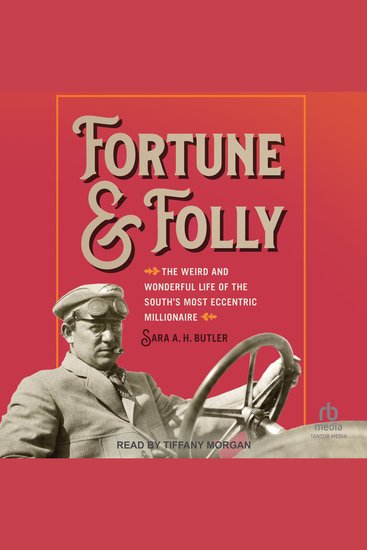
    Briarcliff Mansion and the land it occupies are owned by Emory University, which refers to it as its "Briarcliff Campus." Fortune and Folly, in part, illuminates the largely lost story of how the mansion, and the entire surrounding neighborhood, got its name. But in order to understand the mansion, we have to understand the man who built it. 


    Briarcliff Mansion once belonged to a man named Asa Candler, Jr.—also known as Buddie. The second son and namesake of Coca-Cola founder Asa Griggs Candler, Buddie was a wealthy real estate developer of great successes and greater failures. A man of big vision and bigger adventures, and a socialite whose boisterous, unapologetic personality made him both beloved and reviled in the Atlanta community. But after he passed away in 1953, his stories faded from memory, either tangled up with or overshadowed by his father. 


    It's no mystery why Briarcliff garners attention. It's self-consciously grandiose, built to display maximum grandeur to the neighborhood. It towers over the landscape, set far back from the road behind a filled-in, overgrown pool. Its face is stitched together where a music hall was added two years after the main house was completed, and the bricks don't quite match up. This book offers a deep-dive into the life of Asa Candler, Jr. to excavate a piece—and place—of Atlanta history.
    Show book
  • Goodfellas - The Ultimate Trivia Collection - From The Movie Directed By Martin Scorsese - cover

    Goodfellas - The Ultimate Trivia...

    Film Trivia Metaverse

    • 0
    • 0
    • 0
    GOODFELLAS 
    THE ULTIMATE TRIVIA COLLECTION 
      
    FROM THE MOVIE DIRECTED BY MARTIN SCORSESE 
      
    CREATED BY FILM TRIVIA METAVERSE 
      
    ABOUT THE FILM 
    Goodfellas is a 1990 American crime film directed by Martin Scorsese, based on the true story of Henry Hill and his life in the Mafia. The film follows Hill's rise and fall within the organized crime world, starting from his youth in Brooklyn to his involvement in major heists. It explores themes of loyalty, betrayal, and the brutal realities of mob life, depicting the allure and dangers of the criminal underworld. Through dynamic storytelling and intense performances, the film delves into the psychology of its characters, offering a gritty, realistic portrayal of the Mafia’s impact on individuals and families. 
      
    TRIVIA SAMPLES: 
      
    “Joe Pesci's Oscar acceptance speech is the sixth shortest in the Academy's history. It was simply, "It's my privilege, thank you." He later admitted that he didn’t expect to win, which is why he kept it short.” 
      
    “Ray Liotta once mentioned that Robert De Niro and Joe Pesci were like the "glitter" of the film, while he was more like the "glue" that held everything together.” 
      
    “The film was ranked number two on the American Film Institute's list of the greatest gangster films in June 2008.” 
      
    “Initially, producer Irwin Winkler disagreed with Martin Scorsese's choice of Ray Liotta for the role of Henry Hill. Liotta convinced him in a conversation at a restaurant.” 
      
    “Robert De Niro was offered the roles of both Jimmy "The Gent" Conway and Tommy DeVito, but he chose to play Jimmy.”
    Show book
  • Death of a Salesman - cover

    Death of a Salesman

    Arthur Miller

    • 0
    • 0
    • 0
    Stacy Keach and Jane Kaczmarek star in Arthur Miller’s 1949 masterpiece, a searing portrait of the physical, emotional, and psychological costs of the American dream. Willy Loman (Keach) is the play’s iconic traveling salesman, whose family is torn apart by his desperate obsession with success and social acceptance. As his two sons cast about aimlessly for their station in life, Willy begins to come unraveled when the reality of his life threatens his long-cherished illusions. 
     
    Recorded before a live audience at the Skirball Cultural Center, Los Angeles in March 2011. 
     
    Directed by Eric Simonson 
    Producing Director: Susan Albert Loewenberg 
     
    An L.A. Theatre Works full cast performance featuring: 
    Steven Culp as Biff Loman 
    Maureen Flannigan as Letta/Jenny 
    Jason Henning as Bernard/Stanley 
    Jane Kaczmarek as Linda Loman 
    Stacy Keach as Willy Loman 
    Kathryn Meisle as The Woman 
    Tim Monsion as Uncle Ben 
    Sam McMurray as Charley 
    John Sloan as Happy Loman 
    Kate Steele as Miss Forsythe 
    Kenneth Alan Williams as Howard 
     
    Recording, Editing and Mixing Engineer: Mark Holden for The Invisible Studios, West Hollywood 
    Sound Effects Artist: Tony Palermo
    Show book