¡Acompáñanos a viajar por el mundo de los libros!
Añadir este libro a la estantería
Grey
Escribe un nuevo comentario Default profile 50px
Grey
Suscríbete para leer el libro completo o lee las primeras páginas gratis.
All characters reduced
Queen Elizabeth - cover

Queen Elizabeth

Jacob Abbott

Editorial: Librorium Editions

  • 0
  • 0
  • 0

Sinopsis

Travelers, in ascending the Thames by the steamboat from Rotterdam, on their return from an excursion to the Rhine, have often their attention strongly attracted by what appears to be a splendid palace on the banks of the river at Greenwich. The edifice is not a palace, however, but a hospital, or, rather, a retreat where the worn out, maimed, and crippled veterans of the English navy spend the remnant of their days in comfort and peace, on pensions allowed them by the government in whose service they have spent their strength or lost their limbs. The magnificent buildings of the hospital stand on level land near the river.
Disponible desde: 24/03/2022.

Otros libros que te pueden interesar

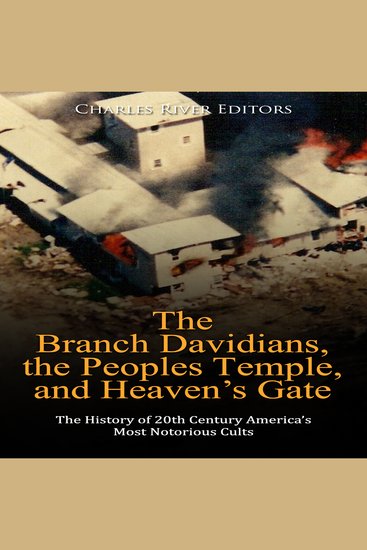
  • Branch Davidians the Peoples Temple and Heaven’s Gate The: The History of 20th Century America’s Most Notorious Cults - cover

    Branch Davidians the Peoples...

    Editors Charles River

    • 0
    • 0
    • 0
    The United States has never had a shortage of cults based on religious teachings and charismatic leaders, but perhaps none are as infamous as Jim Jones and the Peoples Temple, which remain notorious for the mass murder-suicide event in Jonestown, Guyana on November 18, 1978, during which nearly 900 people drank cyanide-laced Flavor Aid, including nearly 300 children. To this day, “drinking the Kool-Aid” is a popular phrase in America to refer to people who blindly follow a person or idea without thought, and the event at Jonestown was the deadliest deliberate act involving Americans in history until the 9/11 attacks. In addition to those deaths, Peoples Temple members also murdered a handful of others on the same day, including journalists, a member trying to leave Jonestown, and Congressman Leo Ryan.  
    	David Koresh, the leader of the Branch Davidians, had deep convictions based on the Book of Daniel and the Book of Revelation, and his sect believed the world was in the power of Satan and that the nations were merging to form a new Babylon. David hoped to establish the kingdom in Jerusalem, where, according to him, he would suffer martyrdom. The headquarters of the sect was a complex called Mount Carmel Center located in Waco, Texas. Koresh claimed to be the mysterious Lamb of Revelation who opens the sealed scroll, as well as the figure who rides the White Horse when the first seal is opened. 
    On paper, the extraordinarily unorthodox ideology spouted by Heaven's Gate ranks near the top of the list of most outlandish end-of-the-world prophecies, and it was built on a blend of Christian, Gnostic, supernatural, New Age, and extraterrestrial lore. Although the cult did not speak in Christian terms, it was clearly apocalyptic, and its belief system was a strange mix between science fiction and the basic message of Revelation.
    Ver libro

  • Tarascan Empire - The Fierce Rivals of the Aztecs and Masters of West Mexico - cover

    Tarascan Empire - The Fierce...

    Rolf Hedger

    • 0
    • 0
    • 0
    The Tarascan Empire flourished in the rugged and resource-rich region of western Mexico, primarily in what is now the state of Michoacán. Unlike the arid landscapes of central Mexico dominated by the Aztecs, the Tarascan homeland was defined by volcanic highlands, fertile valleys, and vast lakes, particularly Lake Pátzcuaro, which played a central role in their civilization. The geography of this region not only shaped their way of life but also provided a natural defense against external threats, including the expansionist ambitions of the Aztecs. 
    The varied landscape of Michoacán consisted of towering mountains, deep forests, and fertile plateaus. This diverse terrain allowed the Tarascans to develop a robust agricultural system, cultivating maize, beans, squash, and chili peppers, which formed the foundation of their diet. The presence of rivers and lakes further supported fishing and provided fresh water, making settlements around these water bodies highly strategic. Lake Pátzcuaro, in particular, was not only an economic and social hub but also held deep religious significance. It was believed to be the gateway to the underworld in Tarascan mythology, reinforcing its central role in spiritual life. 
    Natural resources played a crucial role in the rise of the Tarascan Empire. The region was rich in minerals, especially copper and obsidian, which were vital for both tools and weaponry. Unlike the Aztecs, whose military strength relied on wooden clubs and stone blades, the Tarascans developed advanced metalworking techniques, producing copper axes, bronze weapons, and intricate ornaments. This technological advantage gave them a distinct edge in warfare and trade, allowing them to maintain independence from their more dominant neighbors.
    Ver libro
  • The Biggest Civil War Battles of 1863 - cover

    The Biggest Civil War Battles of...

    Editors Charles River

    • 0
    • 0
    • 0
    Americans have long been fascinated by the Civil War and its biggest battles, particularly Gettysburg, Antietam, and Shiloh, all of which involved Robert E. Lee or Ulysses S. Grant. But one of the 6 biggest battles of the war, and the one that took the heaviest toll by % on both armies was fought at the end of 1862 in Tennessee, and it involved neither of those generals. Though Stones River is mostly overlooked as a Civil War battle today, it had a decisive impact on the war. The two armies had both suffered nearly 33% casualties, an astounding number in 1862. 
    Of all the Civil War battles fought, and of all the victories achieved by Robert E. Lee at the command of the Confederate Army of Northern Virginia, the Battle of Chancellorsville is considered the most tactically complex and ultimately the most brilliant Confederate victory of the war. However, it cost them Stonewall Jackson, and the reorganization of the armies and the battle itself played an influential role in the way the Pennsylvania Campaign and the Battle of Gettysburg unfolded later that summer.  
    Without question, the most famous battle of the American Civil War took place outside of the small town of Gettysburg, Pennsylvania, which happened to be a transportation hub, serving as the center of a wheel with several roads leading out to other Pennsylvanian towns. From July 1-3, Robert E. Lee’s Confederate Army of Northern Virginia tried everything in its power to decisively defeat George Meade’s Union Army of the Potomac, unleashing ferocious assaults that inflicted nearly 50,000 casualties in all.  
    While many read about the siege of Vicksburg in the summer of 1863, as well as the desperate straits the Confederate soldiers and Vicksburg residents found themselves in, Grant’s initial attempts to advance towards Vicksburg met with several miserable failures, and it took several months just to get to the point where the Union forces could start a siege. 
    Ver libro
  • Narcissism And Leadership - cover

    Narcissism And Leadership

    Brittany Forrester

    • 0
    • 0
    • 0
    The destiny of humankind as a species fell on the shoulders of great men.The current book aims to unravel the changes in narcissistic leadership that develop over time and examine the potential mechanisms responsible for any such changes.The term “Narcissism” is derived from Ovid’s tale of Narcissus falling in love with his own reflection to the detriment of his genuine/authentic self, which caused him to perish. Although Ovid’s tale of Narcissus being obsessed with his image is void of any psychological examination, it is significant not merely for where the term “narcissism” is derived from. More importantly, constructive themes like unrequited self-love resonated with later interpretations of narcissism as a personality trait.Such individuals’ maintenance of their self-esteem depends on the continued use of certain mental functions. They continually judge others, usually pointing up the moral flaws in other people’s personalities and behavior, and, without shame or hesitation, they set themselves up as the guides and leaders and gods of those who need guidance, of leadership, and as a target for their reverence.These psychoanalytical perspectives suggest that narcissists regulate their self-image through portrayals of boasting, which are often boundless, leading to their rise into leadership positions.
    Ver libro
  • Chola Empire - Masters of the Seas and Builders of Temples - cover

    Chola Empire - Masters of the...

    Rolf Hedger

    • 0
    • 0
    • 0
    The Chola Empire, one of the longest-ruling dynasties in South Indian history, has origins shrouded in legend and antiquity. The early Cholas find mention in Tamil literature and ancient inscriptions, tracing their lineage back to mythical rulers. The Sangam period texts, such as the Pattinappalai and Puranaanuru, speak of the valor and governance of early Chola kings, who ruled over fertile lands along the Kaveri River. However, after a period of decline, the Cholas reemerged as a dominant force in the 9th century CE under the leadership of Vijayalaya Chola, the founder of the imperial Chola dynasty. 
    Vijayalaya Chola, initially a minor chieftain under the Pallavas, seized the opportunity to establish his rule in the fertile region of Thanjavur around 850 CE. This marked the resurgence of Chola power after centuries of obscurity. By defeating the Mutharaiyars, who controlled the region, Vijayalaya laid the foundation for an empire that would dominate South India for the next four centuries. Under his rule, the Cholas not only expanded their territories but also strengthened their political and military structures. He initiated temple-building activities, commissioning the construction of the temple of Nisumbhasudani in Thanjavur, a precursor to the grand temple-building tradition that would define the dynasty. 
    His successor, Aditya I, continued the expansion by defeating the Pallavas, thereby establishing the Cholas as a formidable power in the region. This victory marked a turning point, allowing the Cholas to assert their dominance over Tamil Nadu. Aditya I’s campaigns also extended into Kongu Nadu and the northern parts of Kerala, laying the groundwork for further expansion. His administrative policies ensured a stable governance system, which helped integrate the newly conquered regions into the Chola fold.
    Ver libro
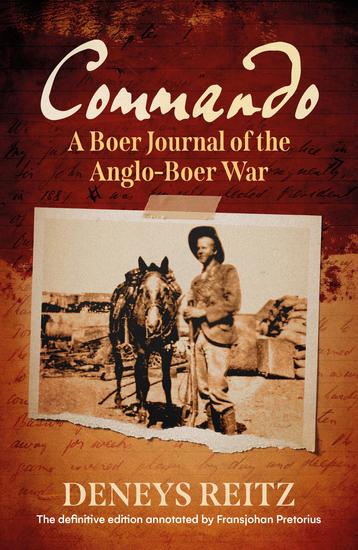
  • Commando - A Boer Journal of the Anglo-Boer War - cover

    Commando - A Boer Journal of the...

    Deneys Reitz

    • 0
    • 0
    • 0
    The definitive account of Commando: A Boer Journal of the Anglo-Boer War, published word-for-word as Reitz first wrote it in the English translation; edited and annotated by historian and Anglo-Boer War expert, Professor Fransjohan Pretorius.
    In 1899, Deneys Reitz, then aged seventeen, enlisted in the Boer army to fight the British. He had learnt to ride, shoot and swim almost as soon as he could walk. He made full use of these skills and the endurance he had acquired in the next three years of the war, during which he fought with the Boer commandos.
    He was involved in major actions, like the battle of Spioen Kop, and he interacted with prolific political and military figures of the time, such as President Paul Kruger, Boer generals Piet Joubert, Louis Botha, Koos de la Rey, Christiaan Beyers, Jan Smuts and British commander Lord Kitchener. He even met the young Winston Churchill as a prisoner-of-war in Pretoria. Reitz forged a strong personal and political friendship with General Jan Smuts after the war, built on reciprocal respect.
    Commando is more than a historical document; it is a literary masterpiece that transcends time.
    With prose that captures both the brutality and the beauty of war, Reitz weaves a narrative that resonates with authenticity and passion.
    As relevant today as when it was first penned, Commando has become a South African classic and stands as a testament to the indomitable human spirit.
    Ver libro