Unisciti a noi in un viaggio nel mondo dei libri!
Aggiungi questo libro allo scaffale
Grey
Scrivi un nuovo commento Default profile 50px
Grey
Iscriviti per leggere l'intero libro o leggi le prime pagine gratuitamente!
All characters reduced
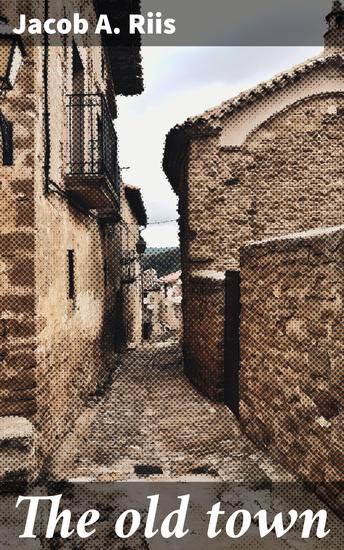
The old town - Unveiling the Realities of Urban Poverty: A Glimpse into Immigrant Life in Gilded Age New York - cover

The old town - Unveiling the Realities of Urban Poverty: A Glimpse into Immigrant Life in Gilded Age New York

Jacob A. Riis

Casa editrice: Good Press

  • 0
  • 0
  • 0

Sinossi

Jacob A. Riis's "The Old Town" is a poignant exploration of life in turn-of-the-century America, revealing the stark realities faced by immigrants and the impoverished in urban settings. Written in a vivid, journalistic style that combines rich narrative with compelling photography, Riis captures the essence of the struggles in New York's tenements, utilizing a documentary approach that was groundbreaking for its time. This work not only serves as a chronicle of social conditions but also as a call to action, urging reform and empathy from a predominantly indifferent society, thus situating it within the broader context of the Progressive Era. Riis, a Danish immigrant himself, drew from his own experiences to illuminate the plight of those marginalized in society. His background as a reporter and muckraker fueled his commitment to social reform and advocacy for the rights of the underprivileged. "The Old Town" reflects his belief in the power of compassion and social justice, making it a personal mission to bridge the chasm between the affluent and the downtrodden in America's burgeoning cities. This book is a timeless reading for anyone interested in social justice, urban studies, or the history of immigration in America. With its engaging narrative and powerful imagery, "The Old Town" not only educates but also inspires readers to reflect on their role in the ongoing struggle for equity and better living conditions for all.
Disponibile da: 10/07/2023.
Lunghezza di stampa: 150 pagine.

Altri libri che potrebbero interessarti

  • Against the Grain - How Farmers around the Globe Are Transforming Agriculture to Nourish the World and Heal the Planet - cover

    Against the Grain - How Farmers...

    Roger Thurow

    • 0
    • 0
    • 0
    Farmers in some of the world's oldest agricultural areas were toiling year after year, only to find that modern industrial agriculture was turning on itself. Industrial agriculture's effects on our climate and environment were multiplying and worsening, until the very families growing the world's food were starving. 


    They terraced the land to catch more rainwater and prevent soil runoff; they planted a diverse range of vegetables that would balance the nutrients in the soil; they replaced commercial fertilizers with organic matter from their own farms; they planted more trees and drought-resistant grains; and, perhaps most importantly, they taught their communities by example that these regenerative farming methods paid off—both in nourishing their families and in bringing their land back to life. 


    Award-winning author and journalist Roger Thurow has traveled to Ethiopia, Uganda, Kenya, India, Guatemala, Peru, and the United States to share their stories, highlighting the conflicts inherent in our most important human endeavor: feeding the world using the methods of industrial agriculture is stripping the land of its ability to feed future generations. But these farmers are starting a new kind of revolution, nourishing both humans and the land, and following their lead could help us solve one of the great crises of our time.
    Mostra libro
  • Why Can't Somebody Just Die Around Here? - " A Story Of War Deprivation Courage Perseverance And Triumph" - cover

    Why Can't Somebody Just Die...

    Gerhard Maroscher

    • 0
    • 0
    • 0
    “A memoir that offers a rare, underrepresented perspective of World War II.” -Kirkus
    
    _A true story of a Romanian family’s miraculous survival of World War II, becoming refugees, fleeing their homeland, starving after the war, and coming to the United States to live the American Dream._Life was full of promise for the young Maroscher family. Gustav was a teacher; Helene was busy rearing two boys and managing their small farm. The war changed everything. While Gustav fought the Russians on the Eastern Front, Helene fled the advancing army to her sister’s house in Germany. Danger and hardship transformed Helene from a shy young mother into a lioness; she once pointed an illegal pistol at the Nazi refugee camp director to save her younger son’s life. In the early years of the war, Gustav had helped a Jewish friend at considerable risk to himself. As a released prisoner of war, Gustav faced certain arrest after returning home. His friend, now the communist police commissioner, protected him. Eventually, though, his friend could no longer protect him, and Gustav fled to the West.To reunite the family, Helene and her sons made a dangerous nighttime border crossing from communist East Germany to the West. After being reunited in West Germany they faced discrimination and hunger. The family immigrated to the USA and embraced the freedoms and opportunities of America. Gustav became an engineer working on NASA’s Moon Shot. Helene became an independent businesswoman. Their sons continue to thrive and enjoy their freedom.
    Mostra libro
  • Empire of God - How the Byzantines Saved Civilization - cover

    Empire of God - How the...

    Robert Spencer

    • 0
    • 0
    • 0
    Western civilization is generally regarded as the child of Athens, Jerusalem, and Rome. That is, in the West, our philosophical and political thought is derived from that of the ancient Greeks; our Christian religion comes from the Jewish religion, and both of these came to us via the Roman Empire. 


    Western society has other forefathers as well: we would be unwise to give the Byzantine Empire short shrift. The ways in which it has influenced our world for the good, and indeed, created the parameters of our society at its healthiest and strongest, are insufficiently appreciated today. 


    If the United States were to last as long as the Roman Empire, including its Byzantine period, it would have to continue as an independent country until the year 2899. To maintain a unified nation state for over eleven hundred years is a remarkable achievement by any standard, and the Romans accomplished it while facing existential threats and efforts to extinguish their polity during virtually every period of their existence. Now, nearly six hundred years after the demise of the empire, its influence still resonates in a number of fields. 


    There is no arguing with success. It's time we took notice.
    Mostra libro
  • The New Age of Sexism - How AI and Emerging Technologies Are Reinventing Misogyny - cover

    The New Age of Sexism - How AI...

    Laura Bates

    • 0
    • 0
    • 0
    We like to believe we're moving closer to equality, riding the wave of technological progress into a brighter, fairer future. But beneath the glossy surface of innovation lies a chilling truth: new technologies are not just failing to solve age-old inequalities—they're deepening them. 


    In The New Age of Sexism, acclaimed author and activist Laura Bates exposes how misogyny is being coded into the very fabric of our future. From the biases embedded in artificial intelligence to the alarming rise of sex robots and the toxic dynamics of the metaverse, Bates takes listeners on a shocking journey into a world where technology is weaponized against women. 


    This isn't a dystopian warning about what might happen. It's a harrowing account of what's happening now and the dangers we face if we don't act. With clarity and urgency, Bates reveals how these advancements are dragging society backward, reinforcing harmful stereotypes, and jeopardizing decades of progress in the fight for gender equality. 


    Eye-opening and empowering, The New Age of Sexism is a rallying cry for awareness and action in a world where the battle for equality has entered a dangerous new frontier.
    Mostra libro
  • Disentangled - Taming Your Thoughts and Feelings to Live Freely for Jesus - cover

    Disentangled - Taming Your...

    Jo hnson

    • 0
    • 0
    • 0
    Pair biblical insight and psychological tools to better manage your thoughts and emotions as you seek to become more like Christ.Apply biblical insights using tools from modern psychology to manage your thoughts and emotions.Jesus calls Christians to live for him, but it’s hard! A tangle of distracting thoughts and painful emotions can trip us up and stop us from being the people we long to be.Christian neuropsychologist Jo Johnson pairs biblical insight with the tools of psychology to offer a freeing way forward. Through her positive, practical, down-to-earth perspective, you will:Better understand your inner lifeLearn to manage your thoughts, memories, desires, and emotionsCombat overthinking and gain emotional resilienceTake charge of your behavior by applying psychological tools and techniquesBe encouraged to look to Jesus and rely on the help of the Spirit every dayDriven by the desire to become more like Christ, this book takes your inner struggles seriously while offering the hope of the gospel.You will be encouraged to throw off everything that hinders and the sin that so easily entangles, fixing your eyes on Jesus as you run the race (Hebrews 12:1)!Each chapter concludes with action steps and prompts to worship.
    Mostra libro
  • Digitalisation for Sustainable Infrastructure: The Road Ahead - cover

    Digitalisation for Sustainable...

    Carlo Secchi, Alessandro Gili

    • 0
    • 0
    • 0
    In today's tumultuous and fast-changing times, digitalisation and technology are game changers in a wide range of sectors and have a tremendous impact on infrastructure. Roads, railways, electricity grids, aviation, and maritime transport are deeply affected by the digital
    and technological transition, with gains in terms of competitiveness, cost-reduction, and safety. Digitalisation is also a key tool for fostering global commitment towards sustainability, but the race for digital infrastructure is also a geopolitical one. As the world's largest economies are starting to adopt competitive strategies, a level playing field appears far from being agreed upon.
    Why are digitalisation and technology the core domains of global geopolitical competition? How are they changing the way infrastructure is built, operated, and maintained? To what extent will road, rail, air, and maritime transport change by virtue of digitalisation, artificial intelligence, and the Internet of Things? How to enhance cyber protection for critical infrastructure? What are the EU's, US' and China's
    digital strategies?
    Mostra libro