Join us on a literary world trip!
Add this book to bookshelf
Grey
Write a new comment Default profile 50px
Grey
Subscribe to read the full book or read the first pages for free!
All characters reduced
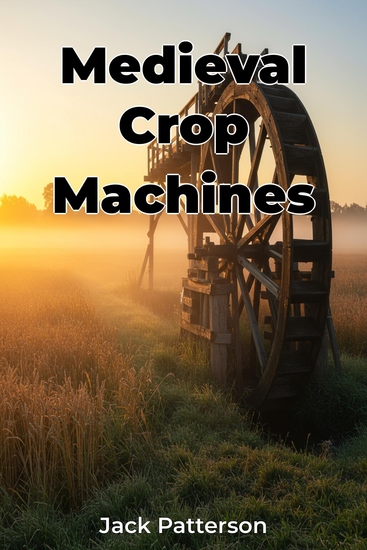
Medieval Crop Machines - cover

Medieval Crop Machines

Jack Patterson

Translator A AI

Publisher: Publifye

  • 0
  • 0
  • 0

Summary

"Medieval Crop Machines" explores the mechanical ingenuity applied to agriculture during the medieval period, revealing a landscape of innovation often overshadowed by traditional historical narratives. From the 5th to the 15th centuries, advancements in planting, harvesting, threshing, and winnowing technologies significantly boosted agricultural output, supporting growing populations.

 
One intriguing aspect is the medieval understanding and application of mechanical principles such as levers and gears, adapting them to create functional crop machines despite limited resources. These machines, though simple by modern standards, demonstrate a clear grasp of mechanical advantage and power transmission.

 
The book approaches its subject by first laying a foundation of relevant mechanical concepts before progressing chronologically and thematically. Beginning with early planting technologies, the book transitions to reaping and harvesting machines, then delves into the intricacies of threshing and winnowing devices.

 
The book examines these devices' impact on medieval agrarian economies and their legacy in subsequent agricultural innovations. By drawing from illuminated manuscripts, agricultural treatises, and archaeological findings, the book offers a unique perspective on medieval agricultural technology, highlighting its mechanical aspects and practical applications.
Available since: 02/21/2025.
Print length: 61 pages.

Other books that might interest you

  • Elixir - A Parisian Perfume House and the Quest for the Secret of Life - cover

    Elixir - A Parisian Perfume...

    Theresa Levitt

    • 0
    • 0
    • 0
    For centuries, scientists believed that living matter possessed a special quality—a spirit or essence—that differentiated it from nonliving matter. But by the nineteenth century, the scientific consensus was that the building blocks of one were identical to the building blocks of the other. Elixir tells the story of two young chemists who were not convinced, and how their work rewrote the boundary between life and nonlife. 


    In the 1830s, Édouard Laugier and Auguste Laurent were working in Laugier Père et Fils, the oldest perfume house in Paris. By day they prepared the perfumery's revitalizing elixirs and rejuvenating eaux, drawing on alchemical traditions that equated a plant's vitality with its aroma. In their spare time they hunted the vital force that promised to reveal the secret to life itself. Their ideas, roundly condemned by established chemists, led to the discovery of structural differences between naturally occurring molecules and their synthetic counterparts, even when the molecules were chemically identical. 


    Scientists still can't explain this anomaly, but it may point to critical insights concerning the origins of life on Earth. Rich in sparks and smells, brimming with eccentric characters, experimental daring, and the romance of the Bohemian salon, Elixir is a fascinating cultural and scientific history.
    Show book
  • Summary: Fanatical Prospecting - The Ultimate Guide to Opening Sales Conversations and Filling the Pipeline by Leveraging Social Selling Telephone Email Text and Cold Calling by Jeb Blount: Key Takeaways Summary & Analysis Included - cover

    Summary: Fanatical Prospecting -...

    Brooks Bryant

    • 0
    • 0
    • 0
    Disclaimer: This is not the official book, but a summary & it does not accompany the official. 
    Craving a sales breakthrough? Dive into our game-changing summary of Jeb Blount's 'Fanatical Prospecting,' the ultimate guide to filling your pipeline and skyrocketing your sales. Blount's proven strategies demolish the age-old excuses and myths that hold salespeople back, arming you with the tools to prospect like a pro. 
    Our summary condenses this sales bible into an easily digestible format, offering you the top takeaways and actionable insights. You'll learn the art of effective communication, discover how to leverage social selling, and grasp the power of the telephone—equipping you with the unshakable confidence to reach out and reel in clients. 
    Don't miss your chance to unlock the secret to boundless sales opportunities and explosive growth. Get ready to elevate your prospecting game and shatter those sales records!
    Show book
  • The Immortals of the Interstellar Colony - cover

    The Immortals of the...

    Martin K. Ettington

    • 0
    • 0
    • 0
    In Part I we learn the story of a young man who lost hope—then found it again.He learned how to change his life and found a new mission and goals which excited him. This led him to a career in space manufacturing which evolved into a project building Habitats in Space.There have been a lot of discussions about Space Habitats, but how would you actually build one and what technical and personal issues would arise in the process?Read about a personal rise from ashes, hope, and the potential for creating a new wonderful world to live in which is literally out of this world.Part II is about converting the Habitats to an interstellar spaceship to settle a new planet.It is a long journey with major dangers along the way. A generational ship with long lived residents.And what new abilities would people develop on a long journey to the stars? Follow this adventure to learn the realistic challenges of an Interstellar Journey.
    Show book
  • Classical Electrodynamics - Advanced Study of Electromagnetic Theory - cover

    Classical Electrodynamics -...

    Mark Hedges

    • 0
    • 0
    • 0
    Electromagnetic theory is one of the fundamental pillars of physics, providing the framework for understanding electric and magnetic fields and their interactions. It is essential not only for classical physics but also for modern advancements in engineering, communications, and quantum mechanics. This chapter introduces the historical development of electrodynamics and the significance of Maxwell’s equations, which form the foundation of classical electromagnetism. 
    The origins of electromagnetic theory can be traced back to early observations of static electricity and magnetism. The ancient Greeks, particularly Thales of Miletus, noted that rubbing amber could attract small objects, laying the groundwork for electrostatics. By the 17th century, William Gilbert’s studies on magnetism and Benjamin Franklin’s experiments on electricity further developed the understanding of electric and magnetic phenomena. The 18th and 19th centuries saw rapid progress, with Charles-Augustin de Coulomb formulating the inverse-square law of electrostatics and André-Marie Ampère discovering the relationship between current and magnetic fields. Michael Faraday’s groundbreaking work on electromagnetic induction demonstrated that a changing magnetic field could induce an electric current, setting the stage for the unification of electricity and magnetism.
    Show book
  • Ancient Secrets: How Food Shaped Our Humanity - "Elevate your knowledge! Discover powerful audio lessons revealing ancient secrets of how food influenced human evolution!" - cover

    Ancient Secrets: How Food Shaped...

    Cyrus Greymont

    • 0
    • 0
    • 0
    Ancient Secrets: How Food Shaped Our Humanity 
    ⭐️⭐️ Simplified Guide & Explanations Included ⭐️⭐️  
    Are you eager to advance in your career while deepening your understanding of how food has influenced our humanity throughout history?   
    Searching for a comprehensive resource that covers all the essential elements to uncover nature’s secrets and enhance your grasp of our journey?   
    Your quest ends here!   
    This guide is your ultimate companion for enriching your knowledge, applying your insights, and engaging in practical exercises that prepare you for success.   
    Updated for the latest insights on the relationship between food and humanity.   
    Key features of this enriched guide:  
    - In-depth insights about understanding humanity through food   
    - Detailed exploration of how culinary practices have shaped societies   
    - Effective strategies for leveraging food knowledge to inform your perspective   
    Our guide stands out with comprehensive coverage, which is crucial for your understanding and mastery. Concepts are not just briefly touched upon; they are explored with depth and clarity.   
    Crafted with a clear organizational structure and accessible language, our guide ensures smooth transitions between topics. Say goodbye to complicated jargon and embrace straightforward, precise, and well-researched content.   
    So, why wait? Click the BUY NOW button, secure your guide, and embark on your journey to uncover the ancient secrets of food and its impact on our humanity!
    Show book
  • Agrostology - Grasses of the World: From Lawns to Prairie Ecosystems - cover

    Agrostology - Grasses of the...

    Mike Crawford

    • 0
    • 0
    • 0
    Agrostology, the scientific study of grasses, is a crucial field of botany that explores the diversity, structure, and ecological significance of grasses. Grasses belong to the Poaceae family, one of the largest and most economically important plant families in the world. These plants play a foundational role in ecosystems, agriculture, and human civilization. From the vast prairies and savannas to the rice and wheat fields that sustain billions of people, grasses shape the landscapes of both natural and human-altered environments. 
    The study of grasses has a long history, dating back to early agricultural societies that first domesticated cereal crops. The ancient civilizations of Mesopotamia, Egypt, and China relied on grasses such as wheat, barley, and rice to establish permanent settlements. Over time, the understanding of grass physiology, reproduction, and ecological functions deepened, leading to advancements in agronomy, ecology, and land management. By the 19th and 20th centuries, agrostology emerged as a specialized discipline within botany, focusing on grass classification, physiology, and ecosystem dynamics. 
    Grasses are uniquely adapted to a wide range of environmental conditions. They thrive in temperate, tropical, and even arid climates, displaying remarkable resilience through specialized growth mechanisms. Their ability to reproduce through both seeds and vegetative propagation allows them to colonize and dominate various habitats. Many grass species employ C4 photosynthesis, an efficient metabolic pathway that enables them to survive in hot, dry environments. This adaptability makes grasses a dominant plant group in many ecosystems, providing habitat and food for numerous animal species.
    Show book