Join us on a literary world trip!
Add this book to bookshelf
Grey
Write a new comment Default profile 50px
Grey
Subscribe to read the full book or read the first pages for free!
All characters reduced
The Call of the Wild + White Fang + The Son of the Wolf (3 Unabridged Classics) - cover

The Call of the Wild + White Fang + The Son of the Wolf (3 Unabridged Classics)

Jack London

Publisher: DigiCat

  • 0
  • 0
  • 0

Summary

Jack London's 'The Call of the Wild,' 'White Fang,' and 'The Son of the Wolf' comprise a compelling anthology of unabridged classics that transport readers to the rugged landscapes of the Yukon and the raw wilderness of the American frontier. Written in London's dynamic, visceral prose, these interconnected tales explore themes of survival, instinct, and the primal bond between humans and animals. The narratives use rich, evocative language that immerses the reader in the elemental struggle for existence, reflecting the author's keen observation of nature and human behavior amid the backdrop of the Gold Rush era, a time of profound social and environmental transformation. Jack London (1876-1916), an emblematic figure of American literature, drew extensively from his experiences as a gold prospector and a sailor. His firsthand encounters with the unforgiving Alaskan wilderness deeply inform his narratives, imbuing them with authenticity and passion. London's own tumultuous life, marked by poverty, adventure, and insatiable curiosity about the human spirit, positioned him to explore the intricate relationships of life and death against the stark, often brutal realities of nature. For readers seeking a profound exploration of resilience and the animalistic truths underlying the human condition, this collection stands as a timeless testament to London's literary genius. Each story serves not only as entertainment but also as an insightful commentary on naturalism and existentialism, making it essential reading for anyone intrigued by the complexities of life and the wilderness.
Available since: 11/13/2023.
Print length: 1143 pages.

Other books that might interest you

  • The Eidoloscope - Milnes incredible sci fi tale shows the power of his imagination as it soon after this went from scientific fiction to fact - cover

    The Eidoloscope - Milnes...

    Robert Duncan Milne

    • 0
    • 0
    • 0
    Robert Duncan Milne was born on 7th June 1844 in Cupar in Fife, Scotland. 
     
    Little is known of the life of this extraordinary author who created some of the most appealing science fiction stories ever written.   
     
    As an adult he lived in San Francisco and wrote short stories for local newspapers and periodicals of the time and principally for The Argonaut, the political and literary newspaper heavyweight of the area. 
     
    Robert Duncan Milne died in San Francisco, California on 15th December 1899.  He was 55. 
     
    The Eidoloscope is a story of a man’s pursuit to record and reveal past events as though they are happening right now before our very eyes.  Outlandish, yes. But possible?
    Show book
  • Frau Brechenmacher Attends a Wedding - cover

    Frau Brechenmacher Attends a...

    Katherine Mansfield

    • 0
    • 0
    • 0
    In Frau Brechenmacher Attends a Wedding by Katherine Mansfield we have the theme of gender roles, domination, submission, control, struggle, identity and tradition. Taken from her In a German Pension collection the story is narrated in the third person by an unnamed narrator and after reading the story the reader realises that Mansfield may be exploring the theme of control. Throughout the story Frau Brechenmacher is at the beck and call of her husband.
    Show book
  • The Murderer - Bulgakov expertly explores life and death choices set on the backdrop of the Bolshevik Revolution - cover

    The Murderer - Bulgakov expertly...

    Mikhail Bulgakov

    • 0
    • 0
    • 0
    Mikhail Bulgakov was born on 15th May 1891 in Kiev, in the Kiev Governorate of the Russian Empire, into a Russian family.  He was one of seven children. 
     
    In 1901, Bulgakov attended the First Kiev Gymnasium, and developed a keen interest in Russian and European literature, theatre and opera.  After the death of his father in 1907, his mother assumed responsibility for his education.  After graduating Bulgakov entered the Medical Faculty of Kiev University and then took up a post as physician at the Kiev Military Hospital. 
     
    At the outbreak of the First World War, he volunteered as a doctor and was sent directly to the front, where he was badly injured at least twice.  To suppress chronic pain, especially in the abdomen, he injected morphine.  It took years to wean himself off. 
     
    He now took up medical posts in various towns and in 1919, he was mobilised by the Ukrainian People's Army and assigned to the Northern Caucasus.  There, he became seriously ill with typhus and barely survived.  
     
    After this illness, Bulgakov abandoned his medicine to pursue writing.  He moved to Vladikavkaz and had two plays staged there with great success.  He wrote too for various newspapers and other outlets, but his critics were many.  And growing. 
     
    When a Moscow's theatre director severely criticised Bulgakov, Stalin personally protected him, saying that a writer of Bulgakov's quality was above ‘party words’ like ‘left’ and ‘right’.   Indeed, it is said that Stalin watched ‘The Days of the Turbins’ at least 15 times. 
     
    It was not to last and by March 1929, Bulgakov's career was ruined when Government censorship stopped publication of any of his work and plays. 
     
    In despair, Bulgakov wrote a personal letter to Stalin.  He requested permission to emigrate.  He received a phone call from the Soviet leader, who asked the writer whether he really desired to leave. He replied that a Russian writer cannot live outside of his homeland.  Stalin thus gave him permission to continue working. In May 1930, he re-joined the theater, as stage director's assistant.  
     
    During the last stressful decade of his life, and in poor health, Bulgakov continued to work on ‘The Master and Margarita’, wrote plays, critical works, stories, and continued translations and dramatisations of novels.  Many of them were not published, others were derided by critics.  
     
    On 10th March 1940, Mikhail Afanasyevich Bulgakov died from nephrosclerosis.  He was 48. 
     
    ‘The Master and Margarita’ was not published in any form until the mid-1960’s 
     
    Here Bulgakov relates a story as told by a doctor describing the terrible things that humanity is capable of doing in times of war.
    Show book
  • Great Expectations - cover

    Great Expectations

    Charles Dickens

    • 0
    • 0
    • 0
    One of the most revered works in English literature, Great Expectations traces the coming of age of a young orphan, Pip, from a boy of shallow aspirations into a man of maturity. From the chilling opening confrontation with an escaped convict to the grand but eerily disheveled estate of bitter old Miss Havisham, all is not what it seems in Dickens’ dark tale of false illusions and thwarted desire. Like much of Dickens’ work, the novel depicts an unstable society in which people’s life chances can change radically and suddenly, especially when under the influence of more powerful individuals who, for selfish or immoral reasons, have no qualms in altering, and often damaging, the lives of others. 
    Cover illustrated by: Sheila Wong 
    Sheila Wong is a graphic designer and illustrator based in the Pacific Northwest. Her work often pulls from a variety of experiences - from growing up as a child of Chinese immigrants in the Midwest, to years working in tech support and then design in the heart of Silicon Valley. When not at work, she is usually looking for new places to go camping, or building mechanical keyboards.
    Show book
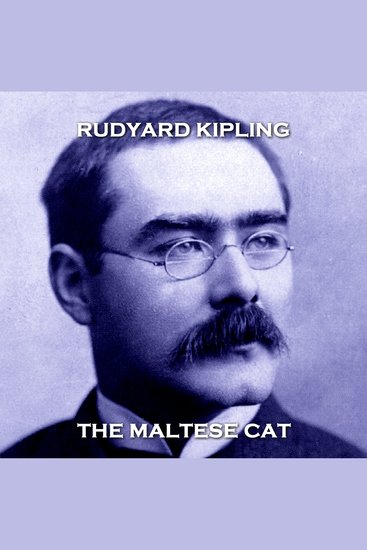
  • The Maltese Cat - Celebrated author of The Jungle Book Kipling brings another marvellous story from the perspective of an animal this time about a game of polo set in India during British rule - cover

    The Maltese Cat - Celebrated...

    Rudyard Kipling

    • 0
    • 0
    • 0
    Joseph Rudyard Kipling was born in Mumbai, India on 30th December 1865.   
     
    As was the custom in those days, he and his sister were sent back to England when he was 5.  The ill-treatment and cruelty by the Portsmouth couple they boarded with Kipling said contributed to the onset of his literary life.  
     
    At 16 he returned to India to work on a local paper where he was soon contributing and writing.  It also exposed him to the issues of identity and national allegiance which pervade much of his work.  
     
    In 1886, his ‘Departmental Ditties’, collection of verse appeared in print followed by 39 short stories for his newspaper over only 8 months.  These were then published as ‘Plain Tales from the Hills’, shortly after his 22nd birthday.  
     
    He continued his prolific pace of writing before being dismissed in a dispute and, taking his pay-off and the profits from the sale of some publishing rights, decided to return to London, travelling via Rangoon, Hong Kong, Japan and the United States, all the while writing articles, and arriving at Liverpool in October 1889. 
     
    Over the next two years he saw further works published as books and in magazines, as well as a nervous breakdown for which he was prescribed a sea voyage, to South Africa, Australia, New Zealand and India.  
     
    Happier times came with marriage to Caroline Starr Balestier in January 1892.  The honeymoon began in Vermont and ended in Yokahama where they heard their bank had failed.  They returned to Vermont and settled.  Caroline was now pregnant and he was planning the ‘Jungle Books’.  
     
    A failed arbitration between the US and England resulted in an argument between Caroline’s brother and Kipling, and then his arrest.  At the hearing he was mortified by the exposure of his private life and after settling the matter they returned to England and life in Torquay.  ‘Kim’ was published in 1902, and ‘Just So Stories for Little Children’, a year later.  
     
    In 1907 he was awarded the Nobel Prize for Literature with the citation “in consideration of the power of observation, originality of imagination, virility of ideas and remarkable talent for narration which characterise the creations of this world-famous author”.   
     
    When the Great War erupted, he scorned those who refused conscription.  His son enlisted and was killed at the Battle of Loos in September 1915, at 18, an exploding shell had ripped his face apart.  This death inspired Kipling’s writing thereafter, but the tragedy broke his life and by 1930 his prolific pen had almost ceased. 
     
    Rudyard Kipling died on 18th January 1936 from a perforated duodenal ulcer.  He was 70.  His ashes are buried at Poets’ Corner in Westminster Abbey. 
     
    In the Maltese Cat Kipling returns once more to India and the British Empire.  A polo match is being played.  The fierce competitive instincts of two social classes are fighting for dominance.  All told through the voice of the Maltese Cat, the most cunning of the horses.
    Show book
  • Obligation - cover

    Obligation

    Stefan Zweig

    • 0
    • 0
    • 0
    Stefan Zweig's "Obligation" is a riveting narrative that delves into the depths of human conscience, honor, and the moral quandaries that shape our destinies. Set in the early 20th century, this masterful work captures the essence of internal struggle through the life of its protagonist, a man ensnared by a promise made in a moment of desperation. 
    The story unfolds as the protagonist, a respected individual within his community, faces an unexpected moral dilemma. Years ago, he made a vow under circumstances that he believed would never resurface to challenge the integrity of his word. However, when the past comes knocking in an unforeseen manner, he is thrust into a vortex of ethical introspection and societal judgment. 
    Zweig, with his unparalleled ability to explore the psychological landscapes of his characters, crafts a tale that is not only about the weight of a promise but also about the complex interplay of duty, societal expectations, and personal integrity. The protagonist's journey is a compelling exploration of how one's sense of obligation can dictate the course of one's life, often leading to unforeseen consequences and internal conflicts. 
    "Obligation" is a testament to Zweig's genius in portraying the nuanced battles that rage within the human soul. It is a story that resonates with the timeless theme of how personal honor and the sense of duty can lead to a crucible of decision-making, where every choice comes with its own set of repercussions. This novel is a must-read for anyone who appreciates the art of psychological narrative and the exploration of moral dilemmas in the human experience.
    Show book