Join us on a literary world trip!
Add this book to bookshelf
Grey
Write a new comment Default profile 50px
Grey
Subscribe to read the full book or read the first pages for free!
All characters reduced
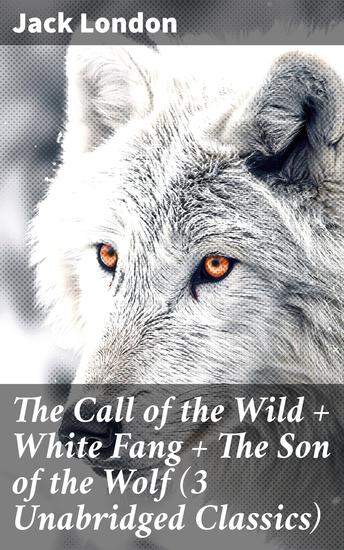
The Call of the Wild + White Fang + The Son of the Wolf (3 Unabridged Classics) - Wilderness Tales: Primal Instincts and Survival in Nature - cover

The Call of the Wild + White Fang + The Son of the Wolf (3 Unabridged Classics) - Wilderness Tales: Primal Instincts and Survival in Nature

Jack London

Publisher: Good Press

  • 0
  • 0
  • 0

Summary

In "The Call of the Wild," "White Fang," and "The Son of the Wolf," Jack London immerses readers in the primal landscapes of the Alaskan wilderness, masterfully exploring themes of survival, instinct, and the inexorable pull of nature. London'Äôs prose is characterized by a visceral immediacy and vivid descriptive imagery, effectively capturing the harsh realities of the wild and the transformative journeys of his central characters. These unabridged classics are suffused with rich symbolism and social commentary, reflecting London's deep engagement with the conflicts between civilization and the wild, as well as the struggle for self-definition amidst unforgiving environments. Jack London, a trailblazer in American literature, was profoundly influenced by his own experiences in the Klondike Gold Rush and his philosophical explorations of Darwinism and social inequality. His tumultuous life, characterized by adventure, hardship, and a relentless quest for authenticity, became a rich wellspring from which he drew in crafting these compelling narratives. London's unique perspective as a writer'Äîinfused with his love for nature and humanity's relationship with it'Äîshapes the moral and existential inquiries central to these stories. Readers keen on adventure and philosophical reflection will find in these classics a captivating blend of gripping storytelling and profound insight. London'Äôs ability to evoke empathy and provoke thought renders these works timeless and relevant, making them essential reading for anyone exploring the depths of human resilience and the call of the wild.
Available since: 12/14/2023.
Print length: 1143 pages.

Other books that might interest you

  • The Murders In The Rue Morgue - A Robin Reads Audiobook - cover

    The Murders In The Rue Morgue -...

    Edgar Allan Poe

    • 0
    • 0
    • 0
    With this absorbing and surprising story, Edgar Allan Poe introduced amateur Parisian sleuth C. August Dupin to the world, and invented the modern detective story. This classic tale has lost none of its ability to startle and intrigue. 
    Narrated by Robin Reads.
    Show book
  • The Great Gatsby - cover

    The Great Gatsby

    Anonymous

    • 0
    • 0
    • 0
    An undisputed masterpiece of twentieth-century literature, perfect for Fitzgerald lovers and classics collectors alike. 
     
    Set against a backdrop of jazz music, bootlegging, and lavish parties, The Great Gatsby is the story of Midwesterner Nick Carraway’s curious introduction to the decadent world of his mysterious, wealthy neighbor Jay Gatsby, whose thirst for riches is matched only by his tragic obsession with the beautiful Daisy Buchanan. 
    Penned in the “roaring twenties,” the novel continues to be the subject of numerous film and stage adaptations and has become a fixture in the American classroom. This dangerously propulsive tale of glitz and glamour continues to be relevant as readers long for escapist novels—a chance to flee into Gatsby’s famed mansion and lose oneself in the rush of opulence. 
    The Great Gatsby audiobook is brought to life by Tim Robbins, famed American actor, screenwriter, director, producer, and musician.
    Show book
  • Beryl the Croucher and the Rest of England - From their pens to your ears genius in every story - cover

    Beryl the Croucher and the Rest...

    Thomas Burke

    • 0
    • 0
    • 0
    Thomas Burke was born Sydney Thomas Burke on November 29th, 1886 in Eltham, London (at the time it was part of Kent). 
    An author in the early years of the 20th Century Burke brought his skills of pen and eye to parts of London, specifically the Limehouse district of the East End, to write with drive and vigour about the characters he met and the places that he knew.  Whether he turned that material into fiction or non-fiction the words seep quality.  His publications ranged from these wonderful vignettes of down-at-heel London to writings on homosexuality and the English Countryside. 
    Thomas Burke died in the Homeopathic Hospital in Queens Square, Bloomsbury on 22 September 1945.
    Show book
  • A Somewhat Improbable Story - From their pens to your ears genius in every story - cover

    A Somewhat Improbable Story -...

    G K Chesterton

    • 0
    • 0
    • 0
    G K Chesterton (29 May 1874 – 14 June 1936) was a poet, novelist, playwright, literary commentator, editor, biographer, journalist, orator and theologian.  He was often dubbed as the “prince of paradox” for his light whimsical style that often addressed serious issues such as politics and religion.  The latter was as a member and defender of the Christian faith and the former was shaped by a distrust of concentrated wealth and power.  He advocated Distributionism and said that every man should be allowed to own "three acres and a cow."  These political views have spread round the world, crediting Chesterton as the father of the “small is beautiful” movement.  It is also said to have influenced Gandhi in seeking a genuine nationalism for India rather than imitating the British state.   
    Chesterton was remarkably prolific but perhaps his most famous creation is Father Brown.  Within this character Chesterton’s clever writing and profound ideas reveal truths, often with humour as the detective priest pursues the answers to his cases.
    Show book
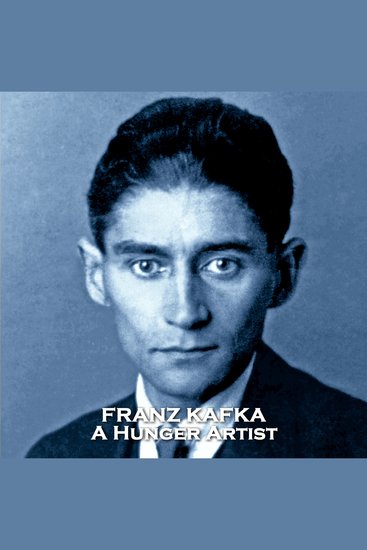
  • A Hunger Artist - A study in artistic pursuit and the sacrifices one must make - cover

    A Hunger Artist - A study in...

    Franz Kafka

    • 0
    • 0
    • 0
    Franz Kafka was born on 3rd July 1883 in Prague, then in Bohemia, the eldest of 6, into a middle-class Jewish family. 
     
    Life for the young Kafka and his passion for literature was often made an ordeal by his over-bearing and domineering entrepreneur of a father.   
     
    In 1889 Kafka was sent to the Deutsche Knabenschule, an elementary school in Prague. His father would only allow him to be educated in German-speaking schools and even went so far as to limit visits to the synagogue to four a year. 
     
    In 1901 he graduated from the classics-oriented Altstädter Gymnasium. Kafka did well there and across a large range of subjects.  He now enrolled at the Charles Ferdinand University, to study chemistry, but quickly switched to law for which he obtained his degree in June 1906 and then performed the mandatory year of unpaid service as clerk at the civil and criminal courts. 
     
    A job at an Italian insurance company left him little time to write and after a year he took another job with the Worker's Accident Insurance Institute for the Kingdom of Bohemia where he stayed until ill health led to his resignation in 1922. 
     
    Although he saw work as a means to pay the bills and to allow him time to write, he received several promotions and was noted as a good employee. 
     
    By 1917 Kafka was suffering from tuberculosis, which required frequent periods of convalescence. Interspersed with this, were several intense affairs before he settled in Berlin with Dora Diamant, a 25-year-old kindergarten teacher who herself having left the ghetto now influenced Kafka's interest in the book of Jewish law, the Talmud. 
     
    Kafka’s on-going health was littered with problems. Apart from TB there were several other ailments, including migraines, insomnia, boils, depression, all usually brought on by excessive stresses and strains. He attempted to counteract all of this by naturopathic treatments, a vegetarian diet and consuming large quantities of unpasteurized milk. 
     
    His tuberculosis still worsened. He returned to Prague, where he died on 3rd June 1924. He was 40. 
     
    His literary works are few in number but towering in influence.  His masterpieces include ‘The Trial’, ‘The Metamorphosis’ as well as a number of short stories which reveal facets of humankind that truthfully could only be born from Kafka’s brain and pen.
    Show book
  • Poor Folk - cover

    Poor Folk

    Fyodor Dostoyesky

    • 0
    • 0
    • 0
    "Poor Folk" is the debut novel of Russian author Fyodor Dostoyevsky, first published in 1846. It's presented in epistolary form, primarily comprising letters between two distant relatives, Makar Devushkin and Varvara Dobroselova, who are both poor inhabitants of St. Petersburg. Through their correspondence, the book explores the life of the urban poor in Russia and the challenges they face. The novel delves into themes of poverty, societal class structures, and the emotional toll of destitution. The relationship between the two characters, rooted in genuine concern but tainted by their challenging circumstances, provides a heartfelt, tragic view into 19th-century Russian society.
    Show book