Join us on a literary world trip!
Add this book to bookshelf
Grey
Write a new comment Default profile 50px
Grey
Subscribe to read the full book or read the first pages for free!
All characters reduced
Revolution and Other Essays - cover

Revolution and Other Essays

Jack London

Publisher: Avia Artis

  • 0
  • 0
  • 0

Summary

“Revolution and Other Essays” is a book by Jack London, an American novelist. A pioneer of commercial fiction and an innovator in the genre that would later become known as science fiction.

Revolution and Other Essays is a series of essays by Jack London. The collection consists of these titles: Revolution, The Somnambulists, The Dignity of Dollars, Goliah, The Golden Poppy, The Shrinkage of the Planet, The House Beautiful, The Gold Hunters of the North, Fomá Gordyéeff, These Bones Shall Rise Again, The Other Animals, The Yellow Peril, What Life Means to Me.
Available since: 12/03/2021.

Other books that might interest you

  • The Country of the Blind - And Other Stories - cover

    The Country of the Blind - And...

    H. G. Wells

    • 0
    • 1
    • 0
    Thirty-three science fiction and fantasy stories from the celebrated author of such classics as The War of the Worlds, The Times Machine, and The Invisible Man. Venture to strange worlds from the imagination of H. G. Wells with this collection of tales of science fiction and fantasy. Witness the darker side of humanity in “The Jilting of Jane” and “The Cone.” Learn what a man does when he faces fear itself in a haunted house in “The Red Room.” Travel to an Ecuadorian mountain community deprived of sight in “The Country of the Blind.” Find a curio inside an antique shop in London’s West End that allows you to see Mars in “The Crystal Egg.” Float down the Amazon on a Brazilian gunboat as a captain and his crew fight to save a village from terrifyingly evolved ants. These are just a few of the unusual journeys awaiting readers inside this compilation from one of the greatest science fiction writers in history.
    Show book
  • Grimm's Fairy Tales - A Collection of Classic Bedtime Stories for Kids & Adults - cover

    Grimm's Fairy Tales - A...

    The Brothers Grimm

    • 0
    • 0
    • 0
    Ready to turn bedtime into the most magical part of your day? Dive headfirst into a world of wonder, danger, laughter, and heart with Grimm’s Fairy Tales: A Collection of Classic Bedtime Stories for Kids & Adults! This isn’t just an audiobook — it’s a dazzling journey through enchanted forests, royal palaces, and mysterious villages where anything is possible and every story bursts with adventure. Cheer for brave Hansel and clever Gretel, gasp as Little Red Riding Hood faces the big bad wolf and celebrate the power of love and courage with Sleeping Beauty and the Frog Prince. These legendary tales don’t just entertain — they ignite the imagination, teach timeless life lessons, and fill every listener with joy, hope, and wonder. Whether you’re sharing them with a child or rediscovering them for yourself, each story is a cozy escape into a world where good triumphs, magic is real, and dreams truly do come true. So snuggle in, press play, and let the magic of Grimm sweep you away tonight!
    Show book
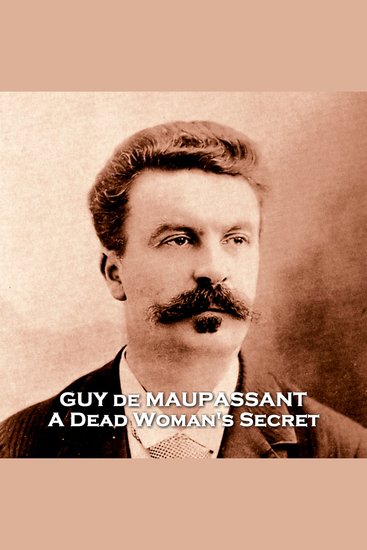
  • A Dead Woman's Secret - From their pens to your ears genius in every story - cover

    A Dead Woman's Secret - From...

    Guy de Maupassant

    • 0
    • 0
    • 0
    Henri René Albert Guy de Maupassant was born on August 5th, 1850 near Dieppe in France.  
    Maupassant’s early life was badly torn when at age 11 (his younger brother Hervé was then five) his mother, Laure, a headstrong and independent-minded woman, risked social disgrace in order to obtain a legal separation from her husband. 
    After the separation, Laure kept custody of her two boys. With the father now forcibly absent, Laure became the most influential and important figure in the young boy's life.   
    Maupassant’s education was such that he rebelled against religion and other societal norms but a developing friendship with Gustave Flaubert began to turn his mind towards creativity and writing. 
    After graduation he volunteered for the Franco-Prussian war. With its end he moved to Paris to work as a clerk in the Navy Department.  Gustave Flaubert now took him under his wing.  Acting as a literary guardian to him, he guided the eager Maupassant to debuts in journalism and literature.  For Maupassant these were exciting times and the awakening of his creative talents and ambitions. 
    In 1880 he published what is considered his first great work, ‘Boule de Suif’, (translated as as ‘Dumpling’, ‘Butterball’, ‘Ball of Fat’, or ‘Ball of Lard’) which met with a success that was both instant and overwhelming.  Flaubert at once acknowledged that it was ‘a masterpiece that will endure.’ Maupassant had used his talents and experiences in the war to create something unique.  
    This decade from 1880 to 1891 was to be the most pivotal of his career.  With an audience now made available by the success of ‘Boule de Suif’ Maupassant organised himself to work methodically and relentlessly to produce between two and four volumes of work a year.  The melding of his talents and business sense and the continual hunger of sources for his works made him wealthy. 
    In his later years he developed a desire for solitude, an obsession for self-preservation, and a fear of death as well as a paranoia of persecution caused by the syphilis he had contracted in his youth.  
    On January 2nd, 1892, Maupassant tried to commit suicide by cutting his throat.  Unsuccessful he was committed to the private asylum of Esprit Blanche at Passy, in Paris.  It was here on July 6th, 1893 that Henri René Albert Guy de Maupassant died at the age of only 42.
    Show book
  • No More Parades - cover

    No More Parades

    Ford Madox

    • 0
    • 0
    • 0
    There are not many English novels which deserve to be called great: Parade's End is one of them. — W. H. Auden  
    No More Parades is the second of four in Ford Madox Ford's Parade's End tetralogy, a work that Ford hoped would contribute to the obviating of all future wars. The novel follows Christopher Tietjens, a wealthy British landowner and the last British Tory; his unfaithful wife, Sylvia; and his mistress, Valentine Wannop. Highlighting the tension between traditional values and the new reality of a world marred by war, the novel details Tietjens' turmoils in both his personal life and on the warfront—and what follows when those struggles become one and the same.  
    The Parade's End tetralogy privileges not the conflict of World War I itself, but the impact the war had on its participants and upon society writ large. It is often referred to as one of the greatest 20th century novels, and one of the best depictions of war in literature. The 2012 television adaptation, written by Tom Stoppard and starring Benedict Cumberbatch and Rebecca Hall, was nominated for two Primetime Emmy Awards and seven BAFTA Television Awards.
    Show book
  • Substitute Journalist A (Unabridged) - cover

    Substitute Journalist A...

    L. M. Montgomery

    • 0
    • 0
    • 0
    Lucy Maud Montgomery (November 30, 1874 - April 24, 1942), published as L. M. Montgomery, was a Canadian author best known for a series of novels beginning in 1908 with Anne of Green Gables. The book was an immediate success. The title character, orphan Anne Shirley, made Montgomery famous in her lifetime and gave her an international following.
    A Substitute Journalist: Clifford Baxter came into the sitting-room where Patty was darning
    stockings and reading a book at the same time. Patty could do things like that. The stockings were well darned too, and Patty understood and remembered what she read.
    Show book
  • Dream of the Red Chamber - A Tale Of Betrayal - cover

    Dream of the Red Chamber - A...

    Cao Xueqin

    • 0
    • 0
    • 0
    The Dream of the Red Chamber (also known as The Story of the Stone) is one of the Four Great Classical Novels of China, and considered the greatest of them all. Almost 40 main characters and some 500 minor characters tell the fortunes of the Chia family; the book details mainly the life of Chia Pao-yü, the heir apparent, who is described as very intelligent, but also as carefree and self-indulging. The already wealthy Chia family rises to new heights when Pao-yü's elder sister becomes an imperial consort. On her first visit home, a lush garden is built, where much of the rest of the story takes place. The intrigues surrounding Pao-yü and his cousins, especially Lin Tai-yü who he loves, and Hsüeh Pao-ch'ai who he is finally tricked into marrying, make up a large part of the story. The decline of the Chia family begins with the death of the imperial consort, and when they fall into disfavour with the emperor, their mansions and the garden are eventually destroyed. 
     
    The whole book has 120 chapters, only 80 of which were written by Cao Xueqin before his death in 1764. Cheng Weiyuan and Gao E claimed to have access to Cao's papers, and published what is now known as the Cheng-Gao version in 1791. Henry Bencraft Joly translated only part of the book written by Cao. Book I contains the first 24 chapters, Book II ends abruptly with chapter 56; a Book III was never published.
    Show book