Join us on a literary world trip!
Add this book to bookshelf
Grey
Write a new comment Default profile 50px
Grey
Subscribe to read the full book or read the first pages for free!
All characters reduced
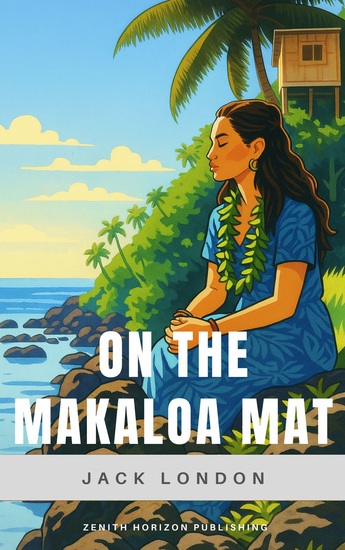
On the Makaloa Mat - Jack London's Hawaiian Tales of Love Loss and Island Life - cover

On the Makaloa Mat - Jack London's Hawaiian Tales of Love Loss and Island Life

Jack London, Zenith Horizon Publishing

Publisher: Zenith Horizon Publishing

  • 0
  • 0
  • 0

Summary

Set sail for the South Seas in Jack London's tender and tragic island tales.

On the Makaloa Mat is a unique and deeply emotional collection of short stories set in Hawaii, revealing a different side of Jack London—introspective, lyrical, and human. Through a series of loosely connected vignettes, London captures the cultural richness, heartbreak, and resilience of native Hawaiians and Westerners during a time of change.

Written during the final years of his life, these stories depart from London's usual rugged adventures to explore love, betrayal, aging, memory, and dignity—woven into the natural beauty and spiritual rhythm of the islands.

🌴 This edition includes:

The complete, unabridged short story cycle

Lush illustrations evoking early 20th-century Hawaii

Kindle-optimized formatting for immersive reading

📚 A rare literary gem from a legendary author—perfect for lovers of short fiction and cultural storytelling.

Discover the human heart on the shores of Hawaii.
Download this illustrated edition today.
Available since: 06/12/2025.
Print length: 235 pages.
Other books that might interest you

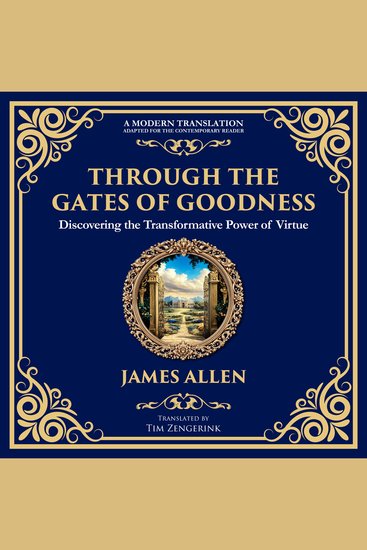
  • Through the Gates of Goodness - Discovering the Transformative Power of Virtue - cover

    Through the Gates of Goodness -...

    James Allen, Tim Zengerink

    • 0
    • 0
    • 0
    What if dedicating yourself to virtue could unlock a life of immeasurable peace, prosperity, and joy? 
    James Allen’s heartfelt exploration demonstrates how living by the highest moral standards fosters profound inner change. Adapted for contemporary readers, this work reveals the quiet but powerful influence of qualities like honesty, kindness, and humility—ushering you through the gates of goodness and into a realm of lasting fulfillment. 
    What You’ll Discover in This Modern Translation: 
    - The practical impact of everyday acts of virtue 
    - How moral integrity leads to enhanced mental clarity and purpose 
    - Steps for overcoming temptation and navigating ethical dilemmas 
    - Insights that tie personal virtue to collective well-being 
    Imagine entering each day guided by genuine kindness and integrity—experiencing a deep sense of wholeness that resonates in all you do. Let James Allen escort you beyond mere goodness into a life of true moral and spiritual triumph. 
    Walk through the gates of goodness. Get your copy now and begin your journey toward a virtue-driven transformation.
    Show book
  • Alone With God - cover

    Alone With God

    Peter Walker

    • 0
    • 0
    • 0
    Where can I go from your Spirit?Where can I flee from your presence?If I go up to the heavens, you are there;If I make my bed in the depths, you are there.If I rise on the wings of the dawn,if I settle on the far side of the sea,even there your hand will guide me,your right hand will hold me fast.(Psalm 139:7-10)
    Show book
  • The World Is Always Coming to an End - Pulling Together and Apart in a Chicago Neighborhood - cover

    The World Is Always Coming to an...

    Carlo Rotella

    • 0
    • 0
    • 0
    An urban neighborhood remakes itself every day—and unmakes itself, too. Houses and stores and streets define it in one way. But it’s also people—the people who make it their home, some eagerly, others grudgingly. A neighborhood can thrive or it can decline, and neighbors move in and move out. Sometimes they stay but withdraw behind fences and burglar alarms. If a neighborhood becomes no longer a place of sociability and street life, but of privacy indoors and fearful distrust outdoors, is it still a neighborhood? 
      
    In the late 1960s and 1970s Carlo Rotella grew up in Chicago’s South Shore neighborhood—a place of neat bungalow blocks and desolate commercial strips, and sharp, sometimes painful social contrasts. In the decades since, the hollowing out of the middle class has left residents confronting—or avoiding—each other across an expanding gap that makes it ever harder for them to recognize each other as neighbors. Rotella tells the stories that reveal how that happened—stories of deindustrialization and street life; stories of gorgeous apartments with vistas onto Lake Michigan and of Section 8 housing vouchers held by the poor. 
     
    Blending journalism, memoir, and archival research, The World Is Always Coming to an End uses the story of one American neighborhood to challenge our assumptions about what neighborhoods are, and to think anew about what they might be if we can bridge gaps and commit anew to the people who share them with us. Tomorrow is another ending.
    Show book
  • Gitanjali - Song Offerings - cover

    Gitanjali - Song Offerings

    Rabindranath Tagore

    • 0
    • 0
    • 0
    GitanjaliBy Rabindranath TagoreWith an Introduction by W. B. YeatsGitanjali (song offerings) is a collection of 103 devotional poems written originally in Bengali and first published in 1910.  In 1912 a translation into English by the author was published in 1912, and led to his being awarded the Nobel Prize for Literature in 1913.The Indian sage, Paramahansa Yogananda, who was a friend and admirer of Tagore, made the following comment on his poetry:  "The beauty of his lines, to me, lies in his art of referring to God in nearly every stanza, yet seldom mentioning the sacred Name. 'Drunk with the bliss of singing,' Tagore writes, 'I forget myself and call thee friend who art my lord.'"Production copyright 2024 Voices of Today
    Show book
  • Unsettled - What Climate Science Tells Us What It Doesn't and Why It Matters Updated and Expanded Edition - cover

    Unsettled - What Climate Science...

    Steven E. Koonin

    • 0
    • 0
    • 0
    In this updated and expanded edition of climate scientist Steven Koonin’s groundbreaking book, go behind the headlines to discover the latest eye-opening data about climate change—with unbiased facts and realistic steps for the future. 
     
    “Greenland’s ice loss is accelerating.” 
    “Extreme temperatures are causing more fatalities.” 
    “Rapid ‘climate action’ is essential to avoid a future climate disaster.” 
     
    You’ve heard all this presented as fact. But according to science, all of these statements are profoundly misleading. 
     
    With the new edition of Unsettled, Steven Koonin draws on decades of experience—including as a top science advisor to the Obama administration—to clear away the fog and explain what science really says (and doesn’t say). With a new introduction, this edition now features reflections on an additional three years of eye-opening data, alternatives to unrealistic “net zero” solutions, global energy inequalities, and the energy crisis arising from the war in Ukraine. 
     
    When it comes to climate change, the media, politicians, and other prominent voices have declared that “the science is settled.” In reality, the climate is changing, but the why and how aren’t as clear as you’ve probably been led to believe. 
     
    Koonin takes readers behind the headlines, dispels popular myths, and unveils little-known truths: 
    • Despite rising greenhouse gas emissions, global temperatures decreased from 1940 to 1970 
    • Models currently used to predict the future do not accurately describe the climate of the past, and modelers themselves strongly doubt their regional predictions 
    • There is no compelling evidence that hurricanes are becoming more frequent—or that predictions of rapid sea level rise have any validity 
     
    Unsettled is a reality check buoyed by hope, offering the truth about climate science—what we know, what we don’t, and what it all means for our future.
    Show book
  • The Indonesian Famine of 1945-1946 - A Study in Post-War Disruption - cover

    The Indonesian Famine of...

    Sarah Willards

    • 0
    • 0
    • 0
    The conclusion of World War II marked a pivotal turning point in Indonesia’s history. As the Japanese forces surrendered in August 1945, the vacuum left behind in their wake exposed the fragility of colonial and wartime institutions. Indonesia, long under Dutch colonial rule and occupied by Japan since 1942, was suddenly thrust into a state of political and administrative chaos. The power void that followed the Japanese capitulation was quickly filled by nationalist fervor, culminating in the proclamation of Indonesian independence on August 17, 1945. However, the declaration did not result in immediate recognition or control. Instead, the country found itself caught between competing powers and clashing agendas. 
    The collapse of Japanese administrative structures left the newly proclaimed Republic of Indonesia struggling to assert its legitimacy. Republican leaders, including Sukarno and Mohammad Hatta, faced the monumental task of organizing a new government while also managing the fallout of war. Meanwhile, Dutch authorities, with Allied support, sought to re-establish their colonial presence. This led to violent confrontations and widespread instability, as various factions—including local militias, former Japanese-trained troops, and returning colonial forces—vied for control over towns, supply routes, and administrative posts. 
    The disintegration of centralized governance had far-reaching consequences. Essential services, including food distribution and public health, were severely disrupted. The chaos was further compounded by a breakdown in communication lines and transportation infrastructure, much of which had been damaged during the war or repurposed by occupying forces. With no clear authority in many regions, local leaders and grassroots organizations were left to manage crises as best they could, often with limited resources and no coordination.
    Show book