Join us on a literary world trip!
Add this book to bookshelf
Grey
Write a new comment Default profile 50px
Grey
Subscribe to read the full book or read the first pages for free!
All characters reduced
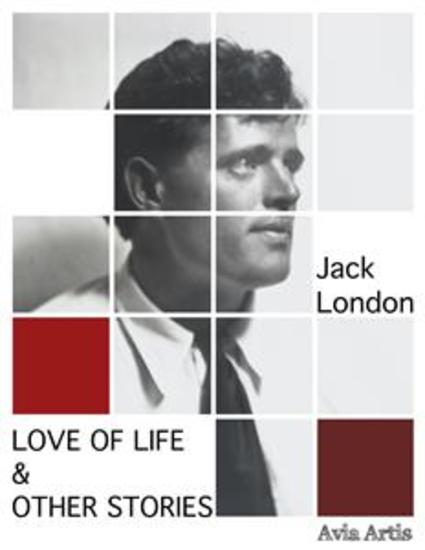
Love of Life & Other Stories - cover

Love of Life & Other Stories

Jack London

Publisher: Avia Artis

  • 0
  • 0
  • 0

Summary

“Love of Life & Other Stories” is a book by Jack London, an American novelist. A pioneer of commercial fiction and an innovator in the genre that would later become known as science fiction.

Love of Life & Other Stories is a series of short stories by Jack London. It consists of eight moving and thrilling stories such as: Love of Life, The Story of Keesh or The Sun-Dog Trail.
Available since: 12/03/2021.

Other books that might interest you

  • Spanking Naughty Girls 3 - James spanks Evelyn and her naughty daughter Emma - cover

    Spanking Naughty Girls 3 - James...

    Peter Michaels

    • 0
    • 0
    • 0
    James spanks Evelyn and her naughty daughter Emma 
    Evelyn Harris hears that James solved Kate’s problem and she asks him to do the same for her. Emma, her daughter, has got into bad company and needs some parental guidance, but Evelyn is a single mum and finds it challenging to spank Emma when she is naughty. James comes up with an idea and Evelyn agrees to be spanked when Emma is naughty until Emma agrees she should take the spanking. Emma agrees but calls the police to accuse James of assault. Luckily James has been recording all the spanking sessions so Emma is proven to be a liar so she gets an extra spanking for that. Soon Emma agrees that she has been naughty and her behaviour improves. Evelyn eventually marries the policeman who helped solve their problem.
    Show book
  • The Gentleman from San Francisco - cover

    The Gentleman from San Francisco

    Ivan Bunin

    • 0
    • 0
    • 0
    The Gentleman from San Francisco is a short story by Ivan Bunin, a Nobel Prize-winning but often overlooked Russian author. It was translated into English by D. H. Lawrence (with Samuil Koteliansky). The story is often hailed as a classic of the genre.
    
    A 58-year-old American from San Francisco, now in possession of a vast fortune, sets off with his wife and daughter on a world tour. A series of events causes laughter, embarassment, and revolt as he and his family travel through Italy and remarkable changes begin to take effect.
    Show book
  • Blood - cover

    Blood

    Noelle Q. de Jesus

    • 0
    • 1
    • 0
    Blood Collected Stories 
    Winner of the 2016 Indie Book Awards (Short Stories) 
     
     
    Noelle Q. de Jesus’ collection of short stories is a striking debut of cultural exchanges and foreign tongues: stories that trace and sustain the conflict between man and woman, parent and child, country and identity, self and sexuality, love and loss. 
     
    "... De Jesus' characters inhabit a world of regret, loss and unfulfilled longing. In these works, there is as much said in the silences and ellipses, as there are in the fraught, perfunctory exchanges. ... De Jesus' economy of words and her voice, bleak and spare, yet intimate, recalls the virtuosity of short story fiction masters, such as Lorrie Moore and Edith Pearlman." 
    -The Straits Times 
     
    “At the start of each compact narrative in this collection, Noelle Q. de Jesus places a cunning tiger of thrilling tension ready to spring. Thematically cogent, these stories are about the lives of the displaced" 
    -Michael Carroll, Author of Little Reef and Other Stories, Lambda Literary Award Winner 2015 
     
    “Carefully crafted and richly observed, these stories are filled with unforgettable women" 
    -F.H. Batacan, Author of Smaller and Smaller Circles
    Show book
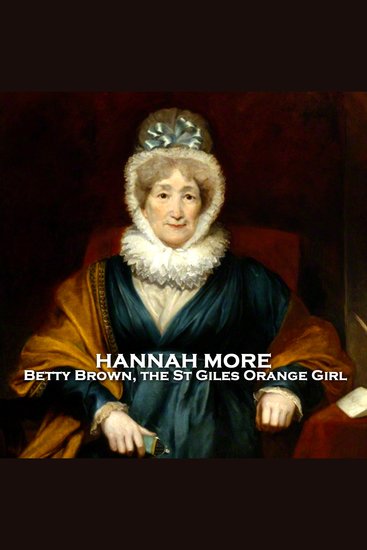
  • Betty Brown the St Giles Orange Girl - From their pens to your ears genius in every story - cover

    Betty Brown the St Giles Orange...

    Hannah More

    • 0
    • 0
    • 0
    Hannah More was born on February 2nd, 1745 at Fishponds in the parish of Stapleton, near Bristol. She was the fourth of five daughters. 
    The City of Bristol, at that time, was a centre for slave-trading and Hannah would, over time, become one of its staunchest critics.  
    She was keen to learn, possessed a sharp intellect and was assiduous in studying.  Hannah first wrote in 1762 with The Search after Happiness (by the mid-1780s some 10,000 copies had been sold). 
    In 1767 Hannah became engaged to William Turner.  After six years, with no wedding in sight, the engagement was broken off.  Turner then bestowed upon her an annual annuity of £200.  This was enough to meet her needs and set her free to pursue a literary career.   
    Her first play, The Inflexible Captive, was staged at Bath in 1775. The famous David Garrick himself produced her next play, Percy, in 1777 as well as writing both the Prologue and Epilogue for it.  It was a great success when performed at Covent Garden in December of that year.  
    Hannah turned to religious writing with Sacred Dramas in 1782; it rapidly ran through nineteen editions. These and the poems Bas-Bleu and Florio (1786) mark her gradual transition to a more serious and considered view of life. 
    Hannah contributed much to the newly-founded Abolition Society including, in February 1788, her publication of Slavery, a Poem recognised as one of the most important of the abolition period.   
    Her work now became more evangelical.  In the 1790s she wrote several Cheap Repository Tracts which covered moral, religious and political topics and were both for sale or distributed to literate poor people.  The most famous is, perhaps, The Shepherd of Salisbury Plain, describing a family of incredible frugality and contentment. Two million copies of these were circulated, in one year. 
    In 1789, she purchased a small house at Cowslip Green in Somerset. She was instrumental in setting up twelve schools in the area by 1800. 
    She continued to oppose slavery throughout her life, but at the time of the Abolition Bill of 1807, her health did not permit her to take as active a role in the movement as she had done in the late 1780s, although she maintained a correspondence with Wilberforce and others.  
    In July 1833, the Bill to abolish slavery throughout the British Empire passed in the House of Commons, followed by the House of Lords on August 1st. 
    Hannah More died on September 7th, 1833.
    Show book

  • When the World Screamed - cover

    When the World Screamed

    Arthur Conan Doyle

    • 0
    • 0
    • 0
    The bombastic Professor Challenger is convinced that a sentient being lurks in the mantle of the earth. Aided by Edward Malone and Peerless Jones, he must drill down through the earth’s crust to alert the creature of humankind’s existence.  
     
    After his debut in The Lost World, Arthur Conan Doyle went on to develop the grandiloquent Professor Challenger in four other works. When the World Screamed is the fourth in the series, and a satisfying addition to the canon. 
    Show book
  • Brightness Falls - From their pens to your ears genius in every story - cover

    Brightness Falls - From their...

    Mary Butts

    • 0
    • 0
    • 0
    Mary Frances Butts was born on 13th December 1890 in Poole, Dorset. 
    Her early years were spent at Salterns, an 18th-century house overlooking Poole Harbour.  Sadly in 1905 her father died, and she was sent for boarding at St Leonard's school for girls in St Andrews. 
    Her mother remarried and, from 1909, Mary studied at Westfield College in London, and here, first became aware of her bisexual feelings.  She was sent down for organising a trip to Epsom races and only completed her degree in 1914 when she graduated from the London School of Economics.  By then Mary had become an admirer of the occultist Aleister Crowley and she was given a co-authorship credit on his ‘Magick (Book 4)’. 
    In 1916, she began the diary which would now detail her future life and be a constant reference point for her observations and her absorbing experiences. 
    During World War I, she was doing social work for the London County Council in Hackney Wick, and involved in a lesbian relationship.  Life changed after meeting the modernist poet, John Rodker and they married in 1918. 
    In 1921 she spent 3 months at Aleister Crowley's Abbey of Thelema in Sicily; she found the practices dreadful and also acquired a drug habit.  Mary now spent time writing in Dorset, including her celebrated book of short stories ‘Speed the Plough’ which saw fully develop her unique Modernist prose style. 
    Europe now beckoned and several years were spent in Paris befriending many artists and writing further extraordinary stories.   
    She was continually sought after by literary magazines and also published several short story collections as books. Although a Modernist writer she worked in other genres but is essentially only known for her short stories.  Mary was deeply committed to nature conservation and wrote several pamphlets attacking the growing pollution of the countryside. 
    In 1927, she divorced and the following year her novel ‘Armed with Madness’ was published.  A further marriage followed in 1930 and time was spent attempting to settle in London and Newcastle before setting up home on the western tip of Cornwall.  By 1934 the marriage had failed. 
    Mary Butts died on 5th March 1937, at the West Cornwall Hospital, Penzance, after an operation for a perforated gastric ulcer. She was 46.
    Show book