Join us on a literary world trip!
Add this book to bookshelf
Grey
Write a new comment Default profile 50px
Grey
Subscribe to read the full book or read the first pages for free!
All characters reduced
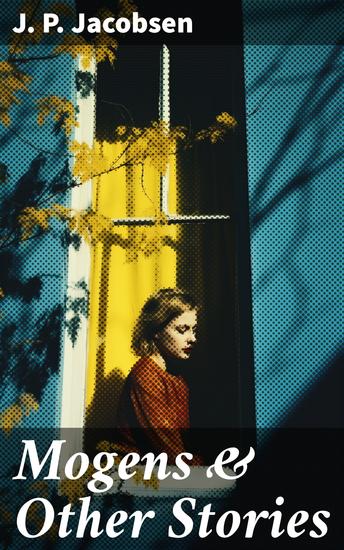
Mogens & Other Stories - Danish Tales Collection: Mogens The Plague of Bergamo There Should Have Been Roses & Mrs Fonss - cover

Mogens & Other Stories - Danish Tales Collection: Mogens The Plague of Bergamo There Should Have Been Roses & Mrs Fonss

J. P. Jacobsen

Translator Anna Grabow

Publisher: Good Press

  • 0
  • 0
  • 0

Summary

In "Mogens & Other Stories," J. P. Jacobsen presents a rich tapestry of narratives that explore themes of existential dread, societal expectations, and the complexities of the human condition. Written in a lyrical and evocative style characteristic of the late 19th-century literary tradition, these stories weave together a profound philosophical inquiry with a keen attention to the subtleties of human emotion. Jacobsen's use of impressionistic prose illuminates the inner lives of his characters, inviting readers to reflect on their own experiences and the universal struggles they face within a seemingly indifferent world. J. P. Jacobsen, a pivotal figure in the Danish literary landscape, drew inspiration from the natural sciences, philosophy, and the challenges of his time, which led to a nuanced understanding of life'Äôs fragility. His exploration of personal and societal dilemmas is heavily influenced by the existential thought emerging during his era, coupled with his own experiences of love, loss, and the search for meaning. Jacobsen'Äôs legacy as a precursor to modern existential literature renders his work both timeless and particularly relevant to contemporary readers. "Mogens & Other Stories" is a compelling collection that beckons those who appreciate deep psychological insight and lyrical storytelling. Ideal for readers seeking thoughtful reflections on the human experience, Jacobsen'Äôs work not only serves as a portal into the 19th century but also resonates powerfully with the struggles and aspirations of the modern individual.
Available since: 12/12/2023.
Print length: 64 pages.

Other books that might interest you

  • Poor Folk - cover

    Poor Folk

    Fyodor Dostoyesky

    • 0
    • 0
    • 0
    "Poor Folk" is the debut novel of Russian author Fyodor Dostoyevsky, first published in 1846. It's presented in epistolary form, primarily comprising letters between two distant relatives, Makar Devushkin and Varvara Dobroselova, who are both poor inhabitants of St. Petersburg. Through their correspondence, the book explores the life of the urban poor in Russia and the challenges they face. The novel delves into themes of poverty, societal class structures, and the emotional toll of destitution. The relationship between the two characters, rooted in genuine concern but tainted by their challenging circumstances, provides a heartfelt, tragic view into 19th-century Russian society.
    Show book
  • Nameless City The (Unabridged) - cover

    Nameless City The (Unabridged)

    H. P. Lovecraft

    • 0
    • 0
    • 0
    The unnamed narrator of the story goes into the middle of the Arabian Peninsula to seek out and enter a lost city. After hearing a clanging seemingly coming from deep inside the earth, the narrator inspects mysterious carvings and ruins until nightfall. The next day, the narrator discovers a cliff riddled with low-ceilinged buildings, unfit for human use. While he attends to his suddenly nervous camel, the narrator discovers a somewhat larger temple, with altars, painted murals, and a small staircase going down. After he descends, his torch dies, and he crawls on his hands and knees until he enters a hallway with small wooden coffins containing bizarre reptiles inside of them lining the walls. The narrator notices a large amount of light coming from an unknown source. After crawling to it on his hands and knees, he sees a large brass door with a descent into a misty portal. He then hears moaning coming from the coffin passage, and feels a strong wind coming from the passage, trying to pull him down. Against all odds, he resists, and sees what appear to be reptiles with a body shaped like a cross between a crocodile and a seal with a strange head common to neither of them, involving a protruding forehead, horns, lack of a nose, and an alligator-like jaw crawling behind the lit portal. The wind dies down after the last of it flows down into the light, when suddenly the door closes behind the narrator, leaving him in the dark.
    Show book
  • The Hound of the Baskervilles - cover

    The Hound of the Baskervilles

    Arthur Conan Doyle

    • 0
    • 0
    • 0
    Step into the moody, mist-shrouded moors of Devonshire in The Hound of the Baskervilles, one of the most gripping and atmospheric tales of Sherlock Holmes and Dr. John Watson. When the Baskerville family is plagued by the legend of a spectral hound, Sherlock Holmes is called upon to uncover the truth behind the mysterious death of Sir Charles Baskerville.
     
    As Watson investigates the eerie moor and the people surrounding the Baskerville estate, he encounters shadowy figures, chilling clues, and the ominous howls of a beast that seems to haunt the night. Holmes, with his unmatched intellect and razor-sharp deductive skills, must unravel the threads of superstition and deceit to reveal the shocking truth.
     
    Packed with suspense, intrigue, and one of literature’s most iconic mysteries, The Hound of the Baskervilles is a masterclass in storytelling. Perfect for fans of detective fiction, gothic thrillers, and classic literature, this audiobook will keep you captivated from the first clue to the final revelation. Prepare to be enthralled by Holmes' genius as he faces one of his most menacing cases.
    Show book
  • Fireside Reading of Dracula - cover

    Fireside Reading of Dracula

    Bram Stoker

    • 0
    • 0
    • 0
    Experiencing a story read out loud is one of the oldest forms of entertainment there is. Fireside Reading is a way to slow down, reconnect with the timeless wisdom of great books and rediscover the simple pleasure of being read to. Join Gildart Jackson in front of a cozy fire as he reads an abridged edition of Bram Stoker's Dracula to you and your family.
    Show book
  • The Adventure of the Abbey Grange - cover

    The Adventure of the Abbey Grange

    Arthur Conan Doyle

    • 0
    • 0
    • 0
    The Adventure of the Abbey Grange, one of the 56 Sherlock Holmes short stories written by Sir Arthur Conan Doyle, is one of 13 stories in the cycle collected as The Return of Sherlock Holmes.Holmes wakes Doctor Watson up early one winter morning to rush to a murder scene at the Abbey Grange near Chislehurst. Sir Eustace Brackenstall has been killed, apparently by burglars. Inspector Stanley Hopkins believes that it was the infamous Randall gang who have committed several other burglaries in the neighborhood.Holmes and Watson arrive at Abbey Grange. There, Lady Brackenstall tells Holmes that her marriage was not happy. Sir Eustace Brackenstall was a violent, abusive drunkard. She then tells that about 11 o'clock, in the dining room, she encountered an elderly man coming in the French window, followed by two younger men. The older man struck her in the face, knocking her out. When she came to, she was tied to an oaken chair with the bellrope, which they had torn down, and gagged. Then Sir Eustace came into the room, and rushed at the intruders. One of them struck and killed him with a poker. Lady Brackenstall fainted again for a minute or two. She saw the intruders drinking wine from a bottle taken from the sideboard. Then they left, taking some silver plate...Famous works of the author Arthur Conan Doyle: A Study in Scarlet, The Sign of the Four, The Adventures of Sherlock Holmes, The Memoirs of Sherlock Holmes, The Hound of the Baskervilles, The Return of Sherlock Holmes, The Valley of Fear, His Last Bow, The Case-Book of Sherlock Holmes, Stories of Sherlock Holmes, The Lost World.
    Show book
  • The Death Room - Former soldier and journalist that became a revered author and screenwriter - cover

    The Death Room - Former soldier...

    Edgar Wallace

    • 0
    • 0
    • 0
    Richard Horatio Edgar Wallace was born on the 1st April 1875 in Greenwich, London.  Leaving school at 12 because of truancy, by the age of fifteen he had experience; selling newspapers, as a worker in a rubber factory, as a shoe shop assistant, as a milk delivery boy and as a ship’s cook.  
     
    By 1894 he was engaged but broke it off to join the Infantry being posted to South Africa. He also changed his name to Edgar Wallace which he took from Lew Wallace, the author of Ben-Hur.  
     
    In Cape Town in 1898 he met Rudyard Kipling and was inspired to begin writing. His first collection of ballads, The Mission that Failed! was enough of a success that in 1899 he paid his way out of the armed forces in order to turn to writing full time.  
     
    By 1904 he had completed his first thriller, The Four Just Men. Since nobody would publish it he resorted to setting up his own publishing company which he called Tallis Press. 
      
    In 1911 his Congolese stories were published in a collection called Sanders of the River, which became a bestseller. He also started his own racing papers, Bibury’s and R. E. Walton’s Weekly, eventually buying his own racehorses and losing thousands gambling.  A life of exceptionally high income was also mirrored with exceptionally large spending and debts.  
     
    Wallace now began to take his career as a fiction writer more seriously, signing with Hodder and Stoughton in 1921. He was marketed as the ‘King of Thrillers’ and they gave him the trademark image of a trilby, a cigarette holder and a yellow Rolls Royce. He was truly prolific, capable not only of producing a 70,000 word novel in three days but of doing three novels in a row in such a manner. It was estimated that by 1928 one in four books being read was written by Wallace, for alongside his famous thrillers he wrote variously in other genres, including science fiction, non-fiction accounts of WWI which amounted to ten volumes and screen plays. Eventually he would reach the remarkable total of 170 novels, 18 stage plays and 957 short stories. 
     
    Wallace became chairman of the Press Club which to this day holds an annual Edgar Wallace Award, rewarding ‘excellence in writing’.  
     
    Diagnosed with diabetes his health deteriorated and he soon entered a coma and died of his condition and double pneumonia on the 7th of February 1932 in North Maple Drive, Beverly Hills. He was buried near his home in England at Chalklands, Bourne End, in Buckinghamshire.
    Show book