Join us on a literary world trip!
Add this book to bookshelf
Grey
Write a new comment Default profile 50px
Grey
Subscribe to read the full book or read the first pages for free!
All characters reduced
William Pitt and national revival - cover

William Pitt and national revival

J. Holland Rose

Publisher: Good Press

  • 0
  • 0
  • 0

Summary

In "William Pitt and National Revival," J. Holland Rose delves into the pivotal role played by William Pitt the Elder in the resurgence of British national pride during the 18th century. The book navigates Pitt's political strategies and foreign policies, set against the backdrop of an evolving British Empire facing both internal and external challenges. Rose employs a narrative style that juxtaposes rigorous historical analysis with accessible prose, allowing readers to glean insights into the intricate interplay of politics, war, and cultural revival during a transformative period in British history. J. Holland Rose was a scholar steeped in British history, which greatly informed his understanding of Pitt's legacy. His academic background, enriched by extensive research in both primary and secondary sources, allows him to present a nuanced portrait of Pitt — a figure often overshadowed in popular narratives. Rose's keen interest in the socio-political climate of the 18th century sheds light on the broader implications of Pitt's policies, providing insight into the factors that contributed to the evolution of British identity. This book is highly recommended for scholars, students, and enthusiasts of British history who seek to understand the complexities of national identity and leadership. Rose's compelling analysis not only deepens our comprehension of Pitt's influence but also resonates with contemporary discussions around nationalism and governance.
Available since: 03/02/2025.
Print length: 140 pages.
Other books that might interest you

  • Determinism - Fate Coincidence and the Question of Free Will - cover

    Determinism - Fate Coincidence...

    Hector Davidson

    • 0
    • 0
    • 0
    The question of whether humans possess free will has intrigued philosophers, scientists, and thinkers for centuries. At the heart of this debate lies the concept of determinism—the idea that every event or action is the result of preceding causes, governed by laws of nature and logic. If everything that happens is the result of a cause, can we truly say we have control over our decisions? Is free will simply an illusion? These questions challenge our sense of autonomy and personal responsibility, and they invite us to explore the complex relationship between fate, coincidence, and choice. 
    Determinism suggests that all events, including human actions, are preordained by prior causes. From a deterministic standpoint, the universe is a vast, interconnected web of cause and effect, where each moment flows seamlessly from the one before it. This view raises profound questions about the nature of human agency. If every decision we make, every thought we have, and every action we take is determined by a series of preceding events—genetic, environmental, and even cosmic—where does the space for free will lie? Are we merely puppets of fate, our strings pulled by forces beyond our control? 
    However, this deterministic view is not universally accepted. Many philosophers argue that humans can exercise free will—that we have the capacity to make choices independent of the deterministic forces at play. This belief in free will asserts that while factors such as genetics, upbringing, and circumstances may influence our decisions, we retain the ability to act in ways that transcend these influences. The challenge, then, is reconciling the possibility of free will with the idea that many of our actions may be shaped or even constrained by forces outside our conscious control.
    Show book
  • Spitfire Command - A Fighter Pilot's Memoir of Fighting From Dunkirk to D-Day - cover

    Spitfire Command - A Fighter...

    Bobby Oxspring

    • 0
    • 0
    • 0
    Dunkirk, the Battle of Britain, the Channel Dash, North Africa, Sicily, Dieppe, D-Day, and the fight against the V1 menace—Group Captain Bobby Oxspring saw action in many of the most famous battles of the Second World War. 


    His memoir of time as a Spitfire fighter is the perfect book for fans of First Light by Geoffrey Wellum, Samurai! by Saburo Sakai, and The First and the Last by Adolf Galland. 


    Beginning in 66 Squadron, by the end of the Battle of Britain, he was already an ace with eight enemy aircraft destroyed: three Heinkel 111s, one Dornier 17, one Me110, and three Me109s. He then went on to become flight commander in No. 41 Squadron RAF and later took command of three more squadrons. 


    His memoir, Spitfire Command, is a remarkable account of life as one of The Few, charting his journey through the war, flying all marks of the Spitfire—from the Mk I to the Mk XIV—right through to when he ended operational duty just a week before the war ended. Written vividly, Oxspring provides an authentic insight into the lives of the men who fought in the air. It is a fascinating and inspiring story of bravery, good humor, and sacrifice.
    Show book
  • Ur and Uruk: The History and Legacy of the Ancient Sumerians’ Two Most Important Cities - cover

    Ur and Uruk: The History and...

    Editors Charles River

    • 0
    • 0
    • 0
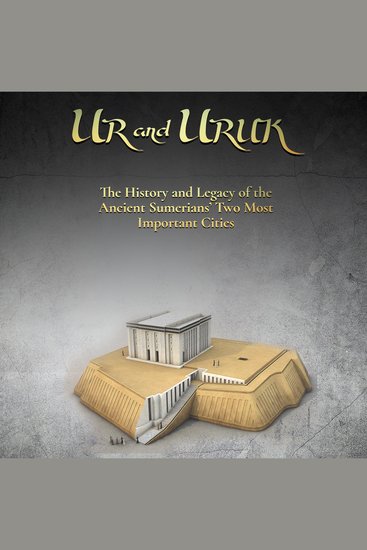
    In southern Iraq, a crushing silence hangs over the dunes. For nearly 5,000 years, the sands of the Iraqi desert have held the remains of the oldest known civilization: the Sumerians. When American archaeologists discovered a collection of cuneiform tablets in Iraq in the late 19th century, they were confronted with a language and a people who were at the time only scarcely known to even the most knowledgeable scholars of ancient Mesopotamia. The exploits and achievements of other Mesopotamian peoples, such as the Assyrians and Babylonians, were already known to a large segment of the population through the Old Testament and the nascent field of Near Eastern studies had unraveled the enigma of the Akkadian language that was widely used throughout the region in ancient times, but the discovery of the Sumerian tablets brought to light the existence of the Sumerian culture, which was the oldest of all the Mesopotamian cultures.  
    	Although the Sumerians continue to get second or even third billing compared to the Babylonians and Assyrians, perhaps because they never built an empire as great as the Assyrians or established a city as enduring and great as Babylon, they were the people who provided the template of civilization that all later Mesopotamians built upon. The Sumerians are credited with being the first people to invent writing, libraries, cities, and schools in Mesopotamia, and many would argue that they were the first people to create and do those things anywhere in world. Indeed, a close examination of Sumerian culture and chronology reveals that the Sumerians set the cultural tone in Mesopotamia for several centuries in the realms of politics/governments, arts, literature, and religion. The Sumerians were truly a great people whose legacy continued long after they were gone.
    Show book
  • This Is Depression - A Comprehensive Compassionate Guide for Anyone Who Wants to Understand Depression - cover

    This Is Depression - A...

    Dr. Diane McIntosh

    • 0
    • 0
    • 0
    Depression sucks. It's a debilitating illness that affects the mind and the body—and chances are that you or someone you love will battle depression at some point in your lifetime. This Is Depression is your guide through the darkness. 


    Psychiatrist Dr. Diane McIntosh provides all the information you need to understand and combat this serious and isolating disorder. Written in an accessible format with compassion and humor, Dr. McIntosh takes an evidence-based approach as she outlines the causes, impact, and treatment of depression and along the way provides encouragement that it can be overcome. 


    This Is Depression reveals: 


    ● how life experience, genetics, and hormones factor into depression, and explores the common overlap between depression and other mental and physical illnesses 


    ● how all areas of life can be impacted by depression 


    ● essential tools to support you in your recovery or your loved one on their journey. 


    Depression can be a lonely, debilitating illness, but sufferers are not alone, and there is always a path forward. This book is the first step on that path.
    Show book
  • The Mystery and Romance of Alchemy and Pharmacy - cover

    The Mystery and Romance of...

    C. J. S. Thompson

    • 0
    • 0
    • 0
    Dr. v. Oefele states of pharmacy before the time of Hippocrates, that although the practice of medicine was not separated from pharmacy among the Greeks and Romans, there was such a separation among the ancient Egyptians, from whom the distinction was handed down to the Copts, and by them to the Arabians; and, in fact, that the term pharmacist is probably of Egyptian origin, being derived from Ph-ar-maki, which signifies the preparation of medicine from drugs. The Egyptian pharmaki who were engaged in that occupation belonged to the higher social ranks of writers or academically-educated persons, comprising also the priests, physicians, statesmen, and military commanders. The Jews were indebted to Egypt for their primary ideas of medicine, but they cast away the ideas of demonology and magic which clouded what was good in the practice of Egypt. The Talmud recommends onions for worms, and wine, pepper, and asafœtida for flatulency. The Talmudists are responsible for calling the earth, air, fire, and water elementary bodies. In the middle ages the Jews rendered service to the healing art, and had a large share in the scientific work connected with the Arab domination of Spain. In China the use of drugs goes back to a very remote age, and alchemy was practised by the Chinese long previous to its being known in Europe. For two centuries prior to the Christian era, and for four or more subsequent, the transmutation of the base metals into gold, and the composition of the elixir of immortality, were questions ardently studied by the Chinese.
    Show book
  • Listen to HSK1 - Listen to and Learn HSK 1 Vocabulary & Sentences - cover

    Listen to HSK1 - Listen to and...

    Letitia Wu

    • 0
    • 0
    • 0
    Are you looking to take your Chinese language skills to the next level? Listen to HSK1 is here to help! This audiobook was designed with the needs of serious Chinese learners in mind.With fifteen audio files, you’ll learn all the words from the HSK 1 vocabulary and their English translation. To make sure that you can really understand and perfect your pronunciation, each audio file also includes example sentences with an accompanying English translation. For better learning, the teacher reads these example sentences twice: the first time slowly, so learners can get used to the sound of Chinese and match it with its English translation; the second time quickly, so learners can challenge themselves with faster-paced conversation. Plus, this one-time investment will serve its purpose for a long time – once learned, these words won’t go out of style any time soon! Invest in Listen to HSK1 now and experience rapid progress in your listening and speaking skills.
    Show book