Join us on a literary world trip!
Add this book to bookshelf
Grey
Write a new comment Default profile 50px
Grey
Subscribe to read the full book or read the first pages for free!
All characters reduced
William Jordan Junior - cover

William Jordan Junior

J. C. SNAITH

Publisher: Good Press

  • 0
  • 0
  • 0

Summary

Set against the backdrop of early 20th-century America, J. C. Snaith's "William Jordan, Junior" deftly explores the complexities of youth and the struggle for identity in a rapidly changing society. Narrated with a blend of keen observation and emotional depth, the novel delves into the life of its titular character, offering a poignant exploration of family dynamics, personal ambition, and societal expectations. Snaith's stylistic use of vivid imagery and rich character development invites readers to immerse themselves in the intricate tapestry of William Jordan's world, highlighting themes of aspiration and self-discovery that resonate universally. J. C. Snaith, a notable figure in early 20th-century literature, drew inspiration from his personal experiences and the societal shifts he witnessed during his formative years. His educational background in literature and keen insight into human nature inform his narrative style, while his own challenges with identity and purpose resonate clearly in William's journey. These elements reflect Snaith's profound understanding of character-driven storytelling, positioning him as a significant voice in his era. "William Jordan, Junior" is a compelling read for those interested in themes of personal growth and the challenges of the human condition. It appeals to scholars, students, and general readers alike, presenting a rich narrative that provokes reflection on one's own journey. Snaith's mastery of description and dialogue makes this novel a timeless exploration of youth and self-definition.
Available since: 03/02/2025.
Print length: 200 pages.

Other books that might interest you

  • A Daughter of Eve - cover

    A Daughter of Eve

    Honoré de Balzac

    • 0
    • 0
    • 0
    In A Daughter of Eve, Honoré de Balzac delivers a compelling exploration of love, marriage, ambition, and disillusionment set against the glittering yet treacherous backdrop of 19th-century Parisian society. As part of his monumental collection La Comédie Humaine, this novel dives deeply into the emotional and moral struggles of women navigating the rigid expectations of aristocratic life.
    
    The story centers on two sisters, Marie-Angélique and Marie-Eugénie de Granville, daughters of a devoted and idealistic mother who has raised them with strict moral principles and romantic ideals. Both sisters are married into respectable positions—one to a rising politician, the other to a nobleman—but beneath the polished surface of their lives lies a quiet dissatisfaction. Their sheltered upbringing leaves them ill-prepared for the complexities of marriage, social ambition, and emotional temptation.
    
    Marie-Angélique, the more passionate and impulsive of the two, becomes the emotional heart of the novel. Though married to Félix de Vandenesse, a man deeply immersed in political ambition, she feels neglected and yearns for romance and admiration. When she encounters Raoul Nathan, a charismatic and manipulative writer burdened with debts and grand illusions, she is swept into an emotional entanglement that threatens not only her marriage but her social standing. Through this relationship, Balzac masterfully reveals the dangers of vanity, naivety, and unchecked desire.
    
    Meanwhile, Marie-Eugénie represents a contrasting temperament—calmer and more practical—yet she too must confront the realities of aristocratic life. Together, the sisters embody Balzac's exploration of the "daughter of Eve": women portrayed as vulnerable to temptation, yet capable of growth, sacrifice, and moral reckoning.
    
    Balzac paints a vivid portrait of Restoration-era France, where politics, literature, and high society intersect in a world driven by reputation, influence, and financial survival. The novel scrutinizes the fragile balance between love and duty, highlighting how easily emotional longing can collide with social expectation. With psychological depth and sharp social commentary, Balzac exposes both the fragility of romantic illusions and the resilience of women forced to confront the consequences of their choices.
    
    Rich in character development and moral complexity, A Daughter of Eve is not merely a story of infidelity or temptation—it is a study of human weakness, ambition, and redemption. Balzac invites readers to question whether innocence is a strength or a liability in a world governed by power and appearance.
    
    For readers who appreciate classic French literature, intricate character studies, and timeless reflections on love and society, A Daughter of Eve remains a powerful and thought-provoking work that continues to resonate across generations.
    Show book
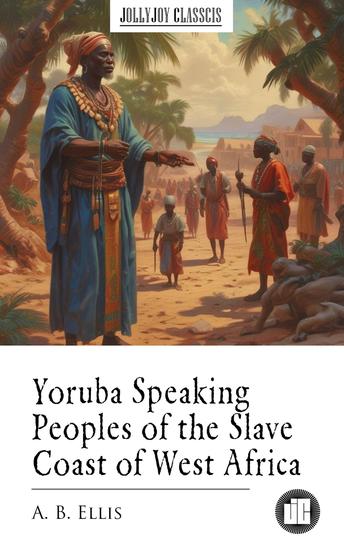
  • Yoruba Speaking Peoples of the Slave Coast of West Africa - cover

    Yoruba Speaking Peoples of the...

    A. B. Ellis

    • 0
    • 0
    • 0
    The Yoruba-Speaking Peoples of the Slave Coast of West Africa (1894) is an important work of in-depth research into one of the principal indigenous communities of West Africa. The territory of the Yoruba peoples extends over the southern parts of western Nigeria and eastern Dahomey, and this book examines their religion, customs, laws and language, and contains an extensive appendix comparing the Tshi (Oji), Gã, Ewe and Yoruba languages.
    Show book
  • Some Words with A Mummy - cover

    Some Words with A Mummy

    SAMPI Books, Edgar Allan Poe

    • 0
    • 0
    • 0
    "Some Words with a Mummy" is a short story by Edgar Allan Poe that satirizes 19th-century science and attitudes, featuring gentlemen who awaken an ancient Egyptian mummy, challenging their views on life, technology, and health.
    Show book
  • Berenice - cover

    Berenice

    SAMPI Books, Edgar Allan Poe

    • 0
    • 0
    • 0
    "Berenice" is a short story by Edgar Allan Poe, centered on obsession and horror. The story follows Egaeus, a man tormented by obsessive thoughts, and his cousin Berenice, who suffers from a mysterious illness. The narrative unfolds around Egaeus' morbid fixation on Berenice's teeth, culminating in a macabre and disturbing outcome that reveals the depth of his obsession.
    Show book
  • God Wills It! - A Tale of the First Crusade - cover

    God Wills It! - A Tale of the...

    William Stearns Davis

    • 0
    • 0
    • 0
    The First Crusade from the preaching at Clermont to the walls of Jerusalem, following a Norman knight who believes the whole way and a Greek who does not. Davis was a professor of ancient history and built the book from the chronicles of people who were there. This edition carries a gallery of 57 plates bound with the text, among them paintings by Gustave Doré, George Goodwin and Margaret Fownes-Luttrell, with subjects ranging from a Pyrenean landscape to the Flower Sellers of London.
    Show book
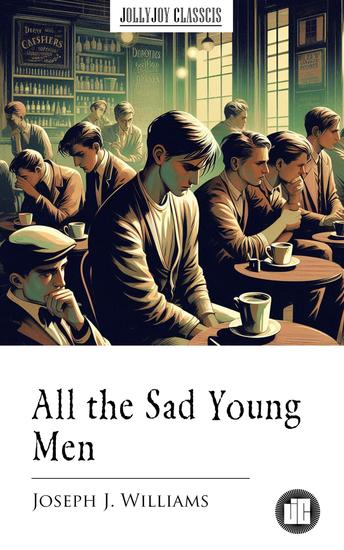
  • All the Sad Young Men - cover

    All the Sad Young Men

    F. Scott Fitzgerald

    • 0
    • 0
    • 0
    This volume of the Cambridge Fitzgerald Edition includes the original nine stories selected by Fitzgerald for All the Sad Young Men, together with eleven additional stories, published between 1925 and 1928, which were not collected by Fitzgerald during his lifetime. This edition is based on extensive surviving manuscripts and typescripts. The volume contains a scholarly introduction, historical notes, a textual apparatus, illustrations, and appendices. The complex history of composition for 'The Rich Boy' is untangled, and Fitzgerald's thorough revision of 'Winter Dreams' is described. Important passages of sexual innuendo and tabloid-style scandal in 'Jacob's Ladder', 'The Love Boat', and 'Magnetism' - removed by editors at the Saturday Evening Post - are restored to the Cambridge texts.
    Show book