Join us on a literary world trip!
Add this book to bookshelf
Grey
Write a new comment Default profile 50px
Grey
Subscribe to read the full book or read the first pages for free!
All characters reduced
Fortune - cover

Fortune

J. C. Snaith

Publisher: Good Press

  • 0
  • 0
  • 0

Summary

In "Fortune," J. C. Snaith crafts a captivating narrative that unravels the complexities of fate, fortune, and the intricate weave of chance in human lives. Employing a rich, descriptive literary style, Snaith deftly combines elements of realism and symbolism, immersing readers in a vividly rendered world where personal aspirations collide with the capricious nature of luck. The book explores the profound impact of fortune on individuals' lives, intricately linking their personal choices to broader societal influences, providing a poignant commentary on the undulating currents of life that shape human destiny. J. C. Snaith was a prominent figure in early 20th-century literature, known for his keen insights into the human condition and social dynamics. His personal experiences, including his observations of social disparity and personal struggles, informed his literary voice, often imbuing his works with a reflective yet critical lens on the societal structures that bind individuals. "Fortune" reflects Snaith's fascination with the unpredictable interplay of luck and decision-making, drawing on his own life's trials and triumphs. Readers will find "Fortune" to be an engaging exploration of the forces that govern human lives, making it a compelling addition to any literary collection. Those intrigued by the interplay of fate and personal agency will discover rich layers of meaning, ensuring a thought-provoking and insightful reading experience that resonates long after the final page is turned.
Available since: 03/02/2025.
Print length: 230 pages.
Other books that might interest you

  • The Shamraken Homeward Bounder - From their pens to your ears genius in every story - cover

    The Shamraken Homeward Bounder -...

    William Hope Hodgson

    • 0
    • 0
    • 0
    William Hope Hodgson was born in Essex, England on November 15th, 1877. 
    Over his short career he produced a large body of work which explored and covered many genres. From horror, to science fiction, to stories on the sea, where he had spent much of his early life. 
    In 1899, at the age of 22, he opened W. H. Hodgson's School of Physical Culture, in Blackburn offering tailored exercise regimes for personal training.  
    Eventually the business shut down and he immersed himself in writing.  An article in 1903 ‘Physical Culture versus Recreative Exercises’ led the way into fiction writing.  In 1904 came his first short story ‘The Goddess of Death’.  It was the beginning of an intensely creative period in his life. 
    He wrote novels, poetry and many, many short stories including series on the Sargasso Sea and Captain Gault. 
    One of his most memorable creations was his Carnacki, Supernatural Detective creation.  This fused together his passion for sleuthing and interest in the Occult.  It was a memorable success. 
    When war drew its shadow over Europe Hodgson received a commission as a Lieutenant in the Royal Artillery. In 1916 he was thrown from a horse and suffered a serious head injury; he received a mandatory discharge, and returned to writing. 
    Hodgson recovered sufficiently to re-enlist but at the Battle of Ypres in April 1918 he was killed by an artillery shell.
    Show book
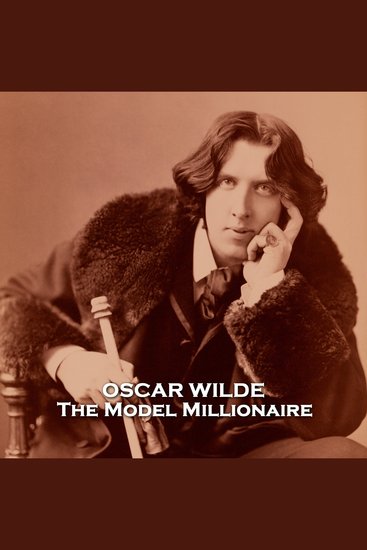
  • The Model Millionaire - From their pens to your ears genius in every story - cover

    The Model Millionaire - From...

    Oscar Wilde

    • 0
    • 0
    • 0
    Oscar Fingal O'Flahertie Wills Wilde was born on the 16th October 1854 in Dublin, Ireland.  The son of Dublin intellectuals Oscar proved himself an outstanding classicist at Trinity College and then at Oxford. 
    Wilde then moved to London and its fashionable cultural and social circles.  With his biting wit, flamboyant dress, and glittering conversation, Wilde became one of the most well-known personalities of his day. 
    His only novel, ‘The Picture of Dorian Gray’ was published in 1890 and he then moved on to writing for the stage with ‘Salome’ in 1891.  His society comedies were enormous hits and turned him into one of the most successful writers of late Victorian London. 
    Whilst his masterpiece, ‘The Importance of Being Earnest’, was on stage in London, Wilde had the Marquess of Queensberry, the father of his lover, Lord Alfred Douglas, prosecuted for libel.  The trial unearthed evidence that caused Wilde to drop his charges and led to his own arrest and trial for gross indecency. He was convicted and imprisoned for two years hard labour. It was to break him. 
    On release he left for France. There he wrote his last work, ‘The Ballad of Reading Gaol’ in 1898.  He died destitute in Paris at the age of forty-six sipping champagne a friend had brought with the line ‘Alas I am dying beyond my means’.
    Show book
  • American Family Shakespeare Entertainment An - cover

    American Family Shakespeare...

    Stefan Rudnicki, Mary Lamb,...

    • 0
    • 0
    • 0
    In this second volume of Blackstone’s audio theater production of An American Family Shakespeare Entertainment, a full cast of award-winning narrators present miscellaneous scenes and soliloquies from Othello, King Lear, Macbeth, Timon of Athens, Pericles, Cymbeline, The Winter’s Tale, and The Tempest. Based on Tales from Shakespeare by Charles and Mary Lamb and featuring Elizabethan songs and dances in new arrangements for stringed instruments, this original audio recording is a Skyboat Road Company production, conceived, adapted, and produced by Stefan Rudnicki for Blackstone Audio, Inc. 
    MUSIC: Willow Song  by Emily Janice Card OTHELLO  read by Mirron Willis SOLILOQUY: Othello  read by Mirron Willis KING LEAR read by Yuri Rasovsky SCENE: “Blow Winds...” read by Yuri Rasovsky, Lorna Raver SCENE: Lear, Fool, Kent read by Stefan Rudnicki MACBETH  read by Harlan Ellison TIMON OF ATHENS read by Robertson Dean PERICLES read by Stefan Rudnicki SCENE: Pericles, Marina read by Stefan Rudnicki, Emily Janice Card CYMBELINE read by Don Leslie THE WINTER’S TALE read by Gabrielle de Cuir THE TEMPEST read by Efrem Zimbalist, Jr. SOLILOQUY: Prospero read by Efrem Zimbalist, Jr.
    Show book
  • Truth is Not Sober - From their pens to your ears genius in every story - cover

    Truth is Not Sober - From their...

    Winifred Holtby

    • 0
    • 0
    • 0
    Winifred Holtby was born on 23rd June 1898 to a prosperous farming family in the village of Rudston in Yorkshire.  
    A governess provided her early education before she went to Queen Margaret's School in Scarborough.  After passing the entrance exam for Somerville College, Oxford in 1917, she decided to join the Women's Army Auxiliary Corps in early 1918.  However, soon after her arrival in France, the War ended. 
    She returned to study at Oxford and met fellow student Vera Brittain.  After graduating from Oxford, in 1921, Winifred and Vera moved to London, hoping to establish themselves as authors. 
    Her early novels met with only moderate success but as a journalist she was both prolific and increasingly well-known.  Her articles graced more than 20 newspapers and magazines, including the Manchester Guardian newspaper.   
    Winifred was a committed feminist, socialist and pacifist.  She gave many lectures for the League of Nations Union.  She was also active in the Independent Labour Party and was a campaigner for the unionisation of black workers in South Africa. 
    In 1931 the symptoms of high blood pressure, recurrent headaches and bouts of lassitude brought forth a diagnosis of Bright's disease.  She was given two years to live and now put all her efforts into what was to become her crowning achievement: South Riding.  Released posthumously it received lavish praise and enormous sales.  Her canon of works tackle difficult subjects head on, many in unusual ways, brimming with verve and usually strong female protagonists. 
    Winifred Holtby died on 29th September 1935 in London.  She was 37.
    Show book
  • Antigone - Full Cast Drama - cover

    Antigone - Full Cast Drama

    Sophocles

    • 0
    • 0
    • 0
    "Antigone" is a Greek tragedy written by Sophocles in the 5th century BCE. The play is part of a trilogy, but only "Antigone," the third installment, has survived. The narrative revolves around Antigone, the daughter of Oedipus, who defies the king's decree and buries her brother Polynices, in defiance of the law. The king, Creon, orders that Polynices' body should remain unburied as punishment for his rebellion against the city. 
     
    Antigone's act of burial is not only an expression of familial loyalty but also an assertion of divine laws over human laws. She believes in the moral duty to honor her brother, even in death and is willing to face the consequences. Creon, however, sees her actions as an affront to his authority and issues a decree that anyone attempting to bury Polynices will be put to death. 
     
    As the plot unfolds, the clash between divine and human laws intensifies. Antigone is caught and brought before Creon, where she staunchly defends her actions. Creon remains resolute in his decision to punish her, regardless of her familial ties. The play explores themes of morality, duty, and the consequences of pride and authoritarian rule. 
     
    Tragedy unfolds as Antigone is sentenced to be entombed alive. The narrative weaves the fates of various characters, including Antigone, Haemon (Creon's son and Antigone's fiancé), and Eurydice (Creon's wife). The play culminates in a series of tragic events, leading to Creon's realization of his own tragic flaw and the devastating consequences of his decisions.
    Show book
  • The Warden - cover

    The Warden

    Anthony Trollope

    • 0
    • 0
    • 0
    "The Warden" by Anthony Trollope is the first entry in the Chronicles of Barsetshire, a series that brilliantly captures the essence of Victorian England through its examination of moral dilemmas. Set against the backdrop of a tranquil cathedral town, the story revolves around Mr. Harding, a benevolent warden of an almshouse who finds himself at the center of a potential scandal stirred by reformers and the press. As he grapples with personal integrity versus public duty, Trollope explores themes of conscience, power, and the complexities of human nature.
    Show book