Join us on a literary world trip!
Add this book to bookshelf
Grey
Write a new comment Default profile 50px
Grey
Subscribe to read the full book or read the first pages for free!
All characters reduced
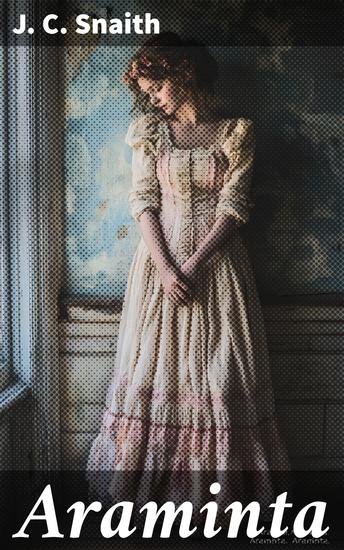
Araminta - cover

Araminta

J. C. Snaith

Publisher: Good Press

  • 0
  • 0
  • 0

Summary

In "Araminta," J. C. Snaith crafts a poignant exploration of the complexities of love and identity through the lens of a captivating protagonist. Set against the backdrop of early 20th-century England, the narrative unfolds with a delicate balance of lush prose and insightful character development. Snaith masterfully employs elements of romanticism while grounding the story in a societal context marked by rapid change, illustrating the struggles of a woman caught between personal desires and societal expectations. The interplay of humor and melancholy enriches the text, inviting readers into a world where emotional depth thrives amid external constraints. J. C. Snaith was a writer whose experiences in both literature and life informed his compelling storytelling. Coming from a diverse cultural background and deeply engaged in contemporary social issues, Snaith's perspectives are woven throughout the fabric of "Araminta." His acute observations on gender roles and class dynamics resonate with both his time and ours, making this work not merely a story but a lens through which the reader can examine their own world. "Araminta" is recommended for anyone interested in rich, character-driven narratives that challenge conventional norms while offering profound insights into the human psyche. Snaith's adept balance of humor and pathos makes this a timeless read that will resonate with anyone seeking to understand the depths of love and the intricacies of one's self in a changing world.
Available since: 03/02/2025.
Print length: 160 pages.
Other books that might interest you

  • Battle of Frogs and Mice - cover

    Battle of Frogs and Mice

    Homer Homer

    • 0
    • 0
    • 0
    The Batrachomyomachia or Battle of the Frogs and Mice is a comic epic commonly attributed to Homer. 
    The Mouse-Prince stops by the shore of a lake to drink, and encounters the Frog King. The Frog offers to show the Mouse his kingdom, on the other side of the lake, and the Mouse agrees. The Prince climbs onto the Frog King's back. In the middle of the lake, they are confronted by a water snake. The Frog dives, forgetting about the Mouse, who cannot swim, and the Prince drowns. 
    On the bank, another Mouse witnesses the scene, and informs the other Mice, who arm themselves for battle. A battle ensues, and the Mice prevail.
    Show book
  • The Telegram - cover

    The Telegram

    Konstantin Paustovsky, Marlene...

    • 0
    • 0
    • 0
    Konstantin Paustovsky was a Russian writer nominated for the Nobel Prize for literature in 1965, 1966,1967,1968.
    Paustovsky began writing while still in Gymnasium. His first works were imitative poetry but he restricted his writing to prose after Ivan Bunin wrote in a letter to him: "I think that your sphere, your real poetry, is prose. It is here, if you are determined enough, that I am sure you can achieve something significant."
    Paustovsky's prose, steeped in nostalgia and quiet sorrow, reaches its finest expression in The Telegram—a story of distance, both physical and emotional, and the irreversible weight of unsaid words.
    The Telegram is not merely a story; it is a whisper across time, a plea too late, a love unspoken until the silence swallows it whole. In Paustovsky's world, distance is more than geography—it is the fragile thread between duty and regret, between those who leave and those who wait. The past lingers in unmailed letters, in the hush of an empty house, in the shadow of a mother's gaze.
    His words do not shout—they murmur, they breathe, they break the heart with a tenderness that lingers long after the final sentence.
    Show book
  • A Study in Scarlet - cover

    A Study in Scarlet

    Sir Arthur Conan Doyle

    • 0
    • 0
    • 0
    "A Study in Scarlet is an 1887 detective novel by British writer Arthur Conan Doyle. The story marks the first appearance of Sherlock Holmes and Dr. Watson, who would become the most famous detective duo in literature1. The book's title derives from a speech given by Holmes, a consulting detective, to his friend and chronicler Watson on the nature of his work, in which he describes the story's murder investigation as his "study in scarlet": ""There's the scarlet thread of murder running through the colourless skein of life, and our duty is to unravel it, and isolate it, and expose every inch of it.""1    The novel begins with Dr. John Watson returning to London after serving in the Second Anglo-Afghan War. He seeks a place to live and is introduced to Sherlock Holmes, who is looking for someone to share the rent at 221B Baker Street. Watson moves in, and after witnessing Holmes's deductive skills, becomes his close companion. A telegram requesting consultation on a murder case leads them to an abandoned house on Brixton Road. The victim is Enoch Drebber of Cleveland, Ohio, and the investigation reveals a mysterious message written in red: "RACHE" (German for "revenge"). Holmes deduces that the victim died from poison and provides a description of the murderer. Thus begins their first adventure together"
    Show book
  • The Purloined Letter - cover

    The Purloined Letter

    Edgar Allan Poe

    • 0
    • 0
    • 0
    In one of Edgar Allan Poe’s most brilliant detective tales, C. Auguste Dupin faces a crime that is as much about intellect as it is about cunning. When a highly sensitive letter is stolen from the royal apartments by a shrewd and unscrupulous minister, the police search tirelessly—yet fail to find it. Called upon for help, Dupin applies his unparalleled powers of observation and deduction, proving that the best hiding place may be in plain sight. 
    The Purloined Letter is a masterclass in psychological intrigue and logical reasoning, a classic that continues to inspire the detective fiction genre.
    Show book
  • A Chameleon - From their pens to your ears genius in every story - cover

    A Chameleon - From their pens to...

    Anton Chekhov

    • 0
    • 0
    • 0
    Anton Pavlovich Chekhov was born on 29th January 1860 in Taganrog, on the south coast of Russia.  
    His family life was difficult; his father was strict and over-bearing but his mother was a passionate story-teller, a subject Chekhov warmed to. As he later said; ‘our talents we got from our father, but our soul from our mother’.  
    At school Chekhov was distinctly average. At 16 his father mis-managed his finances and was declared bankrupt. His family fled to Moscow. Chekhov remained and eked out a living by various means, including writing and selling short sketches to newspapers, to finish his schooling. That completed and with a scholarship to Moscow University obtained he rejoined his family. 
    He was able to help support them by selling satirical sketches and vignettes of Russian lifestyles and gradually obtained further commissions. In 1884, he qualified as a physician and, although it earned him little, he often treated the poor for free, he was fond of saying ‘Medicine is my lawful wife, and literature is my mistress.’ 
    His own health was now an issue as he began to cough up blood, a symptom of tuberculosis.  Despite this his writing success enabled him to move the family into more comfortable accommodation.  
    Chekhov wrote over 500 short stories which included many, many classics including ‘The Kiss’ and ‘The Lady with a Dog’.  His collection ‘At Dusk’ won him the coveted Pushkin Prize when was only 26.  
    He was also a major playwright beginning with the huge success of ‘Ivanov’ in 1887.   
    In 1892 Chekhov bought a country estate north of Moscow. Here his medical skills and money helped the peasants tackle outbreaks of cholera and bouts of famine. He also built three schools, a fire station and a clinic.  It left him with less time for writing but the interactions with real people gained him detailed knowledge about the peasantry and their living conditions for his stories.  
    His most famous work, ‘The Seagull’ was received disastrously at its premiere in St Petersburg. It was later restaged in Moscow to highlight its psychological aspects and was a huge success. It led to ‘Uncle Vanya’, ‘The Three Sisters’ and ‘The Cherry Orchard’.  
    Chekhov suffered a major lung hemorrhage in 1897 while visiting Moscow. A formal diagnosis confirmed tuberculosis and the doctors ordered changes to his lifestyle.  
    Despite a dread of weddings the elusive literary bachelor quietly married the actress Olga Knipper, whom he had met at rehearsals for ‘The Seagull’, on 25th May 1901. 
    By May 1904 with his tuberculosis worsening and death imminent he set off for the German town of Badenweiler writing cheerful, witty letters to his family and assuring them his health was improving.  
    On 15th July 1904 Anton Chekhov died at Badenweiler.  He was 44.
    Show book
  • Under the Knife (Unabridged) - cover

    Under the Knife (Unabridged)

    H. G. Wells

    • 0
    • 0
    • 0
    Under The Knife is a short story by H. G. Wells. Herbert George "H. G." Wells (21 September 1866 - 13 August 1946) was an English writer, now best known for his work in the science fiction genre. He was also a prolific writer in many other genres, including contemporary novels, history, politics and social commentary, even writing textbooks and rules for war games. Wells is sometimes called "The Father of Science Fiction," as are Jules Verne and Hugo Gernsback.
    Show book