¡Acompáñanos a viajar por el mundo de los libros!
Añadir este libro a la estantería
Grey
Escribe un nuevo comentario Default profile 50px
Grey
Suscríbete para leer el libro completo o lee las primeras páginas gratis.
All characters reduced
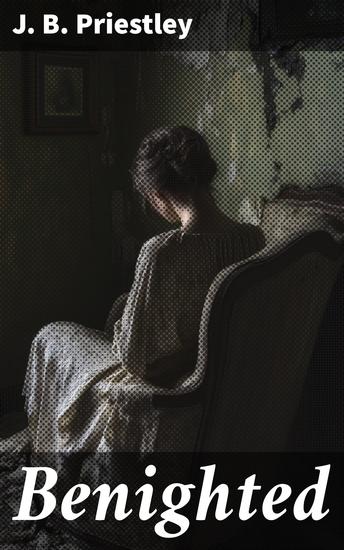
Benighted - cover

Benighted

J. B. Priestley

Editorial: Good Press

  • 0
  • 0
  • 0

Sinopsis

In 'Benighted,' J. B. Priestley masterfully weaves a psychological thriller that explores the human condition through a tapestry of eerie suspense and existential inquiry. Set against the backdrop of a stranded group in a remote hotel, the narrative delves deep into themes of isolation, fear, and the complexities of human relationships. Priestley's poignant prose combines elements of Gothic fiction with modernist undertones, creating a rich, atmospheric experience that challenges the reader's understanding of reality and self. The interplay between the characters serves as a microcosm of society, revealing their hidden desires and fears under extreme duress. J. B. Priestley, a prominent British author and playwright of the 20th century, is known for his insightful commentary on the social and psychological aspects of life. His own experiences during World War I significantly shaped his worldview and literary voice, driving him to explore themes of human vulnerability and resilience. Priestley's commitment to examining societal issues informs this novel, making it not just a suspenseful tale but also a critique of contemporary life. 'Benighted' is a gripping exploration of human nature that invites readers to confront their own fears and beliefs. With its intricate character studies and compelling narrative, this novel is an essential read for those interested in psychological depth and social commentary. Dive into Priestley's world and uncover the chilling truths that lie within.
Disponible desde: 02/03/2025.
Longitud de impresión: 210 páginas.


Otros libros que te pueden interesar

  • Lot No 249 - cover

    Lot No 249

    Arthur Conan Doyle

    • 0
    • 0
    • 0
    Lot No. 249 is a Gothic horror short story by British writer Arthur Conan Doyle, first published in Harper's Magazine in 1892. The story tells of a University of Oxford athlete named Abercrombie Smith who notices a strange series of events surrounding Edward Bellingham, an Egyptology student who owns many ancient Egyptian artefacts, including a mummy. After seeing his mummy disappear and reappear, and two instances of Bellingham's enemies getting attacked, Smith concludes that Bellingham is reanimating his mummy. Smith confronts Bellingham, who denies this is the case; the next day, Smith is attacked by the mummy and escapes. Smith then forces Bellingham to destroy his mummy and the associated artefacts at gunpoint.Written during a period of great European interest in Egyptian culture known as Egyptomania, "Lot No. 249" was inspired by Doyle's interests in the supernatural, crime and Egyptology. Though reanimated mummies had previously appeared in English literature, Doyle's story was the first to portray one as dangerous. The story has been widely anthologised and received positive reviews from critics, including praise from authors H. P. Lovecraft and Anne Rice. Critics have compared the story to the writings of Edgar Allan Poe and H. Rider Haggard and interpreted it as containing themes of imperialism and masculinity. "Lot No. 249" has been adapted for film and television, and has significantly influenced subsequent media that depicts mummies, as well as other works of horror fiction.
    Ver libro
  • The Tell-Tale Heart - cover

    The Tell-Tale Heart

    Sampi Books, Edgar Allan Poe

    • 0
    • 0
    • 0
    In Edgar Allan Poe's "The Tell-Tale Heart", the narrator tries to prove his sanity after murdering an elderly man because of his "vulture eye". His growing guilt leads him to hear the old man's heart beating under the floorboards, which drives him to confess the crime to the police.
    Ver libro
  • The Trial - cover

    The Trial

    Franz Kafka

    • 0
    • 0
    • 0
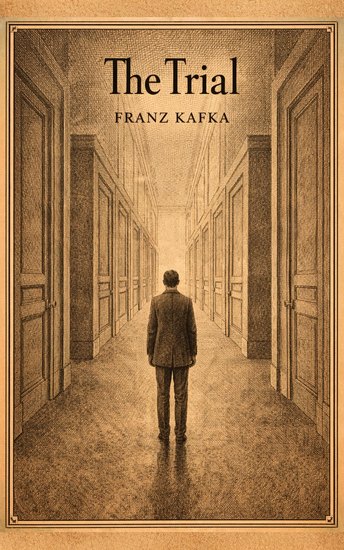
    The Trial by Franz Kafka is a haunting and thought-provoking masterpiece of twentieth-century literature that explores guilt, power, and the unsettling nature of modern bureaucracy. First published posthumously in 1925, this profound and unsettling novel tells the story of a man trapped in a mysterious legal system that operates beyond logic, transparency, or mercy.
    
    The novel opens with a startling event: Josef K., an ordinary bank official, is arrested one morning without being informed of the crime he has allegedly committed. Though he is not taken into custody, he is suddenly entangled in a shadowy judicial process that seems to exist everywhere and nowhere at once. Court officials appear in attics and tenement buildings, hearings take place in suffocating rooms filled with onlookers, and legal procedures unfold according to rules that no one fully understands.
    
    As Josef K. attempts to defend himself, he encounters a series of enigmatic characters—warders, clerks, lawyers, painters, and strangers—each offering vague guidance but no clarity. The deeper he ventures into the system, the more incomprehensible and oppressive it becomes. The court's authority is absolute, yet its structure remains invisible, creating a world governed by anxiety, ambiguity, and silent judgment.
    
    Kafka masterfully captures the psychological strain of living under constant accusation. Josef K.'s growing sense of isolation and helplessness reflects broader themes of alienation in modern society. The novel examines the individual's struggle against faceless institutions, questioning the nature of justice, authority, and personal responsibility. Is Josef K. truly innocent, or does guilt exist independently of wrongdoing? Kafka leaves the answer deliberately unresolved, heightening the novel's existential tension.
    
    Written in a stark yet surreal style, The Trial blends realism with nightmarish absurdity. Everyday settings—boarding houses, offices, and courtrooms—take on a dreamlike quality, emphasizing the fragile boundary between normal life and irrational fear. Kafka's exploration of bureaucracy and power has made the term "Kafkaesque" synonymous with situations that are illogical, oppressive, and disorienting.
    
    More than a legal drama, The Trial is a profound meditation on the human condition. It confronts readers with unsettling questions about freedom, accountability, and the search for meaning in a world governed by hidden forces. With its timeless themes and chilling atmosphere, The Trial remains one of the most influential and enduring works of modern literature.
    Ver libro
  • Christmas Formula - From their pens to your ears genius in every story - cover

    Christmas Formula - From their...

    Stella Benson

    • 0
    • 0
    • 0
    Stella Benson was born on the 6th January 1892 in Easthope, Shropshire to parents who were landed gentry. 
    Her early years involved frequent household moves which was difficult for the child as she suffered from ill-health.  Some of her early education was spent at schools in Germany and Switzerland and by 10 she had developed a lifelong habit of keeping a diary. 
    In the following years her parents separated, and she rarely saw her father. When she did, he encouraged to pause her writing until she had further experience and could better make sense of the world.  When he died, she learned he had been an alcoholic. 
    A winter spent in the West Indies provided material for her first novel ‘I Pose’ published the following year in 1915. 
    During the War years she became involved in the women's suffrage movement and dedicated time outside of writing to support the troops and help the poor. 
    In 1918 she decided to travel spending much time in California, where she also tutored at the University of California, and continued to write.  In China she met her future husband and after marrying in London, journeyed with him to his various Custom postings through Nanning, Beihai, and Hong Kong and the Far East. 
    The works continued to flow novels, short stories, travel essays all helped to build a deserved and burgeoning reputation. 
    Although her works are now in the forgotten and neglected department her writing style, characters, and narratives more than capably demonstrate her obvious talents.   
    Stella Benson died of pneumonia on the 7th December 1933, at Hạ Long in the Vietnamese province of Tonkin.  She was 40.
    Ver libro
  • Taming of the Shrew - cover

    Taming of the Shrew

    William Shakespeare

    • 0
    • 0
    • 0
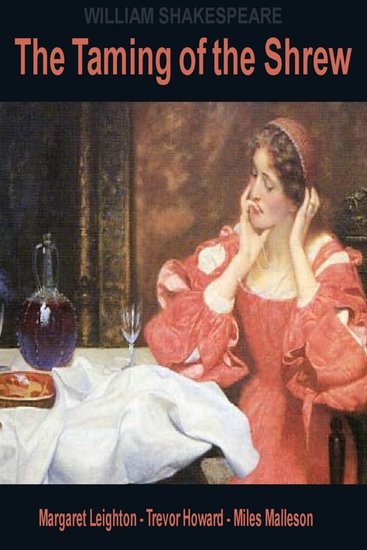
    Trevor Howard and Margaret Leighton lead a full cast performance of this popular Shakespeare comedy
    Ver libro
  • Kasimir Stanislavovitch - From their pens to your ears genius in every story - cover

    Kasimir Stanislavovitch - From...

    Ivan Bunin

    • 0
    • 0
    • 0
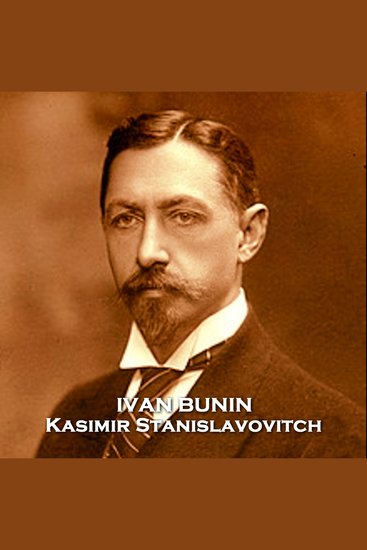
    Ivan Alekseyevich Bunin was born on 22nd October 1870 in Voronezh province, in the South-West of the Russian Empire. 
    His early life was plagued by his Father’s gambling habits which caused his education to be erratic and the family to lose most of their wealth. 
    Bunin published his first poem in 1887 in St Petersburg and later in Oryol he worked for the local paper and became its editor, handily allowing him to publish his own poems and short stories.  There he met and married Varvara Pashchenko.  Ivan Bunin's debut book of poetry ‘Poems (1887–1891)’ was published in 1891. 
    This poetry and his translation of Longfellow garnered him his first Pushkin Prize.  Now he switched to writing prose and his novella ‘Antonov Apples’ is regarded as his first masterpiece.  Many more would follow. 
    The October Revolution of 1905 found Bunin in the Crimea.  Scenes of ‘class struggle’ he saw more as the oppressed people's craving for anarchy and destruction. 
    In November 1906 he began a passionate affair with Vera Muromtseva, within a few months they were touring through Egypt and Palestine.  ‘The Bird's Shadow’ collection was the result.   
    His second Pushkin Prize came in 1909 for Poems (1903–1906) and further translations.  He was now elected to the prestigious Russian Academy. 
    More widespread fame came in 1910 with ‘The Village’, a controversial and bleak portrayal of Russian country life.  Travel too beckoned them back to the Middle East, Ceylon (now Sri Lanka) and for winters in Capri with their friend Maxim Gorky.  
    That friendship suddenly ended in April 1917 as the revolution began to ferment in war-ravaged Russia.  After the Bolsheviks took power and the upheavals continued, he decided to leave Russia, finally achieving that in early 1920.  
    It would take some time to heal the wounds and stress he had been under and for his writing to begin again.  Settled in France, Bunin published many of his previous works and collections of novellas.  He also made regular contributions to the Russian emigre press.  
    Although reluctant to become involved in politics, Bunin was now feted as both a writer and the figurehead of non-Bolshevik Russian values and traditions.  In 1933 he became the first Russian to be awarded the Nobel Prize for Literature ‘for following through and developing with chastity and artfulness the traditions of Russian classic prose.’  
    In 1938 Bunin began working on the celebrated cycle of nostalgic, and erotically themed stories known Dark Avenues (or Dark Alleys).  
    As World War II broke out he chose to remain in Grasse spending the war at his remote Villa Jeanette, high in the mountains.  
    Ivan Bunin was a staunch anti-Nazi, and often, under difficult conditions, sheltered fugitives after Vichy was occupied by the Germans.  He wrote but did not publish during these years until on August 23rd the Nazi’s fled Grasse without a fight.  The next day the Americans came.  
    In May 1945 he returned to Paris and, apart from convalescing at times in Juan-les-Pins, he stayed for the rest of his life. 
    After 1948, with his health deteriorating, Bunin concentrated upon writing his memoirs and a book on Chekhov.  His last years were overshadowed by bitterness and despair at the situation in Russia and the treatment of its peoples.  He was suffering now from asthma, bronchitis and chronic pneumonia. 
    Ivan Alekseyevich Bunin died in a Paris attic flat on 8th November 1953.  Heart failure, cardiac asthma and pulmonary sclerosis were given as the causes of death.  He was 83.
    Ver libro