Join us on a literary world trip!
Add this book to bookshelf
Grey
Write a new comment Default profile 50px
Grey
Subscribe to read the full book or read the first pages for free!
All characters reduced
The Diary of a Superfluous Man - Enriched edition - cover

The Diary of a Superfluous Man - Enriched edition

Iván Turguénev

Translator Constance Garnett

Publisher: DigiCat

  • 0
  • 0
  • 0

Summary

In "The Diary of a Superfluous Man," Ivan Turgenev captures the introspective musings of a disenchanted gentleman, embodying the existential malaise of the Russian gentry in the mid-19th century. Written in a poignant diary format, the narrative adopts a confessional style, providing readers with an intimate glimpse into the protagonist's alienation and societal critique. Turgenev adeptly employs lyrical prose and vivid imagery, reflecting the influences of Romanticism while paving the way for Realism, masterfully intertwining personal reflection with broader social commentary on the futility of existence in an increasingly complex world. Ivan Turgenev, a pivotal figure in Russian literature, was deeply influenced by his own experiences of societal disconnection and philosophical exploration in a rapidly evolving Russia. Raised in a privileged yet stifling environment, Turgenev's encounters with urban intellectuals and his extensive travels across Europe enriched his understanding of human nature and the class struggles of his time. These themes resonate throughout the narrative as he presents a poignant portrait of the superfluous man, a figure emblematic of his era's existential quandaries. This book is a compelling read for anyone interested in the intersections of identity, class, and societal change. Turgenev's profound insights and emotional depth invite readers to reflect on their own place within the landscape of life, making "The Diary of a Superfluous Man" not only a literary classic but also an enduring exploration of the human condition.

In this enriched edition, we have carefully created added value for your reading experience:
- A succinct Introduction situates the work's timeless appeal and themes.
- The Synopsis outlines the central plot, highlighting key developments without spoiling critical twists.
- A detailed Historical Context immerses you in the era's events and influences that shaped the writing.
- An Author Biography reveals milestones in the author's life, illuminating the personal insights behind the text.
- A thorough Analysis dissects symbols, motifs, and character arcs to unearth underlying meanings.
- Reflection questions prompt you to engage personally with the work's messages, connecting them to modern life.
- Hand‐picked Memorable Quotes shine a spotlight on moments of literary brilliance.
- Interactive footnotes clarify unusual references, historical allusions, and archaic phrases for an effortless, more informed read.
Available since: 07/21/2022.
Print length: 51 pages.

Other books that might interest you

  • In Our Time (1925 Edition) - Short Stories by Ernest Hemingway - cover

    In Our Time (1925 Edition) -...

    Ernest Hemingway

    • 0
    • 0
    • 0
    Ernest Hemingway was born in Oak Park, Illinois, on July 21, 1899. He served in World War I as an ambulance driver on the Italian front; he was wounded and decorated. After the war, he worked as a journalist before settling in Paris, where he met Gertrude Stein and Ezra Pound, who shaped his literary voice. His prose was terse, his sentences short, and his stories of men and their battles with nature, with love, with their own souls. Hemingway wrote many novels and short stories: "The Sun Also Rises," "A Farewell to Arms," "For Whom the Bell Tolls," and "The Old Man and the Sea," for which he received the Pulitzer Prize. He lived in Key West, Cuba, and Idaho, always in pursuit of the perfect sentence, the true experience. 
    He married four times, loved deeply, and fought hard against his inner demons. Hemingway's life was marked by adventure, war, hunting, fishing, and an unyielding quest for authenticity. In 1954, he was awarded the Nobel Prize in Literature. On July 2, 1961, in Ketchum, Idaho, he ended his life with a shotgun. His works endure, capturing the essence of a man facing the world, striving for grace under pressure. 
    Frank Marcopolos lives in Florida with his dog, Sparky.
    Show book
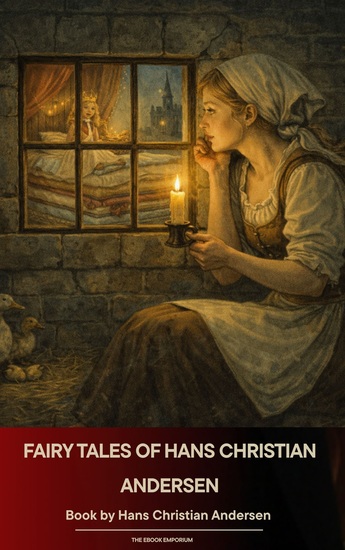
  • Fairy Tales of Hans Christian Andersen - cover

    Fairy Tales of Hans Christian...

    Hans Christian Andersen

    • 0
    • 0
    • 0
    What stories can be gentle, heartbreaking, and unforgettable all at once?
    
    Fairy Tales of Hans Christian Andersen brings together the beloved stories that have enchanted readers for generations. From quiet moments of wonder to deeply emotional journeys, Andersen's tales explore love, sacrifice, hope, and the longing to belong.
    
    Featuring classics such as The Little Mermaid, The Ugly Duckling, The Snow Queen, and The Emperor's New Clothes, these stories blend fantasy with profound human truth. Andersen's unique gift lies in his ability to speak to children through magic and to adults through meaning.
    
    Sometimes joyful, sometimes bittersweet, these fairy tales reveal the beauty and fragility of the human spirit, making them timeless across cultures and ages.
    
    Inside this eBook, you'll explore:
    
    The most famous fairy tales by Hans Christian Andersen
    
    Stories of magic, transformation, and moral insight
    
    Emotional depth rarely found in children's literature
    
    A cornerstone collection of world fairy tales
    
    Read aloud to children, revisited by adults, and studied worldwide, Andersen's fairy tales remain among the most influential stories ever written.
    
    Enter a world where wonder meets truth. Buy now and experience the fairy tales of Hans Christian Andersen.
    Show book
  • From Beyond (Unabridged) - cover

    From Beyond (Unabridged)

    H. P. Lovecraft

    • 0
    • 0
    • 0
    The story is told from the first-person perspective of an unnamed narrator and details his experiences with a scientist named Crawford Tillinghast. Tillinghast creates an electronic device that emits a resonance wave, which stimulates an affected person's pineal gland, thereby allowing them to perceive planes of existence outside the scope of accepted reality. Sharing the experience with Tillinghast, the narrator becomes cognizant of a translucent, inter-dimensional environment that overlaps our own recognized reality. From this perspective, he witnesses hordes of strange and horrific creatures that defy description. Tillinghast reveals that he has used his machine to transport his house servants into the overlapping plane of reality. He also reveals that the effect works both ways, and allows the inter-dimensional creature denizens of the alternate dimension to perceive humans. Tillinghast's servants were attacked and killed by one such inter-dimensional entity, and Tillinghast informs the narrator that it is right behind him. Terrified beyond measure, the narrator pulls out his gun and shoots it at the machine, destroying it. Tillinghast dies immediately thereafter as a result of apoplexy. The police investigate the scene and it is placed on record that Tillinghast murdered the servants in spite of their remains never being found.
    Show book
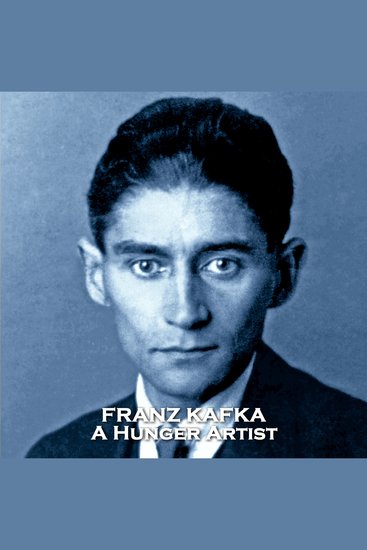
  • A Hunger Artist - A study in artistic pursuit and the sacrifices one must make - cover

    A Hunger Artist - A study in...

    Franz Kafka

    • 0
    • 0
    • 0
    Franz Kafka was born on 3rd July 1883 in Prague, then in Bohemia, the eldest of 6, into a middle-class Jewish family. 
     
    Life for the young Kafka and his passion for literature was often made an ordeal by his over-bearing and domineering entrepreneur of a father.   
     
    In 1889 Kafka was sent to the Deutsche Knabenschule, an elementary school in Prague. His father would only allow him to be educated in German-speaking schools and even went so far as to limit visits to the synagogue to four a year. 
     
    In 1901 he graduated from the classics-oriented Altstädter Gymnasium. Kafka did well there and across a large range of subjects.  He now enrolled at the Charles Ferdinand University, to study chemistry, but quickly switched to law for which he obtained his degree in June 1906 and then performed the mandatory year of unpaid service as clerk at the civil and criminal courts. 
     
    A job at an Italian insurance company left him little time to write and after a year he took another job with the Worker's Accident Insurance Institute for the Kingdom of Bohemia where he stayed until ill health led to his resignation in 1922. 
     
    Although he saw work as a means to pay the bills and to allow him time to write, he received several promotions and was noted as a good employee. 
     
    By 1917 Kafka was suffering from tuberculosis, which required frequent periods of convalescence. Interspersed with this, were several intense affairs before he settled in Berlin with Dora Diamant, a 25-year-old kindergarten teacher who herself having left the ghetto now influenced Kafka's interest in the book of Jewish law, the Talmud. 
     
    Kafka’s on-going health was littered with problems. Apart from TB there were several other ailments, including migraines, insomnia, boils, depression, all usually brought on by excessive stresses and strains. He attempted to counteract all of this by naturopathic treatments, a vegetarian diet and consuming large quantities of unpasteurized milk. 
     
    His tuberculosis still worsened. He returned to Prague, where he died on 3rd June 1924. He was 40. 
     
    His literary works are few in number but towering in influence.  His masterpieces include ‘The Trial’, ‘The Metamorphosis’ as well as a number of short stories which reveal facets of humankind that truthfully could only be born from Kafka’s brain and pen.
    Show book
  • Lurking Fear The (Unabridged) - cover

    Lurking Fear The (Unabridged)

    H. P. Lovecraft

    • 0
    • 0
    • 0
    "The Lurking Fear" is a horror short story by American writer H. P. Lovecraft. Written in November 1922, it was first published in the January through April 1923 issues of Home Brew.
    Show book
  • War and Peace - Book 14: 1812 (Unabridged) - cover

    War and Peace - Book 14: 1812...

    Leo Tolstoy

    • 0
    • 0
    • 0
    War and Peace is a literary work mixed with chapters on history and philosophy by the Russian author Leo Tolstoy. It was first published serially, then published in its entirety in 1869. It is regarded as one of Tolstoy's finest literary achievements and remains an internationally praised classic of world literature.
    Book 14: 1812: The Battle of Borodinó, with the occupation of Moscow that followed it and the flight of the French without further conflicts, is one of the most instructive phenomena in history. All historians agree that the external activity of states and nations in their conflicts with one another is expressed in wars, and that as a direct result of greater or less success in war the political strength of states and nations increases or decreases.
    Show book