¡Acompáñanos a viajar por el mundo de los libros!
Añadir este libro a la estantería
Grey
Escribe un nuevo comentario Default profile 50px
Grey
Suscríbete para leer el libro completo o lee las primeras páginas gratis.
All characters reduced
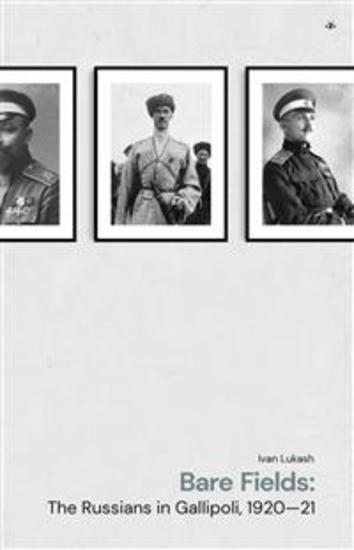
Bare Fields - The Russians in Gallipoli 1920–21 - cover

Bare Fields - The Russians in Gallipoli 1920–21

Ivan Lukash

Editorial: Antelope Hill Publishing LLC

  • 0
  • 0
  • 0

Sinopsis

Nearing the end of the Russian Civil War, a large portion of the White Army, along with some of their families and other emigres, evacuated to Greek-occupied Gallipoli, taking with them the very soul of Russia, desperately hoping to see her in a new dawn. Among them was author Ivan Lukash, who penned the following collection of musings and observations during this time in Gallipoli from 1920 to 1921. Bare Fields paints a vivid image of their camps, from the bustle of the mornings to the late-night outings of both soldiers and locals, sprinkled with an abundance of anecdotes from such famed men as Pyotr Wrangel, Anton Turkul, Vladimir Manstein, and Alexander Kutepov.
 
An overarching theme to the book can be illustrated with the following question: What will a Russian man do when he is deprived of everything-his homeland, his wealth, his family, when nothing remains but the dry, gray landscape of a once beautiful city, now turned into Russia's foreign cemetery of ashes? As hope persists among some while others fall to despair, Lukash beautifully captures the varied answers to this unasked question in a way that is deeply insightful and surprisingly timeless.
 
Antelope Hill Publishing is proud to present this first English translation of Bare Fields: The Russians in Gallipoli, 1920-21 by Ivan Lukash, translated by Elevenfortyseven, a delicate yet powerful testament to the Russian will. In the words of Lieutenant Misha, as recorded by Lukash, "We have become the living idea of Russia, and if she is alive, we are not dead either, because we carry Russia in us like the sun. And that is why everyone here has a burning soul."
Disponible desde: 16/03/2024.

Otros libros que te pueden interesar

  • Healing From Infidelity - Overcome Post Infidelity Stress Disorder Move Forward After an Affair and Become Whole Again After Betrayal Trauma - cover

    Healing From Infidelity -...

    Grace Blake

    • 0
    • 0
    • 0
    Have you experienced betrayal and now feel trapped, exhausted, or emotionally paralyzed by thoughts that won’t leave you alone? 
    Betrayal shakes your world, making everything you once believed feel uncertain. Suddenly, the person you trusted most feels like a stranger. You're caught in cycles of anxiety, self-doubt, and questions that keep you awake at night: 
    “Why did this happen?” 
    “How can I ever trust again?” 
    “Will this pain ever end?” 
    But it doesn’t have to stay this way. 
    This audiobook is a compassionate guide created specifically for you—someone facing the emotional trauma of infidelity and wondering how to heal from a betrayal that has changed everything. 
    Through proven insights and practical steps, you'll learn how to: 
    Make sense of your pain and confusion after betrayal, so you can finally stop feeling lost. 
    Understand the deeper reasons behind why people cheat—giving clarity (not excuses), and helping you reclaim your power. 
    Recognize why betrayal feels so traumatic and gain effective strategies to heal your emotional wounds. 
    Identify how cheating changes the brain and emotions, empowering you to break free from obsessive thoughts and emotional triggers. 
    Rebuild your trust carefully and wisely, allowing you to create authentic connections without constant fear of being hurt again. 
    Protect your heart without closing it off, ensuring you don’t lose your ability to experience genuine love and intimacy. 
    Rediscover yourself and your worth, moving confidently forward toward happiness, clarity, and inner peace.You deserve more than just surviving betrayal—you deserve true healing, strength, and emotional freedom. 
    It’s time to stop replaying painful memories.
    Ver libro
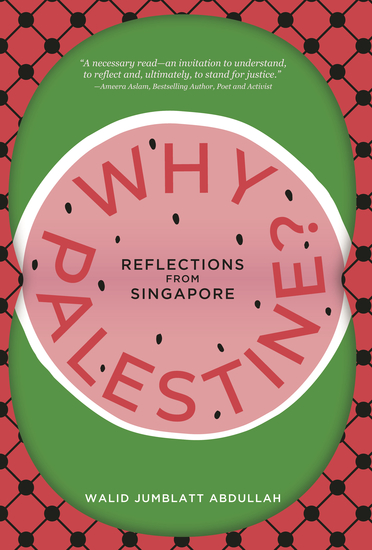
  • Why Palestine?: Reflections From Singapore - cover

    Why Palestine?: Reflections From...

    Walid Jumblatt Abdullah

    • 0
    • 0
    • 0
    If you’ve ever wondered why people keep talking about Palestine, or the point of keeping up with a long-drawn conflict in the Middle East and what difference you could possibly make, this book is for you. Political analyst and podcaster Walid Jumblatt Abdullah takes on questions that Singaporeans have often raised about Palestine, laying out answers that clarify and inform. 
     
    Walid examines myths (“Could Gaza Have Been Singapore?”) and sheds light on the double standards of Western powers, to whom human rights seem to matter, except for where Palestine is concerned. Explaining how the Palestinians have been systematically dehumanised for decades, the book highlights how they continue to exist nevertheless, their very existence an act of resistance. 
     
    Why Palestine? is an illuminating starting point for newcomers to the issue, and a passionate primer that seasoned activists will welcome for capturing the heart and hope of a long-disenfranchised people and those who support them.
    Ver libro
  • Gods Shadows and the Birth of Consciousness - How Myth Ritual and Belief Forged Civilization - cover

    Gods Shadows and the Birth of...

    Hatem Helmy

    • 0
    • 0
    • 0
    Gods, Shadows, and the Birth of Consciousness 
    The evolution of the human mind begins not in pure reason, but in the womb of myth. Long before philosophy or science emerged, myths, rituals, and beliefs shaped cognition, guided behavior, and structured societies. They were not arbitrary stories or empty superstitions—they were the scaffolds of intellect, morality, and power. 
    In ancient civilizations, myths and religious beliefs were strategic tools of governance. They embedded moral frameworks and the fear of deferred punishment—what we might call “cosmic accountability”—into the human psyche, compelling obedience even when no human eyes were present. Gods, spirits, and supernatural forces became invisible regulators, ensuring that the individual conformed to communal norms. This psychological architecture allowed rulers to extend influence without constant coercion. 
    The shamans, magicians, and diviners of early societies were far more than ceremonial figures. They interpreted omens, performed sacred rites, and acted as intermediaries between the visible and invisible worlds. Their symbolic authority legitimized the rule of kings, emperors, and priesthoods, allowing central powers to consolidate control over expansive territories. Through this invisible network of myth, ritual, and belief, early states unified diverse populations, stabilized social order, and extended influence across mountains, rivers, and deserts. 
    This interplay between belief and governance is not confined to the distant past. Modern states continue to rely on narratives, ideologies, and moral frameworks to structure society and legitimize authority. Even in the age of reason, the human mind responds to mythic and symbolic forces—echoes of the cognitive scaffolds built over millennia.
    Ver libro
  • Lives of Eminent Philosophers (Socrates) - Biographer of the Wise – Diogenes Laertius’ Account of Socrates’ Life Teachings and Legacy - cover

    Lives of Eminent Philosophers...

    Diogenes Laertius, Tim Zengerink

    • 0
    • 0
    • 0
    What if a man who wrote nothing became the most quoted thinker in history? 
    In Lives of Eminent Philosophers, Book II, Diogenes Laertius shares a rare and revealing account of Socrates’ life, teachings, and influence. This modern translation offers timeless insights into the character of the man who reshaped Western thought not by pen, but by example. 
    What you’ll discover inside: 
    •	A biographical portrait of Socrates from one of antiquity’s most influential chroniclers 
    •	Stories, sayings, and habits that shaped a life of virtue and wisdom 
    •	A look at Socrates through the lens of Diogenes Laertius’ sharp observation and moral admiration 
    •	A faithful, modern translation designed to bring Socrates’ character and ideas to life 
    Whether you seek inspiration, moral clarity, or philosophical reflection, this account invites you to meet Socrates not as myth—but as a man.
    Ver libro
  • When AI Rules the World - China the US and the Race to Control a Smart Planet - cover

    When AI Rules the World - China...

    Handel Jones

    • 0
    • 0
    • 0
    As China rises to true superpower status, the United States must take immediate action to catch up in AI capabilities—or facefall disastrously behind technologically, economically, and militarily. 


    Over the past decade, China has quietly and methodically moved into a near-leadership position in artificial intelligence technologies on a global scale. Meanwhile, the United States has responded ineffectively, weighed down by politics, bureaucracy, and an absence of clear strategy. 


    In the near future, wars will be fought not over land, but over data. Machines will quickly discover individualized treatments for diseases, and with the help of virtual reality, AI will inspect buildings that have not yet been built. With the rising interest in these technologies by both China and the US, who will emerge as the victor of this technological race? 


    When AI Rules the World is an investigation and call to action into AI technologies for a nation that does not yet comprehend the full gravity of the AI revolution. The United States is losing the race for AI dominance, and the stakes couldn't be higher.
    Ver libro
  • German Tanks in the World Wars: The History of Germany’s Most Famous Tanks during Both Conflicts - cover

    German Tanks in the World Wars:...

    Charles River Editors

    • 0
    • 0
    • 0
    One of the most important breakthroughs in military technology associated with World War I, and certainly the one that continues to capture the public imagination, was the introduction of a war machine that came to dominate the face of land battles throughout most of the 20th century: the tank. As a concept, it was not revolutionary; in fact, it harkened back to classical antiquity and to the Middle Ages, such as the covered battering rams and testudos which had made frequent appearances on ancient battlefields. In essence, it was designed to solve the age-old problem of protecting infantry from enemy projectiles while remaining mobile. 	Ironically, Germany, which would subsequently become famous for panzers and blitzkrieg warfare, was late in taking up the idea. During World War I, the Germans continued to rely on other techniques, and they produced less than two dozen models for battlefield use.  
    	The beginning of World War II found the major powers developing tanks to some extent, but lingering ideas from World War I affected the development of tanks during the Interwar period. As a result, aside from the blitzkrieg doctrine developed by the Nazis, tanks were still used in terms of infantry support, and there were few wars during this period to give strategists the chance to develop better uses for the new armored vehicles before World War II started. Commanders soon found that many of the tanks fielded in the campaigns of 1939-1941 lacked the necessary armor, guns, and designs. Inevitably, tactics evolved throughout the war. The Germans were early leaders in tank tactics, as their successes from Poland through the opening phases of Operation Barbarossa demonstrated. The main German tank tactic was the so-called Schwerpunkt (“center of gravity”), in which a concentration of tanks achieved a local superiority, broke through, and drove deep behind enemy lines.
    Ver libro