Join us on a literary world trip!
Add this book to bookshelf
Grey
Write a new comment Default profile 50px
Grey
Subscribe to read the full book or read the first pages for free!
All characters reduced
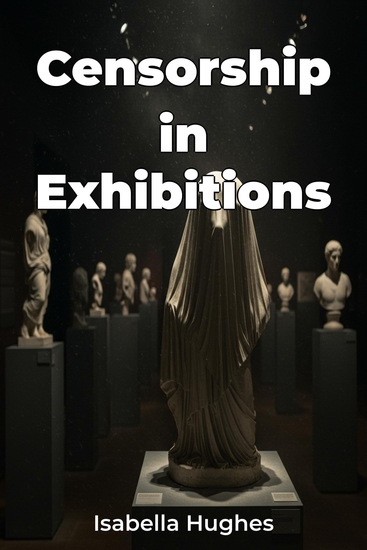
Censorship in Exhibitions - cover

Censorship in Exhibitions

Isabella Hughes

Translator A AI

Publisher: Publifye

  • 0
  • 0
  • 0

Summary

"Censorship in Exhibitions" examines the suppression of artistic expression within art exhibitions, revealing how political ideologies, social norms, and power dynamics shape what art the public sees. The book doesn't treat censorship as isolated events, but rather as a recurring phenomenon with deep historical roots. For instance, the book explores how avant-garde art movements faced suppression in the early 20th century, contrasting this with contemporary controversies surrounding politically charged artworks. This exploration offers insights into how censorship operates and its effects on freedom of expression.

 
The book progresses thematically, beginning with case studies categorized by type of censorship, such as political or religious motivations. It then investigates the actors involved, like government bodies and museum administrators, and their agendas. Finally, it considers the consequences of censorship on artists and society, offering strategies to resist such actions. By examining historical patterns and motivations, the book reveals how censorship reinforces existing power structures. This approach challenges conventional narratives and provides a comprehensive overview valuable to art students, historians, and museum professionals.
Available since: 02/22/2025.
Print length: 70 pages.
Other books that might interest you

  • Hollywood Stage - Anchors Aweigh - The golden age of cinema brought to your ears - cover

    Hollywood Stage - Anchors Aweigh...

    Various Authors

    • 0
    • 0
    • 0
    Hollywood is indelibly printed in our minds as the ‘go-to place for entertainment and has been for decades. When there really did seem to be more stars in Hollywood than in Heaven Hollywood Stage had them performing films as radio plays – on the sponsors dime of course.  The Hollywood director William Keighly unveils the treasure and the stars for you right here…..
    Show book
  • Kamakura Shogunate - Samurai Power and the Mongol Invasions - cover

    Kamakura Shogunate - Samurai...

    Rolf Hedger

    • 0
    • 0
    • 0
    The rise of the Kamakura Shogunate marks a pivotal moment in Japanese history, transitioning from the aristocratic Heian period to the feudal system dominated by the samurai. This era began with the victory of Minamoto no Yoritomo, who, after the Genpei War (1180-1185), established a new form of governance centered in Kamakura, a small coastal town far from the imperial capital of Kyoto. 
    The Genpei War was a civil conflict between the Taira and Minamoto clans, which ultimately ended with the defeat of the Taira in the Battle of Dan-no-ura in 1185. Minamoto no Yoritomo, the leader of the Minamoto clan, emerged as the victor, but his triumph was not simply a personal or clan-based success. Yoritomo's victory laid the foundation for a shift in the political landscape of Japan. The Taira had represented the old courtly aristocracy that governed Japan through the imperial system, but the rise of the Minamoto signaled the beginning of samurai dominance and a move toward military rule. 
    In 1192, Yoritomo was granted the title of shogun by the emperor, an act that formalized his military authority. This title, meaning "generalissimo" or "commander of the army," was traditionally given to military leaders in times of war but had never been used as the primary governing title before. This marked the official beginning of the Kamakura Shogunate, a military dictatorship that would rule Japan for over a century. Though the emperor remained the nominal ruler, Yoritomo’s power was based in Kamakura, far from the imperial court, which shifted the balance of power from the capital to the military elite.
    Show book
  • Nature’s Concerto Of Tranquil Waterfall Soundscapes For Deep Calm Inner Peace & Mindfulness - Achieve Full Serenity for Restful Nights & Enhanced Wellbeing using Amplified 8D Audio Sounds - cover

    Nature’s Concerto Of Tranquil...

    Selena Brooke

    • 0
    • 0
    • 0
    This Kindle book exploring soundscapes' effects and benefits for stress relief and meditation in a visual way. It does not include audio recordings or sound files. Instead, it serves as a guide, offering readers a visual insight into how they can harness the power of sound in their lives. 
    Immerse yourself in a journey of tranquility and healing with Nature’s Concerto Of Tranquil Waterfall Soundscapes For Deep Calm, Inner Peace & Mindfulness. This transformative guide invites you to discover the profound benefits of nature therapy as a pathway to emotional balance and overall well-being. 
    In this book, you will explore a variety of meditative practices for peaceful living, each carefully designed to enhance your mindfulness journey. Every chapter delves into the soothing power of waterfalls, offering insights on how to cultivate a serene environment that fosters relaxation and rejuvenation. Learn the art of self-care practices for relaxation that promote inner harmony and a sense of calm amidst life's challenges, enabling you to navigate daily stressors with resilience. 
    Discover how to integrate holistic healing approaches into your daily routine, allowing you to transform your mental and emotional landscape. This book provides practical techniques for restful evening rituals that prepare your mind and body for a rejuvenating night’s rest, ensuring you wake up refreshed, energized, and centered.
    Show book
  • Flourishing Chinese Empires - Art Trade and Power (3 in 1) - cover

    Flourishing Chinese Empires -...

    Rolf Hedger

    • 0
    • 0
    • 0
    After centuries of division, China experienced an extraordinary renaissance through three dynasties that elevated the empire to unprecedented heights of cultural brilliance and global influence. "Flourishing Chinese Empires: Art, Trade, and Power" examines the Sui, Tang, and Song dynasties—a golden age when China stood as the world's most advanced civilization. 
    The short-lived Sui Dynasty (581-618 CE) accomplished the crucial task of reunification through ambitious projects including the Grand Canal, standardized administration, and reformed examination system. Though bankrupted by these massive undertakings and unsuccessful military campaigns, the Sui created the essential foundation for the glory that followed. 
    The Tang Dynasty (618-907 CE) transformed this unified state into a cosmopolitan empire of unrivaled splendor. China's borders expanded dramatically while its capital at Chang'an became the world's largest and most sophisticated city—a multicultural metropolis where Persian merchants, Japanese monks, and Korean scholars mingled in bustling markets and elegant gardens. This was the era of China's greatest poets, its artistic zenith in sculpture and painting, and unprecedented openness to foreign influences. 
    The Song Dynasty (960-1279 CE) compensated for military vulnerability with stunning economic and technological advancement. Urbanization accelerated as printing spread literacy, commerce flourished through paper money, maritime trade expanded, and scientific innovation thrived. Though constantly threatened by powerful northern neighbors, the Song fostered a refined cultural environment where landscape painting, philosophical inquiry, and scholarly pursuits reached remarkable sophistication.
    Show book
  • Star Wars and Philosophy Strikes Back - This Is the Way - cover

    Star Wars and Philosophy Strikes...

    William Irwin

    • 0
    • 0
    • 0
    "This is the Way." In Star Wars and Philosophy Strikes Back, the Way wends through entirely new adventures in the Star Wars galaxy far, far away: not only the films of the Skywalker saga, but also Rebels, The Bad Batch, Rogue One, Solo, and The Mandalorian. Like the creators of these films and television series, the authors in this book harness the magical mix of humor, action, empathy, characterization, adventure, and fan service that constitutes Star Wars. 


    In addition to thorny metaphysical questions about the nature of time and free will, this volume highlights the staggering cultural impact of George Lucas's universe. The newest Star Wars narratives tackle ethnicity on alien worlds and how love and sex with a droid like L3-37 would work ("It works"). The connections between the Separatist Freedom Movement and the struggle for social justice in the USA in the twenty-first century are brought to light. And philosophical second looks at Rian Johnson's The Last Jedi prove there is much more to this controversial entry in the Skywalker saga. 


    Thirty-six philosophers, both sages and scoundrels among them, examine the full range of deep questions throughout the Star Wars chronology—from The Phantom Menace to The Rise of Skywalker and beyond. "They have spoken."
    Show book
  • Scripting Empire - Broadcasting the BBC and the Black Atlantic - cover

    Scripting Empire - Broadcasting...

    James Procter

    • 0
    • 0
    • 0
    Scripting Empire recovers the literary and cultural history of West Indian and West African writing at the BBC in order to rethink the critical mid-century decades of shrinking British sovereignty, late modernism, and mass migration to the metropole. Between the 1930s and the 1960s, a remarkable group of black Atlantic artists and intellectuals became producers, editors, and freelancers at the corporation. Operating at the interface of a range of literary and broadcast genres, this loose network of African Caribbean writers and thinkers prompt a reassessment of the aesthetic, formal, and political fallout of decolonization between the outbreak of World War II and the first airings of post-colonial independence. 


    Scripting Empire works comparatively across dozens of different programs spanning the General Overseas Service, Home Service, Light Program, and Third Program. Drawing upon a transnational archive of materials, including scripts, correspondence, periodicals, visual records, and sound recordings, it seeks to reposition the cultural contribution of West Indians and West Africans within a more pervasive and porous account of radio transmission, the legacy of which extends well beyond broadcasting.
    Show book