Join us on a literary world trip!
Add this book to bookshelf
Grey
Write a new comment Default profile 50px
Grey
Subscribe to read the full book or read the first pages for free!
All characters reduced
A to Z India - Magazine: June 2023 - cover

A to Z India - Magazine: June 2023

Indira Srivatsa

Publisher: BookRix

  • 0
  • 0
  • 0

Summary

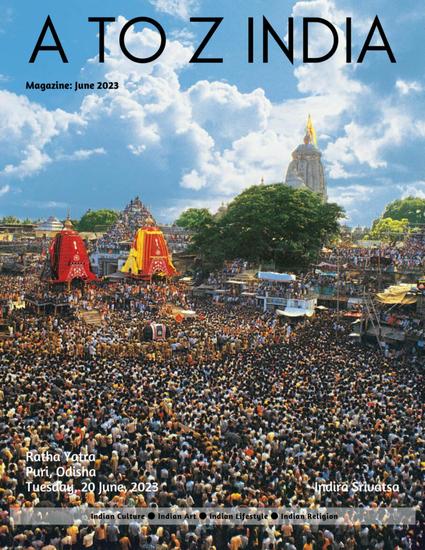
PURI RATH YATRA 2023: CHARIOT FESTIVAL IN ODISHA, INDIA - Puri Rath Yatra, the world famous chariot or car festival, at the Puri Jagannath Temple in Odisha, India. Puri Rath Yatra 2023 date is June 20. It is celebrated on the second day of the Shukla Paksha (waxing phase of moon or bright fortnight) Ashadh month as per traditional Oriya Calendar. On the day of the Ratha Yatra (car festival), chariots (Rath) carrying Lord Jagannath, Balabhadra and Subhadra is pulled to the nearby Gundicha Temple; THE 'GANDHI' OF TRIBAL'S: GANI RAJENDRA VIJAY - Gani Rajendra Vijay, the pioneer of the Sukhi Pariwar Campaign, the messiah of tribal life and eminent Jain saint has been active on tribal issues for the last 36 years.
Available since: 05/22/2023.
Print length: 26 pages.

Other books that might interest you

  • Crassus - The First Tycoon - cover

    Crassus - The First Tycoon

    Peter Stothard

    • 0
    • 0
    • 0
    The story of Rome's richest man, who died a humiliating desert death in search of military glory 


    Marcus Licinius Crassus (115–53 BCE) was a modern man in an ancient world, a pioneer disrupter of finance and politics, and the richest man of the last years of the Roman republic. Without his catastrophic ambition, this trailblazing tycoon might have quietly entered history as Rome's first modern political financier. Instead, Crassus and his son led an army on an unprovoked campaign against Parthia into what are now the borderlands of Turkey, Syria, and Iraq, losing a battle at Carrhae which scarred Roman minds for generations. 


    After Crassus was killed, historians told many stories of his demise. Some said that his open mouth, shriveled by desert air, had been filled with molten gold as testament to his lifetime of greed. His story poses both immediate and lasting questions about the intertwining of money, ambition, and power.
    Show book
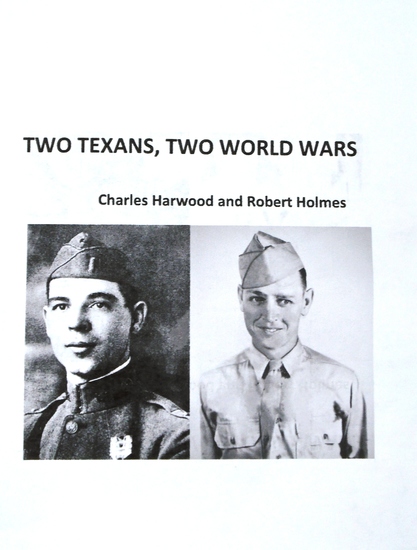
  • Two Texans Two World Wars - My father and grandfather's stories: Robert Holmes and Charles Harwood - cover

    Two Texans Two World Wars - My...

    Kathy Donneson

    • 0
    • 0
    • 0
    Charles Harwood was in the first group of American soldiers to arrive in France with the 1stAmerican Expeditionary Force in June 1917.In 1945 his son-in-law Robert Holmes returned from World War II having served with the 1st Division 26th Infantry Regiment in the Battle of the Bulge and in Germany.These memoirs have been edited for publication by Kathy Donneson, Charles Harwood's granddaughter and Robert Holmes' daughter./
    Show book
  • Ancient Egyptians’ Diet The: The History of Eating and Drinking in Egypt - cover

    Ancient Egyptians’ Diet The: The...

    Editors Charles River

    • 0
    • 0
    • 0
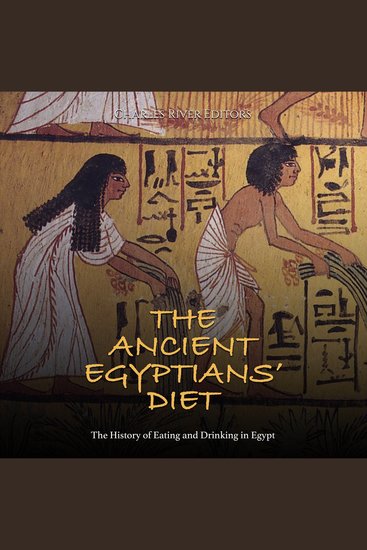
    Perhaps the most intriguing aspect of ancient Egyptian civilization was its inception from the ground up, as the Egyptians themselves had no prior civilization which they could use as a template. In fact, Egypt itself became a template for the civilizations that followed. The Greeks and the Romans were so impressed with Egyptian culture that they often attributed many aspects of their own culture to the Egyptians. With that said, some minor elements of ancient Egyptian culture were, indeed, passed on to later civilizations. Egyptian statuary appears to have had an initial influence on the Greek version, and the ancient Egyptian language continued long after the pharaonic period in the form of the Coptic language.  
    	Despite the strides made in understanding Egyptian history, there are obvious difficulties in assessing what ancient societies ate and drank, even as advances in technology continue to open up new methods of analysis for food deposits in human remains and archaeological sites. In general, the majority of what ancient individuals ate did not last long, and in the case of ancient Egypt, there is an even greater additional time factor. Ancient Egyptian civilization lasted over 3,000 years, a time period that if applied to Europe encompasses the time before Rome was even founded right up to the present day. Within such a lengthy period a great deal happens in any society, and in Egypt, numerous dynasties came and went, with constant invasions both by Egyptians into nearby regions and back into Egypt by neighboring civilizations. All of these different groups presumably had their own preferences for food and drink. Population migrations, especially the ones led by the Sea Peoples into the region around 1250 BCE, combined with other factors such as climate to impact the food and drink consumed by Egyptians.  
    Show book
  • Bruce's Timeline Of Our World - cover

    Bruce's Timeline Of Our World

    Bruce Tapping

    • 0
    • 0
    • 0
    Have you ever wondered where Attila the Hun and the Goths fit into History? When was the Renaissance, and the Restoration, and the Reformation, and were they related? Who fought the English Civil War, and why? What were the US Civil War and War of Independence all about? All these questions are answered in this brilliantly simple timeline.
    Show book
  • The Indonesian Famine of 1945-1946 - A Study in Post-War Disruption - cover

    The Indonesian Famine of...

    Sarah Willards

    • 0
    • 0
    • 0
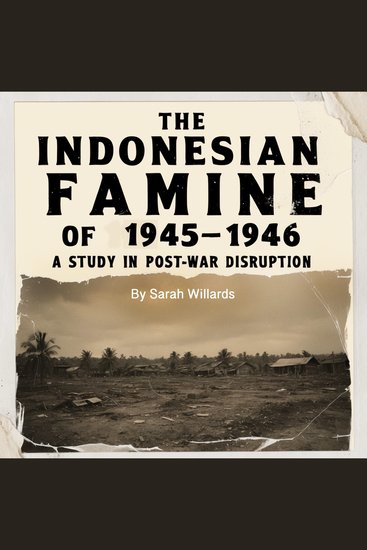
    The conclusion of World War II marked a pivotal turning point in Indonesia’s history. As the Japanese forces surrendered in August 1945, the vacuum left behind in their wake exposed the fragility of colonial and wartime institutions. Indonesia, long under Dutch colonial rule and occupied by Japan since 1942, was suddenly thrust into a state of political and administrative chaos. The power void that followed the Japanese capitulation was quickly filled by nationalist fervor, culminating in the proclamation of Indonesian independence on August 17, 1945. However, the declaration did not result in immediate recognition or control. Instead, the country found itself caught between competing powers and clashing agendas. 
    The collapse of Japanese administrative structures left the newly proclaimed Republic of Indonesia struggling to assert its legitimacy. Republican leaders, including Sukarno and Mohammad Hatta, faced the monumental task of organizing a new government while also managing the fallout of war. Meanwhile, Dutch authorities, with Allied support, sought to re-establish their colonial presence. This led to violent confrontations and widespread instability, as various factions—including local militias, former Japanese-trained troops, and returning colonial forces—vied for control over towns, supply routes, and administrative posts. 
    The disintegration of centralized governance had far-reaching consequences. Essential services, including food distribution and public health, were severely disrupted. The chaos was further compounded by a breakdown in communication lines and transportation infrastructure, much of which had been damaged during the war or repurposed by occupying forces. With no clear authority in many regions, local leaders and grassroots organizations were left to manage crises as best they could, often with limited resources and no coordination.
    Show book
  • The Conscience of Care - Navigating Health in the Culture Wars - cover

    The Conscience of Care -...

    Dov Fox

    • 0
    • 0
    • 0
    Pitched battles over abortion, puberty blockers, and assisted suicide have turned American healthcare into a legal minefield. Faced with mounting restrictions on medical practice, doctors and nurses who follow their conscience to provide standard treatments risk being fined, fired, or even imprisoned, while clinicians who conscientiously deny evidence-based care are shielded without condition from any such consequences. Dov Fox argues that by ceding the moral vocabulary of conscience to refusers alone, the lopsided law of medical conscience selectively burdens providers, drives vulnerable patients underground, and impoverishes the dynamic pluralism of medicine.The Conscience of Care lays bare the broken system of medical conscience and sets out to fix it. Fox canvases a landscape of contested services that include IVF, IUDs, opioids, psychedelics, organ transplants, and advance directives. He develops practical reforms that rebalance conscience protection by introducing measured safeguards for providers and scaling back the categorical refuge afforded to refusers. The Conscience of Care articulates a bold vision of medicine that reclaims the lost promise of conscience to bridge social divides on matters of life and death, impairment and identity.
    Show book